Hands-on research + scholarly opportunities in neurocritical care at Tufts Medical Center

Research and scholarly inquiry are a core part of the fellowship, designed to cultivate academic neurointensivists who contribute meaningfully to the field. Fellows gain hands-on experience with clinical research, protocol implementation, patient recruitment, informed consent, data collection, and interdisciplinary collaboration.

Key research opportunities include:

  • Participation in industry-sponsored and investigator-initiated clinical trials
  • Exposure to the operational and ethical complexities of research in critically ill populations
  • Involvement in ongoing studies on neuromuscular diseases, stroke and fatigue in patients with high-grade glioma
  • Personalized mentoring with core neurocritical care faculty and the Department of Neurology’s Vice Chair for Clinical Research
  • Development of skills to critically appraise literature, lead scholarly projects and integrate research into clinical practice

This structured yet flexible approach equips fellows with the knowledge, skills and confidence to pursue academic or clinical leadership roles in neurocritical care.

Display title
Research Opportunities
Eyebrow
Neurocritical Care Fellowship Program

Academic education in the Neurocritical Care Fellowship at Tufts Medical Center

Education is a cornerstone of the Neurocritical Care Fellowship at Tufts Medical Center. Fellows participate in a rich, varied academic curriculum designed to deepen clinical knowledge, strengthen teaching skills, and promote interdisciplinary collaboration. Structured educational activities ensure fellows gain expertise in neurocritical care, develop effective communication skills, and contribute to the academic community.

Core educational formats include:

  • Neurology morning report: Fellows regularly attend and contribute to resident-led morning reports, engaging in diagnostic reasoning discussions and offering neurocritical care insights to junior learners.
  • Noon conferences: Fellows present at least four educational sessions per year to the Department of Neurology. Presentations may include case-based teaching, literature updates, or clinical reasoning exercises and are delivered to a mixed audience of medical students, neurology residents, physician assistants, and faculty.
  • Morbidity and Mortality Conference: Fellows participate in monthly multidisciplinary M&M conferences, presenting and analyzing complex cases alongside faculty from neurology and neurocritical care. These sessions focus on systems-based learning, patient safety, and professional accountability.
  • Interdepartmental Critical Care Series: Fellows attend lectures in both Pulmonary and Critical Care and Anesthesiology Critical Care departments. These sessions foster cross-disciplinary understanding of ICU best practices and promote discussion around shared patients.
  • Joint Journal Club with Anesthesia Critical Care Medicine: Fellows take turns leading this journal club, critically appraising recent literature in neurocritical care, general critical care, and related disciplines. Presenters engage faculty and trainees from both departments in rigorous evidence-based discussions.

Through these structured activities, fellows hone presentation skills, deepen content expertise​ and contribute meaningfully to the academic environment at Tufts Medical Center. Mentorship is provided throughout preparation and delivery, with routine feedback to support continuous improvement in teaching and communication.

Display title
Conferences + Educational Presentations
Eyebrow
Neurocritical Care Fellowship Program

Hands-on clinical training in neurocritical care at Tufts Medical Center

The Neurocritical Care Fellowship at Tufts Medical Center provides immersive, hands-on training designed to develop expertise in managing critically ill neurological patients. Fellows gain experience in neurophysiology, neuropathology, ICU medicine, and bedside procedures, progressing through graduated responsibility and increasing autonomy. Training emphasizes clinical excellence, leadership​ and multidisciplinary collaboration, preparing fellows for success in both academic and clinical neurocritical care settings.

Supervision + mentorship

Fellows receive close guidance from board-certified neurocritical care faculty, ensuring safe high-quality patient care while fostering skill development and professional growth. Faculty provide structured feedback on clinical reasoning, communication and leadership.

  • Supervised by board-certified neurocritical care faculty trained in neurology or neurosurgery
  • Progression from supervised practice to independent decision-making, procedural competency and team leadership
  • Personalized mentorship in academic development, research, quality improvement and teaching

Multidisciplinary integration

From day one, fellows are fully integrated into a collaborative team-based environment, working alongside attendings, residents, advanced practice providers, nurses and consulting services to provide comprehensive patient care.

  • Participate in morning rounds, urgent consultations and bedside teaching
  • Collaborate with neurology, neurosurgery, anesthesiology and rehabilitation teams
  • Build skills in team coordination, communication and patient-centered care

Call + scheduling

Fellows begin home calls in September of the first year, gaining meaningful exposure to emergency neurocritical care scenarios while maintaining wellness and a balanced workload.

  • Exposure to deteriorating neurosurgical patients, post-acute stroke care and complex neurologic-medical cases
  • Equitable call distribution with protected academic time aligned with ACGME duty hour guidelines
  • 24/7 faculty support for consultation and in-person assistance
  • This clinical training model ensures fellows develop confidence, advanced skills and leadership in a supportive high-acuity neurocritical care environment.
Display title
Clinical Training
Eyebrow
Neurocritical Care Fellowship Program

Neurocritical care fellowship curriculum at Tufts Medical Center

The two-year UCNS-accredited Neurocritical Care Fellowship at Tufts Medical Center provides a structured, progressive curriculum designed to build clinical expertise, leadership​ and academic skills. Fellows advance through graduated responsibility, gaining hands-on experience in the Neurosciences Critical Care Unit while benefiting from personalized mentorship and multidisciplinary collaboration.

Year 1: Foundation building

Focuses on building a strong clinical base, procedural competency​ and teamwork skills. Fellows complete:

  • Core neurocritical care principles
  • General critical care skills
  • Procedural competency
  • Multidisciplinary team integration
  • Elective rotations in MICU, SICU and CCU to enhance general critical care knowledge and skills

Year 2: Advanced practice and leadership development

Emphasizes independent decision-making, teaching​ and scholarly work. Fellows complete:

  • Independent clinical decision-making
  • Teaching responsibilities
  • Research project completion
  • Quality improvement initiatives
  • Elective rotations in neuroanesthesia and airway management

This curriculum ensures fellows are fully prepared for leadership roles in neurocritical care, whether in academic centers or other clinical settings, while supporting growth in research, education​ and quality improvement initiatives.

Display title
Curriculum + Structure
Eyebrow
Neurocritical Care Fellowship Program

Build expertise in neurocritical care through immersive training in Boston

The Neurocritical Care Fellowship at Tufts Medical Center provides an immersive hands-on learning experience designed to prepare fellows for advanced clinical practice and leadership in neurocritical care. Fellows gain expertise in managing critically ill neurological patients, developing procedural skills and mastering both the science and art of neurointensive care. Our program emphasizes graduated responsibility, multidisciplinary collaboration and personalized mentorship, ensuring that fellows not only become skilled clinicians but also grow as educators, researchers and leaders.

Key components of the training experience include:

  • Clinical immersion in the 15-bed NCCU with exposure to neurophysiology, neuropathology, ICU medicine and advanced bedside procedures
  • Graduated autonomy and progressive responsibility from supervised practice to independent decision-making and team leadership
  • Multidisciplinary collaboration with neurology, neurosurgery, anesthesiology and rehabilitation teams
  • Structured academic development including personalized mentorship, research project leadership and quality improvement initiatives
  • Teaching opportunities with residents, advanced practice providers and other trainees
  • Call and scheduling designed to provide meaningful exposure to emergency neurocritical care while maintaining work-life balance and adherence to ACGME duty hour guidelines
  • 24/7 faculty support to ensure safe patient care and a supportive learning environment
Display title
Training Experience
Eyebrow
Neurocritical Care Fellowship Program

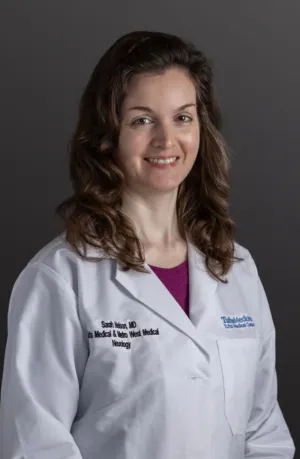
Insights from the Tufts Medical Center neurocritical care fellowship program director

Sarah Nelson, MD

Thank you for your interest in the Tufts Medical Center Neurocritical Care Fellowship Program. This is a wonderful time to be entering our field, and there are vast opportunities available for fellows completing our program. Whether one chooses an academic, community, or laboratory investigative career, we strive during your two brief years of neurocritical care fellowship training to provide the clinical knowledge, skills and attitudes required to be a world-class neurologist prepared for the career of your choice.

All future success follows from a firm grounding in clinical work and the ability to think like a neurologist. Our neurocritical care fellowship program stands out because of highly committed bedside teaching and a regular schedule of formal rounds that allow for the transmission of experiential knowledge that cannot be acquired from published sources. We pride ourselves on our professional and mature fellows and continue to feel close and loyal to them well beyond their years with us in Boston. It is evident when we encounter a graduate of the program at a national meeting that we have met our goal of turning out master clinicians.

We, along with the five full-time academic faculty of Tufts MC Neurocritical Care, have built the program around training, and, as our fellows and graduates can attest, they are always genuinely dedicated to the house staff and their professional education. We look forward to hearing about your interest in neurocritical care as a career and hope that Tufts Medical Center will be the program that best suits your views and goals.

Sarah Nelson, MD
Neurointensivist
Fellowship Director, Neurocritical Care
Stroke Director, MelroseWakefield Hospital

Display title
Message from the Program Director
Eyebrow
Neurocritical Care Fellowship Program

Excel in neurocritical care at Tufts Medical Center in Boston

The Neurocritical Care Fellowship at Tufts Medical Center in Boston offers comprehensive, hands-on training in neurointensive care for critically ill patients. Fellows gain experience in intracranial physiology, ICU medicine, bedside procedures​ and advanced neurological care, while benefiting from personalized one-on-one mentorship from experienced neurocritical care specialists.

Training takes place in the 15-bed Neurocritical Care Unit (NCCU), a combined Neurosciences Critical Care Unit and Neurosciences Intermediate Care Unit that emphasizes multidisciplinary care and family-centered support. The program includes structured educational activities, research opportunities​ and quality improvement projects, preparing fellows to become leaders in neurocritical care. The fellowship offers one position per year for a 24-month training period through the San Francisco Match, providing an intensive, immersive learning experience in Boston’s leading neurocritical care program.

Program history

Since receiving UCNS accreditation, the Neurocritical Care Fellowship at Tufts Medical Center has continually evolved to meet the complexities of modern neurocritical care. Rooted in the 1796 legacy of Tufts Medical Center, the program launched its state-of-the-art 15-bed Neurosciences Critical Care Unit in 2011 under the direction of Dr. Anish Bhardwaj. Over the years, the curriculum has been refined to incorporate emerging neuromonitoring technologies, simulation-based procedural training​ and multidisciplinary collaboration.

Under the leadership of Dr. Joshua Kornbluth and Dr. Jayde Nail, the fellowship emphasizes tailored mentorship, clinical innovation​ and academic excellence, preparing fellows to become skilled neurointensivists and leaders in the field.

Display title
About Our Program
Eyebrow
Neurocritical Care Fellowship Program
Athletic Trainers
Articles
Back to the Grind: Athletic Trainers and Orthopedic Surgeons Collaborate for Fall Sports Season
September 23, 2025
With the beginning of the school year comes one of the busiest times for high school athletic trainers. For Jen Sturtevant, Program Manager of Sports Medicine at MelroseWakefield Hospital, who has served as athletic trainer for Malden High School for the past 20 years, late August marks the start of a demanding season filled with injury prevention, care, and constant monitoring.
COVID-19
Articles
COVID-19 Vaccine Guidance: What’s New and What You Should Do
September 22, 2025
With fall here and COVID-19 still circulating, there’s been a lot of talk—and confusion—about who should get vaccinated and when. Shira Doron, MD, Chief Infection Control Officer at Tufts Medicine, shares a quick breakdown of where things stand and what steps you should consider now.
In the News
Artificial Intelligence Will Never Replace Psychiatry—But It Will Try to Destroy It
September 18, 2025
Article written by Daniel Morehead, MD, Psychiatrist and Program Director of the Adult Psychiatry Residency Program at Tufts Medical Center, about the potential impact of AI on Psychiatry.
Jump back to top