Your brain, spine and nerves are at the center of everything you do. From headaches and strokes to seizures to memory changes, tremors, numbness, trouble walking or vision changes, we help you understand what’s happening. We run the right tests, explain your results and guide you through the next steps with confidence.
Neurology
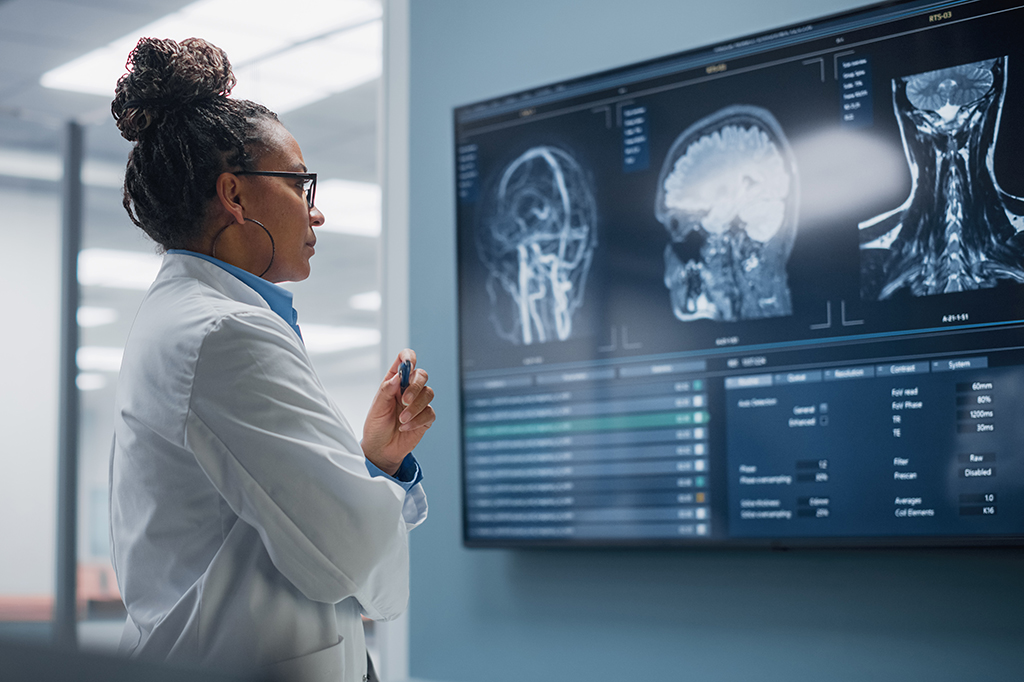


Heading in the right direction for brain, spine + nerve health
Neurology is all about understanding the brain, spine and nervous system. Problems can start suddenly or happen over time. They can be caused by injuries, infections, tumors, gene changes or other health problems.
There are hundreds of neurological conditions, including stroke, Alzheimer’s disease, epilepsy and multiple sclerosis. These conditions can affect how you think, move, speak, see and feel. Knowing what is happening makes it easier to stay independent and keep doing what you like.
We use advanced testing and our specialist expertise to understand each condition. We work closely with primary care doctors and other specialists to see the full picture. Our focus is on helping people feel confident, stay active and continue living life on their terms.
Find a doctor near me

Conditions
From migraines and memory changes to rare neurological conditions, we treat a wide range of brain, spine and nerve issues. With our comprehensive approach, our neurologists help people understand their condition and feel empowered to stay active, independent and confident every day, including:
- Alzheimer’s disease: A condition that affects memory, thinking and daily skills over time
- Amyotrophic lateral sclerosis (ALS): A condition that weakens muscles and affects movement
- Brain infections: Infections in the brain caused by bacteria, viruses, fungi or parasites
- Brain injuries: Damage to the brain from accidents, falls or other trauma
- Brain tumors: Growths in the brain that can affect thinking, movement or other functions
- Carotid and vertebral artery dissection: Injuries to neck arteries that can lead to stroke
- Cerebral cavernomas: Blood vessel abnormalities that can lead to hemorrhagic stroke and seizures
- Cerebral venous sinus thrombosis: Clotting in veins in the brain that can lead to stroke
- Dementia: Changes in memory, thinking and decision-making that make daily life harder
- Epilepsy: A condition that causes seizures or unusual brain activity
- Facial pain: Pain in the face caused by nerve problems
- Headaches and migraines: Pain or pressure in the head that can happen sometimes or often
- MOG antibody disease: A condition that affects the brain, spinal cord and optic nerves
- Multiple sclerosis (MS): A condition that affects nerves in the brain and spine, causing weakness or numbness
- Myasthenia gravis: A condition that causes muscle weakness and fatigue
- Neurodegenerative disorders: Conditions that gradually affect nerves, muscles or brain function
- Neuromuscular disorders: Conditions that affect muscles and the nerves that control them
- Neuromyelitis optica: A condition that affects the optic nerves and spinal cord
- Parkinson’s disease: A condition that affects movement, causing shaking, stiffness or slow motion
- Peripheral nerve disorders: Problems with nerves outside the brain and spine that can cause numbness or pain
- Sleep disorders: Conditions that affect sleep, like insomnia or restless legs
- Spine injuries and disorders: Problems with the spinal cord or back that can affect movement or sensation
- Stroke: A sudden problem with blood flow to the brain that can affect movement, speech or thinking
- Transient ischemic attack (TIA): Temporary stroke-like symptoms caused by brief interruptions in blood flow
- Tremors: Shaking of the hands, arms or other body parts that happens without trying to move
- Young adult stroke: Stroke that happens in younger adults (under 50), affecting movement, speech or thinking

Testing
We use advanced tools and technology to understand what’s happening with the brain, spine and nerves. Some neurological conditions can cause physical symptoms like muscle weakness, balance problems or numbness. Others may affect thinking, memory or mood.
We evaluate how your nervous system is working. We check balance, reflexes, coordination, memory and more to see how the brain and body are connected. This gives us a full picture of your health and helps guide next steps.
Along with a physical exam, we may recommend tests to learn more about the condition and how best to support you:
- Biopsies (muscle, nerve or skin): Examine tissue to detect damage, disease or inflammation, including small fiber neuropathy
- Blood tests: Check for infections, inflammation or other factors affecting the nervous system
- Carotid ultrasound: Looks at blood flow in the neck to the brain
- Cerebrospinal fluid analysis: Test the fluid around the brain and spine for infection, inflammation or other conditions
- CT and CT angiography scans: Detailed images to see the brain, spine and blood vessels
- EEG (electroencephalogram): Measures brain activity to detect seizures or abnormal patterns
- EMG (electromyogram): Test muscle activity to see if nerves or muscles are working properly
- ENG (electroneurogram): Measures nerve signals to check how well nerves communicate with muscles
- Eye movement analysis: Assess how eyes move to detect nerve or brain problems
- Genetic testing: Identify inherited conditions that may affect the nervous system
- Lumbar puncture (spinal tap): Collect fluid from around the spine to check for infection or inflammation
- MRI and MR angiography scans: High-resolution images to detect injuries, tumors, inflammation or blood flow issues
- Nerve conduction studies: Measure how fast nerves carry signals to detect damage or disease
- PET scans: Show how the brain is working, including energy use and activity in different areas
- Transcranial Doppler Ultrasound: Evaluates blood flow in the brain
These tests help us see the full picture of your nervous system and guide care that keeps people active, independent and confident in daily life.

Treatments
While many neurological conditions don’t have a cure yet, new treatments are helping repair and support brain and nerve function. These advances can improve how people feel and help them stay independent and active.
Not everyone needs surgery. Treatment depends on the condition, its severity and the symptoms you’re experiencing. We work with you to find the best options for your needs.
Some treatments we offer include:
- Clinical trials: Access to new therapies that are being studied for safety and effectiveness.
- Deep brain stimulation: A surgical procedure that can help control movement disorders like Parkinson’s Disease and essential tremor.
- Neurorehabilitation: Specialized programs to support recovery and improve daily function.
- Neurostimulation: Implanted devices to help control many neurological conditions (seizures or tremor) and improve neurological recovery (stroke)
- Occupational therapy: Strategies to make daily tasks easier and maintain independence.
- Physical therapy: Exercises and techniques to improve strength, balance and mobility.
Medications may be used to improve symptoms, prevent complications, or reduce risk. They can include:
- Control symptoms: Improve movement in Parkinson’s, improve memory and cognition in Alzheimer’s, reduce nerve pain
- Prevention: Reduce risk of future strokes, seizures, headaches, myasthenic crises or MS attacks
- Slow progression: Help slow the course of diseases such as Alzheimer’s
Our goal is to help people feel their best, stay active and continue doing the things they enjoy.
I only have hope. You have to find the right healthcare team, the care I’ve had at Tufts Medicine has been exemplary.
Tufts Medical Center

Tufts Medical Center’s incredible team cared deeply, supported us completely and never let me feel alone.
Tufts Medical Center


FAQs
What is neurology?
Neurology is the branch of medicine that focuses on the brain, spinal cord and nerves. Our neurologists treat many different conditions, like epilepsy, strokes, migraines, movement problems and memory changes. This field combines expert clinical care with advanced testing to support people through both sudden and long-term neurological issues.
What does the nervous system do?
The nervous system controls nearly every function in the body. It includes the brain, spinal cord and a vast network of nerves that send and receive signals. This system regulates movement, sensation, memory, speech and automatic functions like heart rate and breathing. When something affects the nervous system, it can lead to symptoms that impact daily life and benefit from expert care.
When should I see a neurologist?
Consider seeing a neurologist if you notice symptoms such as frequent headaches, dizziness, seizures, unexplained weakness, vision changes, memory problems or numbness in the arms or legs. These can be signs of an underlying neurological condition. Early evaluation by a Tufts Medicine specialist can lead to faster diagnosis and more effective care.
Do I need a referral to see a neurologist at Tufts Medicine?
Some patients may need a referral depending on insurance or the type of service requested. We encourage you to check with your insurance provider or primary care doctor. Our team is also available to answer questions about the referral process when scheduling an appointment.
What is a neurological assessment?
A neurological assessment helps us understand how well your nervous system is functioning. It includes a review of your symptoms, a physical and neurological exam, and may involve imaging like MRI or CT scans. Additional tests, such as EEGs or nerve conduction studies, provide more information to guide an accurate diagnosis and personalized care plan.
Do you offer specialized clinics for certain neurological conditions?
Yes. Tufts Medicine provides specialized care for conditions such as epilepsy, Parkinson’s disease, multiple sclerosis, stroke recovery and headaches. These clinics bring together neurologists and other experts to provide focused care using the latest research and best practices.
How long does a neurology appointment usually take?
Appointment length varies depending on the visit. Initial consultations often take longer because they include a full review of medical history and a comprehensive assessment. Follow-up visits are usually shorter but still provide time to review progress and adjust care plans as needed.
Related services + treatments
Department of Neurology
Academic Department
Our neurologists are making a significant impact on how the world researches, teaches and delivers care for neurological disease, advancing discoveries that improve patients' lives.
Clinical trials
ALS-TMS

Amyotrophic lateral sclerosis (ALS), Healthy volunteers
All genders
18+

Recruiting now
C2D2AI Participant Recruitment Feasibility Study
Cerebrovascular disease
All genders
50+
Recruiting now
wtATTR-CIAP Burden Study
Transthyretin cardiac amyloidosis
All genders
18+
Recruiting now
Understand what you may pay for care at Tufts Medicine with our price estimate tool.
Patient reviews
08/26/2026
Positive feedback , overall courteous
KEVIN CHYSNA
08/26/2026
He is an expert in his field. I have total faith in him.
Carl Heilman, MD
08/25/2026
Communicated so I could understand and very aware of my own anxieties.
Andrew Young, MD
08/25/2026
Dr. Schoeck listened very closely to everything I said, and and gave me very complete and satisfying answers to all of my questions
ANDREAS SCHOECK
08/25/2026
Very compassionate. Respectful, understand my concerns
JIANING XIAO