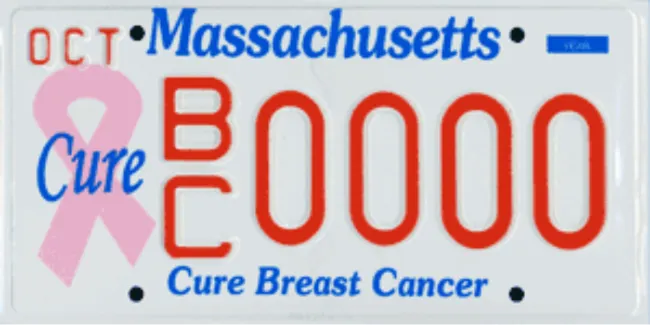
Since October 2002, a simple choice at the Massachusetts Registry of Motor Vehicles has made a powerful difference in breast cancer research. The state’s ‘Cure Breast Cancer’ specialty license plate raises money for the Diane Connolly-Zaniboni Breast Cancer Research Fund at Tufts Medical Center, which has generated more than $1.8 million for lifesaving research since its launch.
The Fund honors the memory of Diane Connolly-Zaniboni, a Tufts Medical Center patient who passed away from inflammatory breast cancer in 2000 at just 39 years old. During the final two years of her treatment, Diane’s family channeled their grief into action, working to create Massachusetts’ first-ever breast cancer charitable license plate. Their efforts created a lasting legacy that continues to advance research nearly two decades later.
Every time a driver chooses the ‘Cure Breast Cancer’ plate, a portion of the registration fee supports the Fund. And when the plate is renewed, the entire renewal fee goes directly to the Fund.
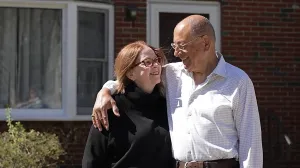
The license plates hold deep meaning for Diane’s family. “When I see a car on the road with the license plate, it fills my heart with joy,” says Diane’s sister, Janice Connolly-Laubenstein. “I know that funds are being raised to help those who are battling, those who beat it, and to remember those we lost.”
Today, the Fund supports cutting-edge breast cancer research by awarding a grant every two years to a researcher at Tufts Medical Center. It also sponsors educational opportunities, bringing leading experts—including specialists in aggressive forms like inflammatory breast cancer—to share their knowledge with the medical center community.
Thomas Schnelldorfer, MD, PhD is the current grantee of the Diane Connolly-Zaniboni Fund. Dr. Schnelldorfer is an Oncologic Surgeon at Tufts Medical Center who also serves as Director of the Surgical Imaging Lab.
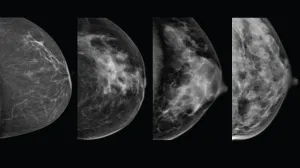
Dr. Schnelldorfer and his team are using artificial intelligence to help doctors make more personalized treatment decisions for women with advanced breast cancer. By teaching computers to analyze thousands of data points—from medical histories and lab results to CT scans and biopsy slides—they’re developing deep learning models that can predict how a woman with advanced breast cancer will respond to specific therapies such as chemotherapy or hormone treatment.
The algorithms learn to spot complex patterns in the data that signal resistance or sensitivity to different interventions, giving doctors powerful insights into the most effective path forward. Ultimately, this approach aims to develop digital twins—virtual versions of patients that allow doctors to test and simulate treatments before they’re given in real life. This model will help women and their care teams confidently choose the treatments most likely to work, leading to more personalized care and better outcomes.
Flexible funding like that provided through the ‘Cure Breast Cancer’ license plate program is crucial for advancing innovative research. Before researchers can compete for major grants from institutions like the NIH, they need to gather preliminary data to show that their ideas have real potential. Philanthropic funding bridges this gap by allowing scientists to take risks, explore bold new directions and generate the early results that are necessary to make their projects competitive for larger federal awards.
To honor Diane’s memory and support breast cancer patients throughout the Commonwealth, we invite you to learn more about registering for the ‘Cure Breast Cancer’ license plate here.
Discover more ways to support life-saving care at Tufts Medical Center