Epilepsy means the brain is more likely to have seizures, which can sometimes feel unpredictable. We help you understand what’s happening, learn about different types of seizures and choose the right treatment. Together, we support you so you can feel confident and ready for what comes next.
Epilepsy + Seizures



Keeping life on track through epilepsy + seizures
Epilepsy is a neurological condition that means the brain is more vulnerable to having seizures. About 1 in 26 people will develop epilepsy at some point in their lifetime. Seizures happen when there is a brief change in the brain’s electrical activity, which can interrupt normal brain function for a short time.
There are different types of seizures that can cause symptoms like staring spells, brief lapses in time, unusual sensations, muscle twitching or loss of consciousness with body stiffening and shaking. Seizures usually last seconds to a few minutes.
Our epilepsy and seizure specialists are here to support you every step of the way. We use advanced testing, review your symptoms and guide you through treatment options like medications, lifestyle strategies and surgery when needed. We help answer questions and provide ongoing care so you can move forward with confidence and clarity.
Find a doctor near me

Conditions
Our epilepsy and seizure neurologists provide care for people living with seizures and related neurological conditions. Epilepsy affects each person differently, so we take time to listen to your story, review your symptoms and use advanced testing to understand what’s happening in your brain. From there, we guide you through treatment options, including medications, lifestyle strategies and surgical options when appropriate, to build a care plan that fits your life.
We provide care for many types of seizures and epilepsy-related conditions, including:
- Absence seizures: Brief lapses in awareness or staring spells that may look like daydreaming
- Epilepsy syndromes: Recognized patterns of epilepsy, such as juvenile myoclonic epilepsy and temporal lobe epilepsy
- Focal seizures: Seizures that start in one part of the brain and may cause unusual sensations, movements or emotions
- Generalized seizures: Seizures that affect both sides of the brain and may cause staring, muscle jerks or full-body shaking
- Intractable epilepsy: Seizures that are difficult to control despite medical treatment
- Pediatric epilepsy: Care for infants, children and teens with seizures or epilepsy syndromes
- Secondary epilepsy: Seizures related to head injury, stroke, infection or other neurological conditions
- Seizure emergencies: Including prolonged seizures, also called status epilepticus, that need urgent care
Managing epilepsy is a lifelong process that requires a dedicated team. We provide ongoing care to monitor your symptoms, adjust treatment as needed and support you over time. Our goal is to help you understand your condition, explore your options and feel supported as you live your life on your terms.

Testing
Our epilepsy and seizure specialists use a range of tests to better understand your seizures and guide care. We work closely with neuropsychology, neuroradiology and neurosurgery teams when needed so you have the right expertise at every step.
Common tests may include:
- CT scan: Used when needed to look for injuries or other changes in the brain
- EEG (electroencephalogram): A safe and painless test that measures electrical activity in the brain and is commonly used to help diagnose epilepsy
- Extended EEG monitoring: Records brain activity over longer periods, either during a hospital stay or at home, to capture seizures and patterns
- MRI: Creates detailed images of the brain to look for structural changes
- Physical and neurological exams: Help assess how seizures may affect movement, thinking and reflexes
- Videos of seizure episodes: Home or hospital videos can help our team better understand the type and pattern of seizures
These tests help us identify the type of seizures you’re having and understand how your brain is affected. We use this information to guide next steps and build a care plan that supports you over time, so you feel informed and confident moving forward.

Treatments
Our epilepsy specialists work with you to create a personalized plan to manage seizures and support your daily life. For some people who have had only one seizure and normal test results, careful monitoring may be all that’s needed. In other cases, anti-seizure medication may be recommended to prevent future seizures.
We use a combination of medication and non-medication treatments to give you the best care:
- Anti-seizure medications: Selected to control seizures while minimizing side effects
- Clinical trials: Optional access to new and promising therapies
- Dietary strategies: In certain cases, a ketogenic diet guided by a registered dietitian can help control seizures
- Epilepsy surgery: Surgery may reduce or eliminate seizures, guided by our multidisciplinary team including neurosurgery
- Extended monitoring: Staying in our specialized unit to pinpoint where seizures start in the brain
- Responsive neurostimulation (RNS): An implanted device that monitors seizure activity and helps prevent seizures
- Vagus nerve stimulation (VNS): A device that sends gentle electrical pulses to the brain to help control seizures
Managing epilepsy is a lifelong process that requires a dedicated team. We provide follow-up care to monitor your symptoms, adjust treatments and answer questions. Our goal is to give you the guidance, support and expertise you need to live your life confidently.

FAQs
What’s the difference between a seizure and epilepsy?
You may think that having a single seizure or even a few seizures means you have epilepsy, but that’s not always the case. To be diagnosed with epilepsy you need to have two seizures at least 24 hours apart that can’t be explained by another condition. We help you understand what your seizures mean and what comes next.
What causes seizures?
Seizures can have many causes. These include genetics, head injuries, infections, or even unknown reasons. Part of our job is to look at every angle so we can understand what’s triggering your seizures and how to treat them.
How do I know if I need epilepsy testing?
You may need testing if you had a first seizure, keep having seizures even with medicine, or if your doctor wants help deciding the next step. Our team uses tools like EEG, MRI, neuropsychology testing, and video monitoring to get the full picture.
What types of seizures can you help with?
We care for all seizure types, including focal seizures, generalized seizures, absence seizures, and seizures that don’t respond well to medicine. If you’re not sure what type you have, that’s okay. We help you figure it out.
Is EEG testing painful?
No. EEGs are safe and painless. We place small sensors on your scalp to measure electrical activity in your brain. We offer quick EEGs, longer monitoring in the hospital, and at-home EEG options so we can see what happens during your daily routine.
What happens during long-term video EEG monitoring?
You stay with us for a few days so we can record your brain activity and capture a seizure in real time. This helps us see where the seizure starts and how it spreads. The room is comfortable and you’re never alone. Our team watches closely around the clock.
What treatment options do you offer for epilepsy?
We build a plan that fits your needs. Your plan may include medicines, diet changes, neuromodulation like VNS or RNS, or epilepsy surgery. We explain how each option works so you always know why we recommend it.
What is epilepsy surgery and when is it considered?
Epilepsy surgery is a treatment option for seizures that don’t improve with medicine. Surgery focuses on the area of the brain where seizures begin. Before recommending surgery we do detailed testing to learn if surgery is safe and if it may help reduce seizures.
What is neuromodulation?
Neuromodulation uses small devices like VNS or RNS to change brain signals and help lower seizures. These devices don’t remove brain tissue. They gently guide the brain’s electrical activity to make seizures less likely.
Can lifestyle or triggers affect seizures?
Yes. Stress, lack of sleep, dehydration, flashing lights and missed medication can trigger seizures for some people. We help you understand your triggers and how to manage them.
Will I need seizure medication forever?
Some people take medicine long term and some don’t. It depends on the type of seizures you have and how often they happen. Your doctor talks you through this and checks in with you over time.
How do we get started with epilepsy care?
Start by talking with your primary care doctor. They can send a referral to our team. After that we help you schedule testing, meet our specialists, and learn what to expect at every step.
What is neurology and what do neurologists do?
Neurology is the area of medicine that focuses on the brain, spine and nerves. These systems guide how we think, move and feel, so they play a big role in understanding seizures and epilepsy. Neurologists are doctors who diagnose and treat conditions that affect the nervous system. They look at your symptoms, review test results like EEGs and MRIs and help build a care plan that fits your needs. Pediatric neurologists focus on growing brains and support children and teens with seizure concerns or pediatric epilepsy. Together, our neurology team helps you find answers and understand the next steps in your care.
Related services + treatments
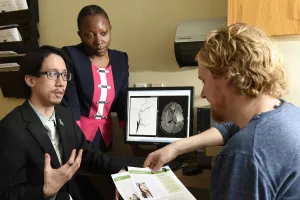
Department of Neurology
Academic Department
When our specialty lies in treating an entire system inclusive of nearly 85 billion neurons, we must collaborate with experts from nearly every branch of medicine to create indisputable improvements in patients’ lives.