Living with seizures can be challenging, especially when medicines aren’t enough to fully control them. Our neurosurgery team offers advanced epilepsy and seizure surgery, using the latest techniques to help reduce or even stop seizures. We guide you every step of the way, from testing to treatment to recovery, so you can feel confident, supported and ready to live life on your terms.
Epilepsy + Seizure Surgery
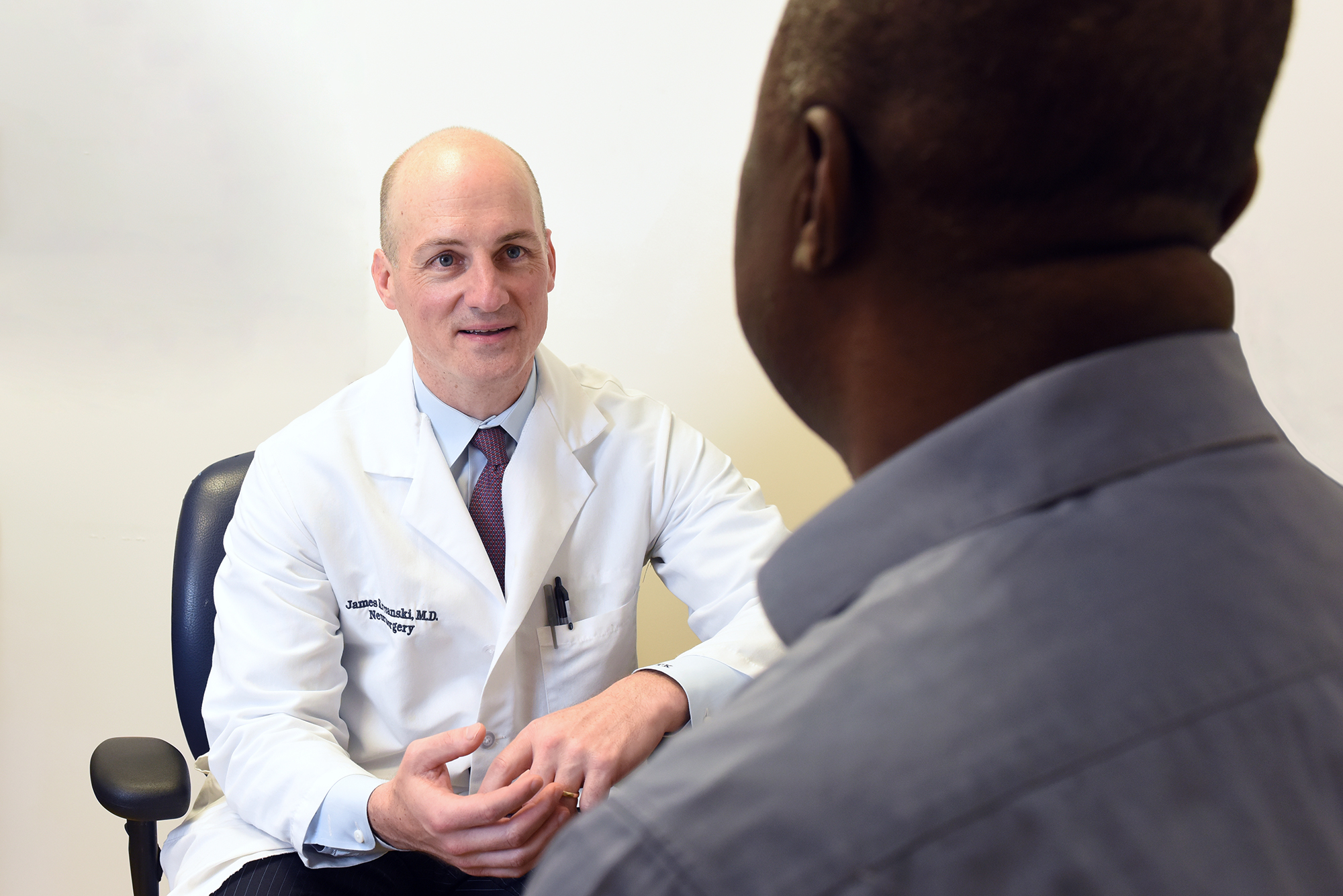


Take control of your brain waves with epilepsy surgery
At Tufts Medicine, our neurosurgery team offers advanced epilepsy and seizure surgery using the latest techniques. This may include removing the small part of the brain where seizures begin or implanting devices that help control brain signals. Surgery is an option when medicines aren’t enough to fully control seizures, with the goal of reducing or even stopping them.
Even if you know what triggers your seizures, they can still feel overwhelming. Our team uses tools and technology, like the RNS® System and Vagus Nerve Stimulator (VNS), to help make seizures less frequent and life more manageable.
Find a doctor near me

Conditions
Some seizures aren’t fully controlled with medicine alone. That’s where advanced epilepsy and seizure surgery can make a difference. Surgery targets the areas of the brain where seizures start or uses technology to help regulate brain signals, aiming to reduce or even stop seizures.
Conditions that may benefit from surgery include:
- Complex seizure disorders: Other types of seizures that are hard to manage with medicine alone
- Drug-resistant epilepsy: Seizures that continue despite medications
- Focal epilepsy: Seizures that begin in one part of the brain
- Generalized epilepsy: Seizures affecting both sides of the brain
- Temporal lobe epilepsy: Seizures starting in the temporal lobe
Our team works with you to carefully evaluate whether surgery is right for your situation. With advanced techniques and support, we aim to give you better seizure control and greater confidence in daily life.

Testing
If surgery is right for you, our team conducts a thorough evaluation to pinpoint exactly where seizures start. This careful approach helps make surgery as safe and effective as possible, giving you the best chance to reduce or even stop seizures.
Our advanced testing may include:
- EEG (electroencephalogram): Measures brain activity to identify seizure patterns
- Video EEG monitoring: Tracks seizures in real time while you’re monitored
- MRI and advanced brain imaging: Locates the precise area of the brain causing seizures
- Neuropsychological testing: Assesses memory, thinking and other brain functions to guide surgical planning
- Invasive monitoring: If needed, small electrodes may be placed on or inside the brain for exact mapping
These tests allow our expert neurosurgeons to create a personalized surgical plan designed to reduce or stop seizures while protecting your brain function.
We guide you through every step, providing clear explanations, support and reassurance, so you feel confident, informed and empowered about your care.

Treatments
After testing and evaluation, our team works with you to determine the best surgical approach for your seizures. Every person’s epilepsy is different, so our goal is to create a personalized plan tailored to your needs. This careful process helps give you the best chance to reduce or even stop seizures while keeping your brain function safe.
The process begins with reviewing your test results and mapping where seizures start in the brain. Based on this information, our neurosurgery team discusses all possible surgical options with you, explaining how each works, the benefits and what to expect during recovery.
Depending on your situation, treatment options may include:
- Resective surgery: Removing the small part of the brain where seizures begin
- RNS® System (Responsive Neurostimulation): A device that monitors and interrupts seizure activity in real time
- Stereotactic laser interstitial thermal therapy (LITT): Precise laser therapy targets and removes seizure-causing brain tissue
- Vagus Nerve Stimulator (VNS): A device that sends gentle signals to the brain to help control seizures
- Other advanced procedures: Specialized approaches for complex seizure disorders
We guide you through every step of the decision-making and surgical process, so you feel informed, confident and supported. Our team answers questions, provides resources and ensures you understand the next steps.
With careful evaluation, advanced technology and expert care, our goal is to help you regain control, reduce seizures and improve your quality of life.

FAQs
How do I get referred for epilepsy surgery?
Most people start with a neurology visit. If your seizures are not fully controlled with medicine, your neurologist may refer you to our epilepsy surgery team. You can also ask your neurologist about a referral at any time. Once you are referred, we guide you through testing, appointments and next steps.
How do neurology and neurosurgery work together?
Neurology focuses on diagnosing seizures and managing medicines. Neurosurgery steps in when seizures continue even with the right medicine plan. Our teams work side by side to study your brain activity, review test results and decide which surgical options may help. You get one connected care team working together for you.
What is epilepsy surgery?
Epilepsy surgery is a treatment that targets the part of the brain where seizures start. It can involve removing a small area of brain tissue or placing a device that helps control brain signals. The goal is to reduce or stop seizures when medicines are not working well enough.
How do we know if surgery is right for you?
We start with testing to learn where your seizures begin and how they affect your brain. Then we review the results with you and walk through all your choices. Surgery may be a good fit if medicines have not controlled your seizures or if testing shows a clear spot where they start.
Is epilepsy surgery safe?
Epilepsy surgery is carefully planned and performed by experts who specialize in seizure care. We use detailed brain mapping, advanced imaging and the latest technology to help keep your brain function safe. We explain every step so you know what to expect.
What are the benefits of epilepsy surgery?
The biggest benefit is better seizure control. Some people have fewer seizures and some stop having seizures. Many people also feel more confident moving through daily life with better control and fewer limits.
What types of surgery do you offer?
We offer several options, including resective surgery, the RNS System and vagus nerve stimulation (VNS). Each works differently and we help you understand which approach may fit your needs.
What is recovery like?
Recovery depends on the type of surgery you have. Some procedures involve a short hospital stay, while device-based treatments like RNS or VNS may have a quicker return to daily activities. We guide you through healing, follow-up visits and ongoing support.
Can surgery cure epilepsy?
Surgery can greatly improve seizure control and some people do become seizure-free. Everyone’s epilepsy works differently, so results vary. We explain your specific outlook based on your testing.
Do I still need medicine after surgery?
Some people continue taking medicine after surgery and others may be able to reduce it over time. This depends on your seizure type and how well surgery works for you. We create a long-term plan together.
Will insurance cover epilepsy surgery?
Most insurance plans cover epilepsy surgery and the testing that comes with it. We help you understand your coverage before you move forward.
Related services + treatments
Department of Neurosurgery
Academic Department
Our neurosurgeons are pioneering new approaches to treating complex disorders of the brain and spine through advanced surgical techniques, research, innovation and education, helping shape the future of neurosurgical care.