
Small enough to know each resident and what they hope to build

Welcome to the Tufts Medical Center Neurology Residency Program.

What excites me most about our program is that we know our residents individually and build an exceptional neurologist with each of them. Our purpose is to help every resident pursue a career that is distinctly their own while ensuring that every graduate shares an exacting foundation in classical clinical neurology.

We welcome seven residents each year. At that scale, I can know what each resident does well, where they are struggling and what they hope to build. That knowledge shapes the feedback, mentorship, opportunities and progressively greater responsibility they receive. We set high expectations, but we do not expect residents to meet them alone. My responsibility as program director is to recognize each resident's potential, be candid about what their growth requires and make sure they have the support and opportunities to achieve it.

Our residents’ training spans four years, beginning with a preliminary year in internal medicine. We consider that year an essential part of becoming a neurologist, not an obstacle to get through before neurology begins. Neurologic patients are medical patients. The judgment residents develop while learning to care for them becomes part of the foundation they draw upon throughout their careers.

At the center of our teaching is clinical neurology: taking a history that has already narrowed the differential, examining carefully enough that the findings are worth reasoning from and localizing before naming. Modern imaging and diagnostic technology have transformed our field, but they have not replaced the neurologist's fundamental work - listening closely, examining carefully, localizing precisely and making sound decisions when the answer is uncertain and cannot wait until morning.

Residents learn this work within a community deliberately designed to support them. Every resident joins a pod at the beginning of the preliminary year. Each pod includes one resident from every year of training and a faculty mentor. From the start, a first-year resident has a faculty member and three more-senior residents looking out for them. I am proud of the culture this creates: residents are known early, supported consistently and taught to take responsibility for one another.

Neurology residency is demanding, and we believe rigor should coexist with humane, transparent scheduling. Overnight coverage in the neurology years is organized through night float, with no 24-hour shifts. The preliminary medicine year follows the internal medicine program's own schedule. Tuesday afternoons, from 1:00 pm to 5:00 pm, are protected for teaching and remain protected. These choices reflect our belief that excellent training requires both meaningful responsibility and the time and structure to learn from it.

Our more than 40 full-time faculty members across Tufts Medical Center and Lahey Clinic represent the breadth of modern neurology, including stroke, epilepsy, neurocritical care, neuro-oncology, movement disorders, neuromuscular medicine and neurophysiology. Just as importantly, they are deeply committed to teaching and mentorship. Whether a resident sees a future in academic medicine, research, education, community practice, subspecialty care or a path they have not yet discovered, we work to connect them with people and experiences that will help make that future possible.

Our investment in residents does not end at graduation. We remain mentors, colleagues, advocates and friends throughout their careers. The enduring relationships among our residents, faculty and graduates are among the things I value most about this program and among the hardest to convey on a website.

I hope you will look closely, ask our residents candid questions and imagine what you might build here. We would be genuinely excited to learn who you are, what kind of neurologist you hope to become and how we can help you get there. If you choose Tufts, you will join a community that will know you, challenge you, support you and remain invested in you long after residency.
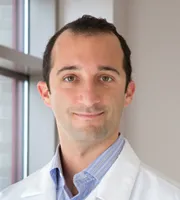
Joshua Kornbluth


Joshua Kornbluth, MD
Vice Chair of Education and Training, Department of Neurology 
Program Director, Neurology Residency 
Medical Director, Michael Neely Neurosciences Critical Care Unit 
Associate Professor of Neurology and Neurosurgery, Tufts University School of Medicine


Display title
Message from the Program Director
Eyebrow
Neurology Residency Program

A close training community built around mentorship, feedback and earned responsibility

Applicants can find a rotation schedule on almost any residency website. What is harder to see is what a program is actually like to be in. At Tufts, the answer begins with scale, access and attention.

We train seven residents per class. In a program that size, faculty and residents work closely enough for teaching to be specific. Feedback can be based on observed clinical reasoning, bedside examination, communication, judgment and growth over time. Mentorship happens on rounds, in clinic, after consults, during career conversations and through a longitudinal resident pod structure.

Longitudinal pods

Each resident joins a Mentorship Pod that includes residents across PGY levels and a faculty mentor. Pods begin during internship and continue through residency. Each pod is a smaller community within the program, there for clinical advice, career planning, peer support and professional development. As senior residents graduate, pods renew and the culture of teaching and mentorship passes from one class to the next.

Supervision that evolves

We believe independence should be taught deliberately. Early in training, residents need close bedside teaching, immediate feedback and help building the habits of neurologic localization and clinical synthesis. As residents demonstrate readiness, they take on larger roles in consultation, inpatient leadership, teaching and supervision. The goal is not autonomy for its own sake; it is preparation for the moment when a graduate is the neurologist responsible for the patient, the team and the decision.

A culture of serious training and real support

The program is rigorous because the work of neurology is rigorous. It is also personal. Faculty know residents well, residents support one another and the program encourages each of them to build a career that reflects their own strengths and ambitions. Some graduates pursue competitive fellowships, some build research careers, some become educators and some enter independent practice. The shared foundation is clinical judgment strong enough to travel with them.

Display title
About Our Program
Eyebrow
Neurology Residency Program

Tufts Medical Center neurology residency with subspecialty + research training

At Tufts Medical Center, neurology residency begins with the work that defines the field: listening carefully, examining precisely, localizing thoughtfully and making decisions for patients whose problems are often complex and uncertain.

Our program trains seven residents per class. That size matters. Faculty know residents through their clinical work, not simply through periodic evaluations, and responsibility increases as each resident demonstrates readiness. Close supervision and earned autonomy develop together, preparing graduates to practice with judgment, confidence, and humility.

Residents train in a major academic medical center and a strong affiliated health system, with exposure to inpatient neurology, neurocritical care, stroke, consultation, ambulatory neurology and the major subspecialties. Bedside teaching, formal conferences, continuity clinic, electives, research mentorship and direct feedback all serve the same goal: helping each resident become the neurologist patients and colleagues trust when the diagnosis is difficult and the decision matters.

Our graduates leave prepared for whatever comes next: competitive clinical fellowship, research or academic development, teaching or independent practice in general neurology.

Program highlights:

  • Seven residents per class, small enough that faculty and program leaders know trainees individually.
  • A strong foundation in classical clinical neurology, paired with contemporary evidence and modern diagnostic tools.
  • Progressively earned independence across inpatient, consultative, ambulatory and subspecialty experiences.
  • Longitudinal mentorship through faculty, senior residents, and structured resident pods.
  • Career preparation for fellowship, research, academic medicine, education and independent clinical practice.
Display title
Neurology Residency Program
OS! Approach Self-Evaluation Support Tool - OS!
info Contact author for availability

Characteristics

Domains: Organizational Health Literacy
Specific Context: Organizational Health Literacy
Validation Sample Age:
Modes of Administration:

Psychometrics

Number of Items: 18
Validation Sample Size:

Advance your career in sleep medicine in Boston

Welcome to the Sleep Medicine Fellowship Program at Tufts Medical Center! We are thrilled to have you join our team and embark on this exciting journey into the dynamic and rapidly evolving field of sleep medicine.

Our fellowship program is designed to provide you with comprehensive clinical training, cutting-edge research opportunities​ and a supportive educational environment. Throughout your fellowship, you will gain expertise in diagnosing and managing a broad spectrum of sleep disorders, including insomnia, sleep apnea, restless legs syndrome, narcolepsy​ and many others.

We are committed to fostering your professional growth and helping you develop into a skilled clinician, educator, and researcher. Our multidisciplinary faculty, comprising experts in pulmonology, neurology, dental sleep, oral maxillofacial surgery, clinical psychology​ and pediatric and adult otolaryngology, will guide you every step of the way.

We encourage you to take full advantage of the diverse patient population, state-of-the-art facilities​ and collaborative atmosphere here at Tufts Medical Center. Your dedication and enthusiasm will be key drivers in your success.

We look forward to sharing what our program has to offer and supporting your journey toward becoming a leader in sleep medicine at our program.

Warm regards,

  • Aarti Grover, MD
    Program Director
  • Rajesh Zacharias, MD
    Associate Program Director
Display title
Message from the Program Director
Eyebrow
Sleep Medicine Fellowship
Jump back to top