You went in for a scan for one reason and came away with more questions: What's that spot on my lung? Could it be cancer?
Lung nodules are often discovered by chance during imaging for another health concern. Hearing that something has been found can be frightening, especially when you feel fine and weren't expecting anything to be wrong.
The good news is that most lung nodules aren't cancer. According to the American Thoracic Society, only about 5% are cancerous. The important thing is understanding what the scan shows and whether the nodule needs further evaluation.
At Tufts Medicine, lung nodule clinics bring together specialists from pulmonology, thoracic and oncology to help patients determine what comes next. Clinics at Tufts Medical Center, MelroseWakefield Hospital and Lowell General Hospital offer access to this specialized care right in the community.
We spoke with pulmonologists Marianne Barry, MD, Director of Interventional Pulmonology and Assistant Professor at Tufts University School of Medicine, and Maureen Dziura, MD, Director of Outpatient Pulmonary Services at Lowell General Hospital and Assistant Professor at Tufts University School of Medicine, about what patients should know if they've been told they have a lung nodule.
What is a lung nodule?
A lung nodule is a small area of tissue that looks different from the surrounding lung on an imaging scan. Nodules are very common, and many are found incidentally during tests for another health concern.
Some are linked to previous infections or inflammation. Others have no clear cause, and a small percentage are cancerous. Its size and appearance, whether it has changed over time and your medical history all help doctors determine whether it needs further evaluation.
"I think people hear the word 'nodule' and immediately worry about cancer, which is understandable, but a nodule is a finding, not a diagnosis," says Dr. Dziura. "Even though most lung nodules aren't cancer, it's very important to have someone look at the scan, explain what it means and make sure there's an appropriate plan in place."
What happens at a lung nodule clinic?
The team starts by reviewing your imaging and medical history to assess the nodule and determine whether it needs further evaluation. A dedicated nurse navigator helps coordinate care and connect you with the right next steps.
"When someone is referred to us, one of the first things we do is review the chest CT and determine what the appropriate next steps are. Some patients need monitoring and other patients need additional testing or biopsy need more testing. Having the right specialists involved from the start helps ensure we can make the right decision and move forward quickly if needed," says Dr. Barry.
Will I need more tests?
Not necessarily. Some nodules can be monitored with a low dose CT (LDCT) scan—a quick, painless X-ray test that uses up to five times less radiation than a standard CT scan—to see whether they change over time. If a nodule grows or develops features that raise concern, the team may recommend additional testing.
Depending on the nodule's location and appearance, that testing may include a PET scan, bronchoscopy or biopsy. These tests can help doctors determine what the nodule is and whether treatment is needed.
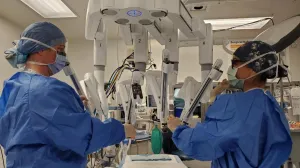
Learn more about robotic-assisted bronchoscopy available at Tufts Medical Center.
Not every nodule needs a biopsy or treatment. The goal is to get the information needed to make an informed decision while avoiding unnecessary procedures. If a nodule is found to be cancerous, your care team can discuss treatment options based on the type and stage of the cancer and your overall health.
Whatever the recommendation, follow-up matters. If your doctor advises another scan or appointment, keep it even if you feel well. Changes in a nodule may not cause symptoms.
Will my insurance cover a lung nodule evaluation?
Coverage depends on your insurance plan and the services recommended. Contact your insurer before your appointment to confirm whether the hospital and specialists are in network, whether you need a referral or prior authorization and what copays, deductibles or other out-of-pocket costs may apply. You can also review insurance plans accepted at Tufts Medicine.
Can I develop lung cancer if I've never smoked?
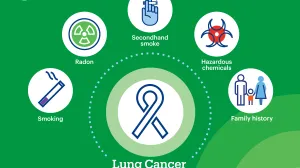
Yes. Smoking is the leading risk factor for lung cancer, but people who have never smoked can develop it, too. Radon, a naturally occurring radioactive gas that can build up inside homes, is the leading cause of lung cancer among nonsmokers. Secondhand smoke, air pollution, certain workplace exposures and family history can also contribute.
Routine lung cancer screening recommendations are based largely on age and smoking history, so screening isn't recommended for everyone. However, if a scan has already revealed a lung nodule, it should be evaluated based on its characteristics and your individual risk factors, regardless of whether you've smoked.
Learn if a lung cancer screening is right for you.
The bottom line
Finding a lung nodule can raise difficult questions, but it doesn't automatically mean cancer. What matters is understanding your individual risk, knowing whether the nodule needs further evaluation and having a clear plan for follow-up.