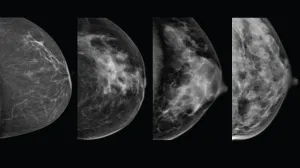
Traditionally, that process often involves removing the cancer first and then, in a later procedure, reconstructing the breast to restore shape and symmetry. That's where oncoplastic breast surgery comes in. Instead of separating cancer removal and reconstruction into different steps, oncoplastic surgery combines both approaches into a single operation. It treats the cancer effectively while also paying close attention to breast shape, sensitivity, symmetry and appearance from the start.
"Oncoplastic surgery lets us remove more tissue in order to achieve negative, or clean, margins and reduce the likelihood of cancer being left behind," says leading oncoplastic surgeon Sarah Persing, MD, MPH. "And it lets us do that in a way that helps patients feel comfortable in their bodies and more like themselves as they heal."
For many patients, that combination of effective cancer treatment and thoughtful attention to recovery experience is what makes this approach feel different.
What is oncoplastic breast surgery?
Oncoplastic breast surgery combines tumor removal with reconstructive techniques in a single procedure. Instead of performing a standard lumpectomy alone, surgeons use careful planning and plastic surgery principles, often working with a patient's own tissue, to preserve breast shape. In some cases, both breasts are addressed during the same operation to help improve symmetry.
"For many patients, we're planning the cancer surgery and reconstruction together from the very beginning," Dr. Persing explains. "That allows us to think ahead about shape, balance and how everything will heal over time. It also allows us to remove the cancer more effectively while maintaining the shape of the breast, all in one surgery."
For example, a patient with larger breasts may undergo a reduction-style procedure that removes the tumor while also relieving discomfort related to breast size. The other breast can be reshaped at the same time to support symmetry.
How is this different from traditional breast cancer surgery?
Traditional surgical options usually include:
- Lumpectomy (removing the tumor)
- Mastectomy (removing the breast)
With a standard lumpectomy alone, the rate of positive margins—meaning cancer cells remain at the edge of the removed tissue—can range from 20-40%. With oncoplastic surgery, positive margin rates are typically closer to 5-7%. At Tufts Medicine, where surgeons perform a high volume of these procedures and use advanced techniques, rates are even lower.
Oncoplastic surgery builds on lumpectomy by adding reconstruction during the same operation. By reshaping tissue during surgery, surgeons can help reduce visible changes such as dents, unevenness or contour differences and support a smoother overall recovery experience.
What is a Goldilocks mastectomy?
A Goldilocks mastectomy is a reconstructive mastectomy approach that uses advanced surgical design techniques to optimize the final breast shape.
In this procedure, a breast lift pattern is used during surgery. The remaining skin and tissue are then reshaped to create a breast mound, with or without implants.
"It gives us another way to tailor the reconstruction to the patient," says Dr. Persing. "Even when a mastectomy is the right treatment, there are still thoughtful options that can help support how someone feels after surgery."
This technique can also be used to improve implant-based reconstruction or reconstruction using a patient's own tissue. At Tufts Medicine, we use advanced local tissue techniques to help recreate breast shape after mastectomy.
Who is a candidate for oncoplastic surgery?
If you're a candidate for a lumpectomy, you may also be a candidate for oncoplastic breast surgery. This can include patients with early-stage breast cancer, those who want to preserve breast shape and patients whose anatomy allows for reshaping. Every plan is individualized, and much of the process is about aligning treatment with patient goals.
Why women are choosing oncoplastic surgery
For many women, oncoplastic surgery is appealing because it brings cancer treatment and reconstruction into a single, coordinated plan. Patients also report greater satisfaction with their outcomes compared to mastectomy with reconstruction.
- Strong outcomes
Oncoplastic surgery follows the same standard of care as traditional approaches, with the same recurrence and survival rates. - Thoughtful attention to breast shape and symmetry
Surgery is planned with reconstruction in mind from the start, which helps support a more balanced result. - Use of your own tissue when possible
When appropriate, using a patient's own tissue can help the breast feel more familiar after surgery. - A coordinated surgical approach
Cancer removal and reconstruction happen in the same operation, which simplifies the overall treatment process. - Fewer additional surgeries when possible
Because surgeons can remove more tissue safely while reshaping the breast at the same time, there is a lower likelihood of needing another operation later, such as a re-excision.
"That's something our patients really appreciate," says Dr. Persing. "We can achieve better cancer removal and a good result in one operation, it means less time recovering, less disruption to daily life and fewer additional procedures whenever possible."
For many patients, combining what has traditionally required separate surgeries for cancer removal and reconstruction can reduce the financial impact, recovery time and the physical and emotional strain that can come with multiple procedures.
"Every woman comes in with different priorities," Dr. Persing says. "Our job is to treat the cancer effectively while also understanding what will help them feel most comfortable moving forward."
Will my breast look and feel the same?
Because oncoplastic surgery often uses a patient's own tissue, results can feel more familiar than other reconstruction methods.
Many patients describe their body as feeling more aligned with how they remember it compared to what they expected before surgery. Compared to implant-based reconstruction after mastectomy, oncoplastic approaches also helps preserve more natural sensation and breast shape.
What can I expect from recovery?
Recovery is similar to other breast surgeries. Most patients feel largely back to normal within about two weeks, with a return to full activity, including exercise, around six weeks. Your care team will guide you through recovery based on your procedure and individual needs.
A more personalized approach to breast cancer care
One of the things that stands out most about oncoplastic surgery is how individualized it is. Surgical planning depends not only on the cancer itself, but also on where it is located within the breast and what matters most to the patient.
"We spend a lot of time talking with patients about what matters to them," Dr. Persing says. "How they want to feel after surgery, what recovery looks like for their life and how we can align the surgical plan with those goals."
That shared decision-making helps ensure treatment supports not only cancer outcomes but also how patients experience life after surgery.
FAQ: Oncoplastic breast surgery
What is oncoplastic breast surgery?
It combines breast cancer removal with plastic surgery techniques to reshape the breast during the same operation.
Is oncoplastic surgery safe?
Yes. It follows standard-of-care cancer surgery principles and has similar recurrence and survival outcomes to traditional approaches.
Does it reduce the need for more surgery?
Yes. It can reduce the likelihood of additional procedures such as re-excision and, in some cases, may help patients avoid mastectomy.
How long is recovery?
Most patients return to normal activities in about two weeks and resume full activity in about six weeks.
The bottom line
Oncoplastic breast surgery is a more personalized approach to breast cancer care that treats the disease effectively while also thoughtfully considering breast shape, sensation, symmetry and recovery experience. It offers the same standard of cancer care and survival outcomes while helping many women maintain, restore or even improve breast appearance after surgery.
Learn whether oncoplastic breast surgery is an option for you.