What is anesthesia, anyway?
Put simply, anesthesia is a medication that helps prevent pain during a procedure. It can make you feel relaxed, drowsy or even completely unconscious, depending on the type used. There are 3 main types of anesthesia: local, regional and general. Your healthcare team will choose the one that's best suited for the procedure you're undergoing.
- Local anesthesia: Numbs a small area of your body.
- Regional anesthesia: Numbs a larger region of your body, like an entire arm or leg.
- General anesthesia: Puts you into a sleep-like state so you’re completely unaware of what’s happening.
For some simple procedures, like colonoscopies, you may get IV or monitored sedation. This helps you relax while still being awake and responsive.
Before the procedure: Prepare for a calm experience
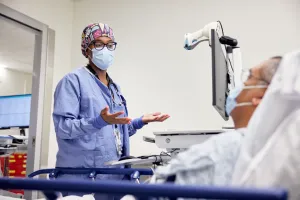
Before any anesthesia is administered, you’ll have a conversation with your anesthesiologist or nurse. They’ll ask about your medical history, any allergies and previous experiences with anesthesia. This is the perfect time to voice any concerns you have — they’re here to help you feel comfortable.
You’ll be asked to fast for several hours before your procedure. This ensures your stomach is empty, which helps reduce the risk of complications during anesthesia.
The process: Feel safe + supported
Once you’re ready for the procedure, you’ll be taken to the operating room, where a team of skilled professionals will be there to guide you through every step. Here’s what typically happens:
- Getting set up: If you’re having general anesthesia or IV sedation, you’ll be hooked up to an IV. This is where the medication will be delivered. It may sting a little at first, but it’s a quick and easy step. For regional or local anesthesia, the process may involve a few injections to numb the area.
- Feeling relaxed: Once the anesthesia starts to take effect, you may feel a sense of warmth or drowsiness. Don’t worry if you feel a little light-headed or relaxed—that’s just the anesthesia doing its job.
- Drifting off: For general anesthesia, you’ll gradually drift off into a deep sleep. The last thing you might remember is the mask or IV being placed, and then you’ll wake up later in a recovery room, feeling like only a few minutes have passed. You won’t feel any pain during the procedure because the anesthesia keeps you comfortable and unaware.
During the procedure: You’re in good hands
While you’re under anesthesia, the medical team is closely monitoring you. They’re checking your vital signs, making sure you’re stable, and adjusting the anesthesia as needed. You won’t feel a thing, but they’re constantly keeping an eye on everything to ensure you’re safe and sound.
Waking up: Recovery + comfort
When your procedure is over, the anesthesia will begin to wear off, and you’ll gradually start to wake up in a recovery room. You may feel groggy, disoriented or even a little chilly — all of this is normal. You’ll also likely be given some oxygen and may need a bit of time to fully wake up.
Don’t be surprised if you feel a little emotional or confused when you first wake up. This is a common reaction, and it typically passes quickly. Your nurses will be right by your side, offering comfort and reassurance as you get your bearings.
After the procedure: Taking care of yourself
Once you’re awake and alert, the anesthesia’s effects will start to fade. If you had a local or regional anesthetic, you might feel some tingling or weakness in the area, but that will wear off soon enough. If you had general anesthesia, you might be asked to stay in the recovery room for a little while longer until you’re feeling more yourself.
You’ll likely be given instructions for aftercare, including when you can eat, drink and take any medications. You might need someone to drive you home, as you may still feel a bit groggy.
Final thoughts: You’re not alone
It’s completely natural to feel a bit nervous about anesthesia, but rest assured, the process is safe, and you’re in the hands of professionals who are dedicated to your well-being. By understanding the process and knowing what to expect, you’ll feel more confident and prepared.
Take comfort in knowing that anesthesia is a vital tool that helps make procedures more comfortable and less stressful. If you have any concerns before your procedure, don’t hesitate to ask your healthcare team. We’re here to ensure you’re comfortable and informed every step of the way.