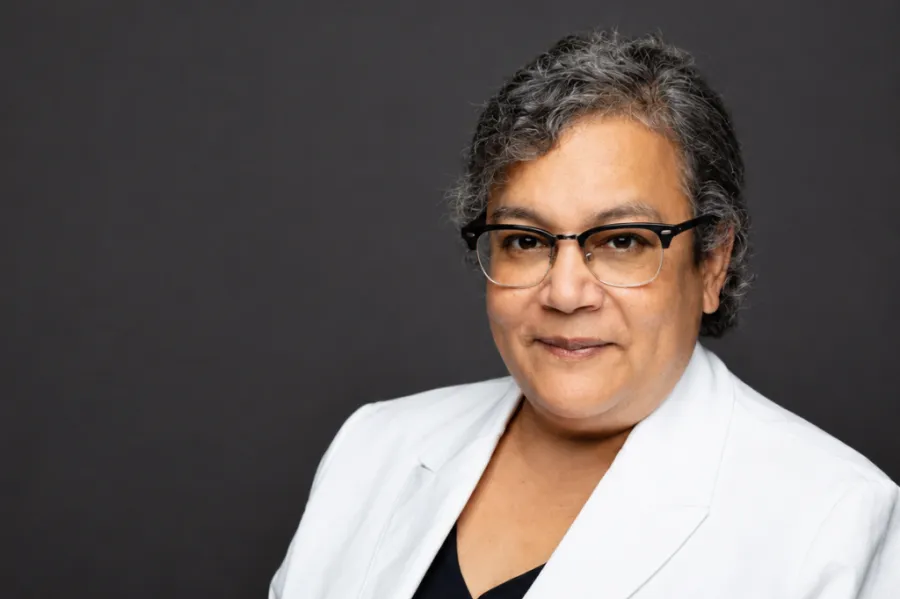
After fulfilling her childhood dream of becoming a neurosurgeon, Dr. Burkarth found a calling in hospice and palliative medicine. Today, as Chief Medical Officer of Tufts Medicine Care at Home, and the recently elected Board of Directors President of the Hospice Medical Director Certification Board, she reflects on the journey that shaped her career and why helping patients make the most of every day remains a privilege.
1. You knew from a very young age that you wanted to become a physician. How did that journey eventually lead you to hospice and palliative care?
I grew up in Brooklyn, and from the time I was about 5 years old, I wanted to be a neurosurgeon. When I was that age, my father was diagnosed with a benign brain tumor, a meningioma. I was always with my mom, so I was there when the neurosurgeon explained what was happening. He told us that my father had something like a grapefruit in his head, and that he was going to go in, remove the grapefruit and that was it. I remember thinking, “I want to take grapefruits out of people’s heads.”
And from that point on, I wanted to be a brain surgeon. I went to medical school, trained in neurosurgery and thought that was exactly where my career would take me.
I loved the science and the challenge of caring for patients with complex neurologic conditions. I also found it incredibly meaningful to sit with patients and families, to help them understand what was happening and guide them through some of the most difficult decisions they would ever have to make.
Several years into my practice as a neurosurgeon and after having my child, I was looking at my own family’s needs and how I could be more present for them while pursuing my career. Around that time, I attended a conference on hospice care and felt a connection with the work that those clinicians were doing. That realization helped lead me to hospice and palliative medicine, where those conversations are at the center of everything we do.
People often think our work is about death, but our mission is to help people live as well as they can for as long as they can. Whether someone is newly diagnosed with a serious illness or nearing the end of life, we're focused on relieving suffering, managing symptoms and helping people make the most of the time they have.
Every patient is different, which is why every conversation starts with the same question: What matters most to you? Once we understand the answer, we can combine our medical expertise with a patient's goals and values to create a care plan that's right for them. It's an incredible privilege to help people navigate those moments, and it's what has kept me passionate about this work throughout my career.
2. Many people still aren't sure what hospice and palliative care actually are. How do you explain the difference?
Both hospice and palliative care are centered on improving quality of life, but they support patients at different points in their healthcare journey.
- Palliative care can begin at any stage of a serious illness and can be provided alongside treatments intended to cure or control disease. We help patients manage symptoms, understand complex medical decisions and continue living the life that's meaningful to them.
- Hospice care builds on those same principles when someone is nearing the end of life. The focus shifts from curing disease to maximizing comfort, dignity and quality of life for both the patient and their loved ones.
One of the biggest misconceptions is that choosing palliative care or hospice means giving up. It's really the opposite. Our role isn't to make decisions for patients—it's to give them the information, guidance and support they need to make the decisions that are right for them.
3. You've described this work as a "team sport." What do you mean by that?
No one person can meet all of a patient's needs. The best care happens when physicians, nurses, nurse practitioners, social workers, chaplains, home health aides, therapists, bereavement councilors and volunteers work together toward the same goal. Every member of the team brings a different perspective.
That collaboration extends beyond our own team. We work closely with primary care physicians, specialists, hospital teams and caregivers because everyone has an important role to play. Healthcare has become incredibly complex, and no one succeeds by working in isolation. When we come together around what's best for the patient, everyone benefits.
4. How does this work at Tufts Medicine?
One of our greatest strengths is that we're integrated with the rest of Tufts Medicine. Because we're part of one health system, collaboration happens naturally. We can partner with colleagues across specialties, share ideas and solve problems together in ways that directly benefit our patients.
We're seeing more and more of that collaboration across the system. Colleagues are reaching out, bringing the right people together and looking for ways to get to "yes." It's about finding solutions that work for our patients and their families while also supporting the colleagues caring for them across Tufts Medicine.
That's one of the things I value most about Tufts Medicine. We have the expertise of an academic medical center combined with a culture that's collaborative, practical and focused on doing what's best for patients.
5. What's the most important lesson you've learned from caring for patients and families throughout your career?
One lesson has stayed with me from the very beginning: people aren't looking for someone to make decisions for them. They're looking for someone they can trust. Patients come to us for our expertise, but they also want someone who will listen, someone who will understand what's important to them, whether that's attending a grandchild's wedding, staying in their own home or just being comfortable. Every patient defines quality of life differently, and our job is to honor that.
When we take the time to understand a person's goals and values, we can combine our medical knowledge with what's most important to them. That's what patient-centered care really means. It's also why I still love this work after all these years.
Whether you're living with a serious illness or looking for support for a loved one, Tufts Medicine Care at Home provides compassionate hospice and palliative care focused on what matters most to each patient and their family.