
Predictive Analytics + Comparative Effectiveness (PACE) Center

About

Medical care is delivered one patient at a time, but the evidence for practicing is derived by aggregating many patients—typically thousands or tens of thousands of patients—into groups. This group-derived evidence would be highly informative for medical practice if all patients were identical. The dissimilarity of individual patients, however, potentially undermines clinical research as a scientific basis for the practice of medicine.

The Predictive Analytics and Comparative Effectiveness Center (PACE), led by Dr. David Kent, seeks to understand better and address the limitations of using group-derived evidence as the basis for decision-making in individual patients. Our approach is based on the close integration of clinical and statistical reasoning. We aim to provide clinicians and patients with evidence better tailored to their particular circumstances; we have expertise in clinical medicine, risk modeling, individual patient meta-analysis, and observational comparative effectiveness studies.

The PACE Center provides clinicians and patients with evidence better tailored to their particular circumstances through risk modeling. Among other projects, Dr. Kent is the Principal Investigator of several federally-funded research grants related to these issues, including several methods grants from the Patient-Centered Outcomes Research Institute (PCORI) and grants from the National Institutes of Health (NIH)/National Institute of Neurological Disorders and Stroke (NINDS) focused on cerebrovascular disease. Dr. Kent works with five additional faculty investigators and statisticians.
More information

Researchers + staff
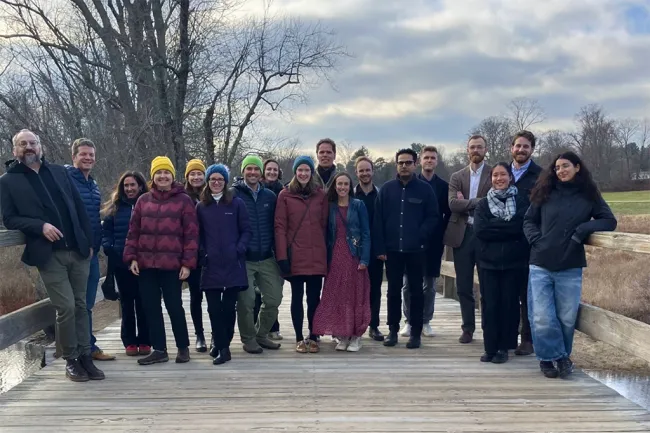
PACE 2026

Jennie An, MS
Research Project Coordinator

June Baglione
Research Administrator

Jack Fischman
Student Researcher

Michael Hughes, PhD
Assistant Professor, Computer Science, Tufts University

David Kent, MD, CM, MSc
Director and Professor of Medicine

Benjamin Koethe, MPH
Statistician

Keren Ladin, PhD, MSc
Associate Professor, Depts of Occupational Therapy and Community Health, Tufts University; Director, Research on Ethics, Aging, and Community Health (REACH Lab)

Michelle Leppert, MD, MBA, MS, FAHA
Associate Professor of Neurology, Tufts Medical Center

Lester Y. Leung, MD, MSc
Director, Comprehensive Stroke Center; Director, Stroke and Young Adults (SAYA) Program

Jennifer Lutz, MA
Project Manager

Marisha Palm, MSc, PhD
Associate Director of Organizational Impact; Assistant Professor Tufts CTSI; Tufts University School of Medicine

Amir Satani, MBBS
Student Researcher

Lisa Small, MS
Research Project Coordinator

David van Klaveren, PhD
Associate Professor of Medical Decision Making, Erasmus University Medical Center

Benjamin S. Wessler, MD
Associate Director; Staff Cardiologist and Assistant Professor of Medicine

Projects
NIH R01 "Focused Imaging as a Novel Diagnostic Strategy for Aortic Stenosis"

Aortic stenosis (AS) is a common and life-threatening heart valve condition that remains difficult to diagnose despite effective treatments. We have developed a machine learning (ML) approach to automate AS diagnosis from cardiac ultrasound imaging. This project will improve these ML networks to work with portable handheld ultrasound devices and evaluate their use in primary care settings to screen high-risk patients. By validating these tools, we aim to enable earlier and more accurate detection of AS.

NIH R01 “Covert Cerebrovascular Disease Detected by Artificial Intelligence (C2D2AI) Phase 2: A Platform for Pragmatic Evidence Generation for Stroke and Dementia Prevention”

This project aims to lay the foundation for a national platform for pragmatic evidence in a population of individuals with incidentally-discovered covert cerebrovascular disease (CCD) with the goal to test a care approach for these individuals. This project is a step in that direction as we will do further epidemiological work and develop models to identify the most promising treatment for stroke and dementia risk reduction and pilot a recruitment approach for this population. These findings along with the guidance of a technical expert panel will be used to plana large clinical trial.

ADDF “Covert Cerebrovascular Disease Detected by Artificial Intelligence (C2D2AI): Pilot Investigation for Pragmatic Neuroimaging Biomarkers for Future Stroke and Dementia Risk”

Using a sample of MRI images, the team will develop deep learning models for the identification of white matter disease and covert brain infarction and the prediction of stroke and dementia. This project aims to develop a preliminary algorithm that can directly read routinely obtained neuroimaging scans and relate findings to stroke and dementia outcomes.

NIH R01 “Covert Cerebrovascular Disease Detected by Artificial Intelligence (C2D2AI): Pragmatic Neuroimaging Biomarkers for Future Stroke and Dementia Risk”

This project builds on the ADDF project and aims to develop and validate a clinically useful algorithm using deep neural networks that can directly read routinely obtained neuroimages, both MRI and head CT, at scale and relate findings to stroke and dementia outcomes.

Publications

Featured

Individual investigators

PACE news + media

"Guidance for Unbiased predictive Information for healthcare Decision making and Equity (GUIDE): considerations when race may be a prognostic factor." Methods for Evaluating Models, Tests and Biomarkers (MEMTAB), University of Birmingham, UK. May 1, 2025.

"Patient selection for PFO closure after stroke: The RoPE Score and PASCAL Classification." CSI, Frankfurt, Germany. June 18, 2025.

"Some Myths about Cpnical Prediction Model Evaluation." AI for Cpnical Decision Support in Heart, Lung, Blood, and Sleep Disorders Workshop. National Heart, Lung, and Blood Institute, Bethesda, MD. September 9, 2025.

"Debate: The Future of Neurocardiology, PFO Closure in Patients with TIA and Cortical Symptoms" with Scott Kasner, MD. World Stroke Congress 2025, Barcelona, Spain. October 22, 2025.

CPM registry

To better understand the extent of Clinical Prediction Model (CPM) development and to help researchers and clinicians, we have created the Tufts PACE CPM Registry, a field synopsis of over 1,000 CPMs that predict clinical outcomes for patients with and at risk for cardiovascular disease.

Contact us

Predictive Analytics and Comparative Effectiveness (PACE) Center
The Institute for Clinical Research and Health Policy Studies
Tufts Medical Center
800 Washington St., Box 63
Boston, MA 02111

Direct inquiries to:
pacecenter@tuftsmedicalcenter.org
Fax: 617.636.0022

Jump back to top