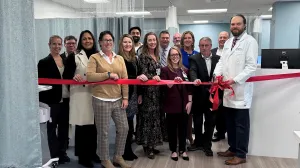
Tufts Medical Center neurosurgery residents, future leaders in neurosurgical care + innovation

Our residents are a diverse group of highly motivated individuals committed to becoming skilled and compassionate neurosurgeons. They bring a wide range of backgrounds and experiences to the program and thrive in Tufts Medical Center’s rigorous yet supportive training environment.

Throughout their residency, they gain hands-on clinical experience, participate in cutting-edge research and develop leadership skills that prepare them for successful careers in neurosurgery. Our residents are integral members of our team, collaborating closely with faculty and advanced practice providers to deliver outstanding patient care.

Display title
Current Residents

Meet the expert neurosurgery faculty + rising resident leaders shaping care + innovation at Tufts Medical Center

The strength of the Neurosurgery Residency Program at Tufts Medical Center lies in its exceptional team of dedicated faculty surgeons and talented residents. Our faculty members are nationally and internationally recognized for their expertise in clinical care, research and education. They serve as mentors, teachers and role models, guiding residents through a rigorous and supportive training experience.

Our residents are highly motivated, diverse and committed to becoming skilled, compassionate neurosurgeons. They contribute to patient care, research and teaching, and are integral members of our collaborative academic community.

Together, our faculty and residents form a dynamic team focused on advancing neurosurgical care, innovation and education in Boston and beyond.

Display title
Our People

Expert neurosurgery faculty driving innovation, education + patient care at Tufts Medical Center 

Our neurosurgery faculty at Tufts Medical Center are nationally recognized leaders in clinical care, research and education. With expertise spanning complex brain and spine surgery, cerebrovascular disease and functional neurosurgery, our faculty members are dedicated to advancing neurosurgical science and providing compassionate, state-of-the-art care. 

As mentors and educators, they guide residents and medical students through rigorous training, fostering a collaborative learning environment rooted in innovation and excellence. Our faculty’s commitment to groundbreaking research and clinical excellence positions Tufts Medical Center as a leading institution in neurosurgery. 

Neurosurgery faculty leaders at Tufts Medical Center

Ron I. Riesenburger, MD

Ron I. Riesenburger, MD
Title(s): Chair, Department of Neurosurgery, Tufts Medical Center; Director, Spine Center; Co-Chief, Division of Spinal Surgery, Department of Neurosurgery, Tufts Medical Center; Chair and Professor of Neurosurgery, Tufts University School of Medicine
Department(s): Neurosurgery
Appt. Phone: 617.636.8484

Expertise: Minimally invasive spine surgery, spinal deformity and scoliosis, complex and reconstructive spine surgery, pinched nerves, sciatica, spinal stenosis, disc herniation, spondylolisthesis, spinal tumors, radiculopathy and myelopathy


Julian Wu, MD

Julian K. Wu, MD
Title(s): Associate Chairman, Neurosurgery; Chief, Neurosurgical Oncology; Neurosurgery Residency Program Director; Professor, Tufts University School of Medicine
Department(s): Neurosurgery
Appt. Phone: 617.636.4500

Expertise: Neuro-oncology, Gamma Knife radiosurgery, meningiomas, pituitary tumors, gliomas, brain metastasis, trigeminal neuralgia


Marie Roguski, MD, MPH

Marie Roguski, MD, MPH
Title(s): Associate Program Director, Neurosurgery; Co-chief, Neurosurgical Oncology; Assistant Professor, Tufts University School of Medicine; Director of Neurosurgery Medical Student Education
Department(s): Neurosurgery
Appt. Phone: 617.636.5878

Expertise: Neurosurgical oncology, degenerative spinal disorders, brain and spinal tumors, including primary, metastatic, and benign conditions (glioma, metastasis, meningioma, schwannoma), degenerative spinal disorders, including myelopathy, herniated spinal discs, and lumbar stenosis, and their treatment with minimally invasive spinal surgery, spinal fusion and microdiscectomy


Carl Heilman, MD

Carl B. Heilman, MD
Title(s): Chief of Skull Base Surgery, Department of Neurosurgery, Tufts Medical Center; Professor, Tufts University School of Medicine
Department(s): Neurosurgery
Appt. Phone: 617.636.5860

Expertise: Meningiomas, acoustic neuromas, skull base surgery, pituitary surgery, Chiari surgery


Jason Frerich, MD, MPH

Jason M. Frerich, MD, MPH
Title(s): Neurosurgeon; Assistant Professor, Tufts University School of Medicine
Department(s): Neurosurgery, Spine Surgery Center
Appt. Phone: 617.636.8686

Expertise: Management of all spinal conditions, from the straightforward to the complex and to provide compassionate care and the least aggressive treatment option for a particular condition.


James Kryzanski, MD

James Kryzanski, MD
Title(s): Chief, Division of Epilepsy Surgery; Co-Chief, Division of Spine Surgery; Assistant Professor, Tufts University School of Medicine
Department(s): Neurosurgery
Appt. Phone: 617.636.8585

Expertise: Epilepsy neurosurgery, skull base surgery, pituitary surgery, neurovascular surgery, minimally invasive spine surgery, neurosurgical disorders in patients with achondroplasia, neurosurgical disorders in patients with Down syndrome


Adel M. Malek, MD, PhD

Adel M. Malek, MD, PhD
Title(s): Chief, Neurovascular Surgery; Director, Cerebrovascular & Endovascular Division Professor, Tufts University School of Medicine
Department(s): Neurosurgery
Appt. Phone: 617.636.8200

Expertise: Aneurysms, arteriovenous malformations, dural fistulas, subarachnoid hemorrhage, intracranial atherosclerosis, arterial dissection


Mina Safain, MD

Mina Safain, MD
Title(s): Chief of Neurosurgery,  Melrose Wakefield Hospital; Neurosurgeon, Department of Neurosurgery, Tufts Medical Center; Associate Professor, Tufts University School of Medicine
Department(s): Neurosurgery
Appt. Phone: 617.636.5860

Expertise: Pituitary tumors, brain tumors, meningiomas, minimally invasive spine surgery, complex and reconstructive spine surgery, spinal microsurgery, spinal trauma


T. Jayde Nail, MD

T. Jayde Nail, MD
Title(s): Director of Neurotrauma; Surgical Director of Neuro-ICU; Assistant Professor of Neurosurgery, Tufts University School of Medicine
Department (s): Neurosurgery
Appt. Phone: 617.636.5878

Expertise: Traumatic Brain Injury, Spinal Cord Injury, Traumatic injuries of the spine, Neurocritical Care, degenerative spinal disorders

Display title
Program Leadership + Faculty

Research + teaching in the Tufts Medical Center Neurosurgery Residency Program

Research and education are essential pillars of the Neurosurgery Residency Program at Tufts Medical Center. We offer a supportive environment where residents are encouraged to explore academic interests, contribute to the advancement of neurosurgical knowledge and take an active role in training the next generation of medical professionals. Whether leading clinical research or mentoring medical students, residents gain valuable experience that enhances their growth as future neurosurgical leaders.

Research involvement with flexibility + support

Residents are encouraged to participate in research throughout their training. While there are no formal requirements for publications or grant applications, the program offers strong mentorship and institutional support for those interested in academic inquiry. Residents may pursue independent projects or collaborate on ongoing basic science, clinical, translational or outcomes research.

The Department of Neurosurgery works closely with faculty across Tufts Medical Center and Tufts University School of Medicine, including core neuroscience educators and laboratory-based researchers. This environment provides residents with access to the resources and expertise needed to explore their academic interests and contribute to the advancement of neurosurgical care.

Hands-on teaching + mentorship

Residents also play a meaningful role in the education of medical students and junior residents. Medical students rotate regularly through the service and attend weekly Thursday conferences, where residents have opportunities to deliver formal presentations and lead case discussions.

During clinical rotations, residents mentor third-year medical students, sub-interns and interns in a hands-on environment that emphasizes bedside learning and surgical preparation. Residents also help teach the neuroscience course for third-year medical students at Tufts University School of Medicine.

Tufts Medical Center is proud to serve as a host site for the Society of Neurological Surgeons (SNS) Intern Bootcamp. This national program brings incoming neurosurgery residents from across the country to Boston to learn the foundational skills of neurosurgical care. Senior residents help lead sessions and support the delivery of this high-impact course, gaining valuable teaching and leadership experience.

Display title
Research Training + Teaching Opportunities

Neurosurgery residency rotations + schedules at Tufts Medical Center

The Neurosurgery Residency Program at Tufts Medical Center is a comprehensive seven-year program designed to provide broad clinical and academic training. The curriculum balances high-volume surgical experience with research and elective opportunities to prepare residents for diverse neurosurgical careers.

The program includes:

  • 51 months of core clinical neurosurgery training
  • 12 months dedicated to research or an enfolded fellowship
  • 6 months of off-service intern rotations, including neurology, otolaryngology, anesthesia​ and surgical ICU
  • 3 months focused on stereotactic radiosurgery and outpatient clinics, neuro-ophthalmology, and neuropathology
  • 3 months of neuro-ICU training

Residents also complete two off-site subspecialty rotations at leading Boston hospitals:

  • 3 months in functional neurosurgery and deep brain stimulation at Brigham and Women's Hospital
  • 6 months in pediatric neurosurgery at Boston Children's Hospital

A team of advanced practice providers supports resident training and patient care. Eight physician assistants assist with inpatient duties such as discharge planning, documentation, consults and day-to-day management. In the outpatient setting, four nurse practitioners and one physician assistant support clinic operations, including note-taking, phone triage and patient follow-up.

A chart with neurosurgery residency schedule
Display title
Rotations + Schedules

Comprehensive 7-year neurosurgery residency training program in Boston with progressive clinical responsibility, specialized rotations + leadership development

The Neurosurgery Residency Program at Tufts Medical Center offers a comprehensive and carefully sequenced seven-year clinical training curriculum. From the intern year through graduation, residents advance through progressively challenging rotations that develop their clinical expertise, surgical skills and leadership abilities. Early training emphasizes foundational neuroscience and perioperative care, while later years focus on complex operative cases, subspecialty rotations and service leadership.

Residents also benefit from diverse clinical environments, including in-house rotations and affiliated subspecialty experiences at leading Boston institutions. The curriculum is designed to prepare graduates for independent practice or fellowship training with confidence and competence.

Below is an overview of the clinical training structure by postgraduate year.

Display title
Clinical Training

Neurosurgery residency curriculum + training structure at Tufts Medical Center

The curriculum at the Tufts Medical Center Neurosurgery Residency Program is designed to foster progressive clinical autonomy, surgical skill development and academic growth. Residents are given increasing responsibility both in and out of the operating room as they advance through training, with close supervision and mentorship from faculty.

In addition to surgical and clinical training, the program provides strong support for scholarly development. Each resident is paired with a research mentor who helps guide project design, development and execution. Residents may pursue their own research interests or contribute to ongoing departmental or institutional studies.

Tufts University School of Medicine’s core neuroscience faculty and the basic science researchers within the Department of Neurosurgery serve as active collaborators and advisors, ensuring that each resident has access to the expertise and resources necessary to carry out meaningful academic work.


Display title
Curriculum + Structure

A structured, hands-on neurosurgery training experience in Boston

The Neurosurgery Residency Program at Tufts Medical Center offers a carefully structured seven-year curriculum that prepares residents for the full spectrum of neurosurgical practice. From early exposure in the operating room to advanced surgical leadership, residents develop the clinical, technical and academic skills needed for fellowship or independent practice.

Clinical training + surgical development

Throughout the program, residents gain extensive experience in adult neurosurgery. They spend 51 months immersed in core clinical training, managing cases across all major neurosurgical subspecialties. As residents advance, they take on greater operative responsibility and leadership in patient care.

Subspecialty + off-site rotations

The curriculum includes dedicated training in neuropathology, neuroradiology and neuro-ophthalmology, as well as focused time in radiosurgery, interventional neurosurgery and outpatient neurosurgical care. Residents also complete two off-site rotations: three months in functional neurosurgery and deep brain stimulation at Brigham and Women’s Hospital, and six months in pediatric neurosurgery at Boston Children’s Hospital.

Research + academic support

Tufts Medical Center emphasizes academic development alongside clinical training. Each resident is paired with a research mentor and encouraged to pursue independent or collaborative projects. The program offers access to institutional research resources and collaborates closely with core neuroscience faculty and basic scientists at Tufts University School of Medicine.

Inpatient + outpatient care structure

Residents work within a well-supported clinical environment that includes a team of advanced practice providers. Eight physician assistants assist with inpatient care, including documentation, consults and discharge planning. Four nurse practitioners and one additional physician assistant support the outpatient clinic, helping manage notes, phone calls and patient follow-up. This collaborative structure allows residents to focus on surgical training, complex care and academic growth.

Display title
Training Experience

A legacy of neurosurgical innovation + leadership at Tufts Medical Center

The Department of Neurosurgery at Tufts Medical Center has a distinguished history of clinical innovation, academic leadership and surgical excellence. Over the decades, it has served as the training ground for many accomplished neurosurgeons who have gone on to lead programs, conduct groundbreaking research and advance the field nationally and internationally. The department has also been the site of important contributions to the evolution of neurosurgical care, where new treatment paradigms have been conceived, refined and brought into clinical practice.

This legacy reflects Tufts Medical Center’s broader commitment to academic medicine and patient-centered care. The history of the Department of Neurosurgery—along with the Medical Center’s origins and evolution—has been formally documented and published in the Journal of Neurosurgery, highlighting its enduring role in shaping modern neurosurgical practice.

Display title
Program History
Jump back to top