Internal Medicine Residency Program

Internal Medicine Residency Program – Program Tracks + Resident Committees

Program Tracks + Resident Committees
At Tufts Medical Center, residents have access to a broad range of opportunities designed to enrich their training in alignment with their individual educational and career goals. Residents can apply in January of their intern year to participate in one of several specialized tracks. These tracks offer focused mentorship and skill development, supporting scholarly work and research within a defined area of interest. The program remains committed to expanding track offerings in response to resident interests and to fostering ongoing professional growth and development.
Internal Medicine Residents 2023
Clinician Educator Track

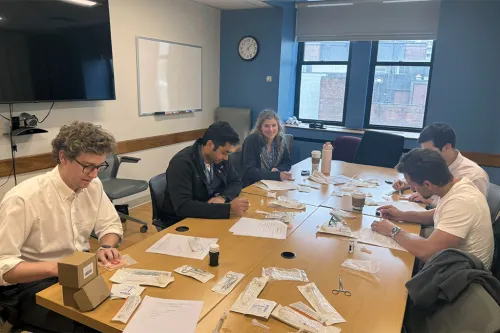
This unique track is designed for residents who are interested in pursuing a career in academic medicine as a clinician educator. Participants get a focused three weeks of didactics, workshops​ and observation/teaching sessions on foundational concepts and theories in education from experts in the field during their second and third year of residency. Each participant is also paired with a primary mentor with experience in medical education scholarship, who they work closely with on a scholarly project.
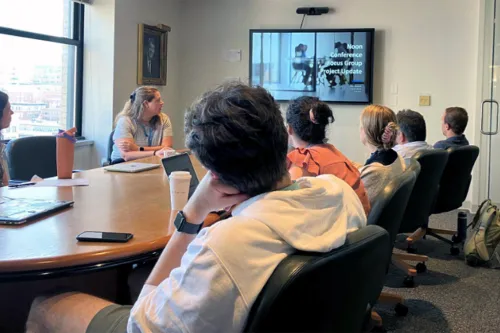
Internal Medicine Educator Track

Clinician educator track goals:

  • Increase knowledge of adult learning theory 
  • Gain practice in different teaching methods 
  • Increase knowledge of curriculum development 
  • Increase knowledge and skills in evaluation and assessment 
  • Develop skills necessary for scholarly activity and innovation in medical education
  • Improve teaching and presentation skills and create a portfolio of teaching activities
     

Educational sessions:

  • Adult learning theory
  • Learning climate and control of teaching session
  • Evaluation, feedback​ and self-directed learning
  • Approach to a struggling learner
  • Technology in medical education
  • How to give a chalk talk
  • Peer observation of teaching
  • Small group teaching
  • Active learning
  • Survey design
  • Writing high-quality MCQs/interpreting item analysis
  • Qualitative research methodology
  • Curriculum development
  • Leadership in medical education
  • Medical education focused literature reviews
  • IRB training for educational projects

Current ongoing resident scholarly projects:

  • Development of IBD exacerbation management curriculum for residents (presented at Society of General Internal Medicine Annual Meeting 5/2025)
  • Development of a novel EKG teaching curriculum for medical students using spaced repetition and artificial intelligence (presented at USC Innovations in Medical Education Conference 2/2025)
  • Development of high value care curriculum for residents

Past resident scholarly projects:

Educational evaluation:

  • Evaluation of residency feedback culture (poster presentation at the SGIM Conference in Colorado in 2023)
  • Evaluation of code status and resident decision making
Internal Medicine Educator Track

Development of curricula:

  • Development of rapid-response simulation for interns
  • Development of oncology focused educational curriculum for residents
  • Development of ambulatory palliative care curriculum
  • Pharmacologic weight management for resident primary care clinic
  • Structured didactics for resident ICU education
  • Addiction medicine curriculum for medical residents
  • Intern wellness and resiliency curriculum
  • Point-of-care ultrasound curriculum for internal medicine residents
  • Goals of care discussions with non-English-speaking Chinese patients (poster presentation at the World Research Congress of the European Association for Palliative Care, 2022)

Workshops:

  • Development of informed consent curriculum for residents
  • Development of liver transplant evaluation curriculum and handbook
  • Interactive musculoskeletal shoulder exam for residents
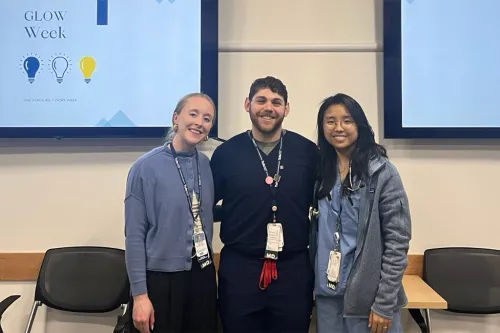
For more information, please contact Dr. Taimur Dad

Ambulatory Track

The Ambulatory Track is open to any rising second- or third-year resident interested in increasing their experience and training in primary care or other outpatient subspecialties.

Internal Medicine Ambulatory Track Mentorship

Curriculum

  • One or two 1-week primary care or subspecialty ambulatory electives scheduled during second and third year beyond the core primary care clinic blocks.
  • For residents interested in primary care, rotations through subspecialty clinics that are valuable for primary care training, including:
    • Dermatology
    • Orthopedics
    • Physical Therapy
    • College Health
    • Diabetes clinic
    • Pharmacy clinic
    • Physical Medicine and Rehabilitation
  • For residents interested in ambulatory subspecialty clinics, rotations through
    • Subspecialty of choice during elective weeks
  • Elective rotation if desired in our Quincy satellite practice to gain experience in a community setting
  • Additional Primary Care CME Conferences

Mentorship

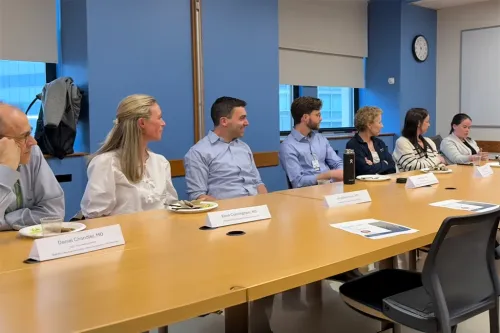
All residents applying to primary care positions after residency will have dedicated career mentorship and advice on the job application process with several events planned throughout the year, including:

  • Annual career panel dinner
  • Guidance in creating a CV and cover letter
  • Tips for interviewing
  • Guidance with contracts negotiations
Internal Medicine Ambulatory Track
Research Track

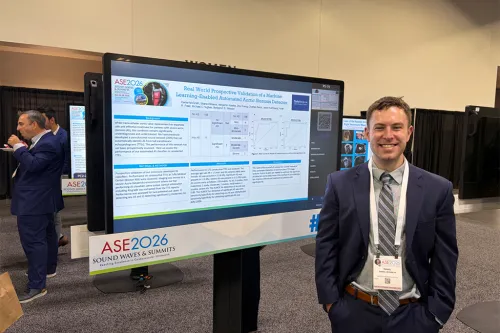
Mission/Purpose: The Research Track is designed for residents with a passion for clinical research, aiming to equip them with the necessary skills to conduct meaningful projects during residency and pursue careers in academic research. Those in the track form a community to nurture and advance each other's individual research agendas.

Participants: Four-five residents per class.

Track Features:

  • Longitudinal research support: Residents participate in monthly, hour-long research progress meetings designed to provide continuous support throughout the research process. These sessions offer a structured forum for residents to share project updates and receive constructive feedback and mentorship to guide the ongoing development of their scholarly work.
  • Cohorted research weeks: Twice annually, residents within the research track will have dedicated cohorted research weeks, providing structured time for scholarly development. During these weeks, faculty lead sessions on core research concepts and offer mentorship on building a sustainable academic or research-oriented career. Additionally, each resident presents their ongoing research in a collaborative workshop setting designed to address challenges, refine presentation skills​ and receive targeted feedback on future directions. Afternoons are reserved exclusively for focused research activity, allowing residents protected time to advance their projects.
  • Protected research time: Residents are provided with four weeks of dedicated research time annually, including the two cohorted research weeks. This protected time allows residents to focus on advancing their scholarly projects without clinical responsibilities, supporting meaningful engagement in research and academic development.
Internal Medicine Research Track
MD/PhDs at Tufts Medical Center

We are actively developing an MD/PhD track within the Tufts Medical Center Internal Medicine Residency Program, building on the success of several residents who have engaged in bench research and matched into highly competitive fellowships. As a smaller academic medical center, Tufts Medical Center offers the unique advantage of a highly personalized and flexible training environment. This allows us to provide a customized experience for MD/PhD residents who are pursuing careers as physician-scientists. Our approach includes fostering meaningful collaborations with researchers at Tufts University School of Medicine and establishing productive research experiences. Some MD/PhD residents have also chosen to participate in the programs’ formal research track. Additionally, for those considering a fellowship or a long-term academic career at Tufts Medical Center, the residency program works closely with the clinical division to support mentorship and career development. Mentorship will also be provided by the Associate Director of the medical school's MD-PhD program, Dr. Cammie Lesser.

Committees + leadership

Residents at Tufts Medical Center have the opportunity to engage in a variety of residency programs, GME and hospital-wide committees, enabling them to participate in and influence the Tufts Medical Center community actively. These committees offer valuable leadership roles that align with residents' interests and career aspirations. We enthusiastically welcome the formation of new resident-led committees based on their specific interests. Here are a few examples:

IM program committees:

  • House Staff Committee
  • Wellness Committee
  • IM Simulation Committee
  • Program Evaluation Committee
  • Resident Education Committee
  • Resident Recruitment Committee
  • Quality Improvement Committee
  • Women in Medicine Committee

GME committees for residents:

  • Graduate Medical Education Committee
  • Resident Leadership Council

Hospital-wide committees with residents:

  • Central-line Associated Bloodstream Infection Committee (CLABSI)
  • Women in Medicine and Science Committee
Jump back to top