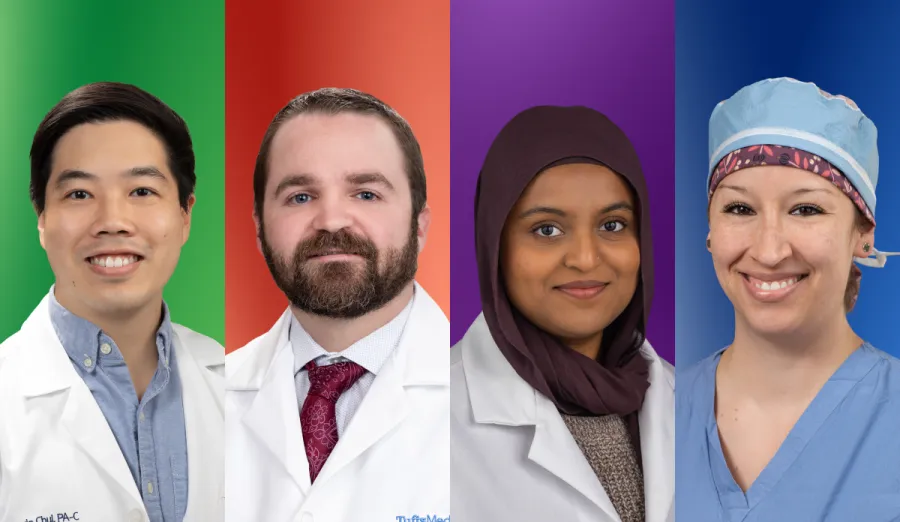
What do all those letters mean?
Ever look at your clinician’s badge and feel like you’re reading alphabet soup? You’re not alone. These credentials reflect years of training, experience and dedication, and understanding them can help you feel more grounded in your care. Tufts Medicine primary care physician Jennifer Saenz, DO, answers questions about what they really mean.
MD vs. DO: Two roads to the same goal—a healthy you
MD stands for Doctor of Medicine. DO stands for Doctor of Osteopathic Medicine. Both are fully licensed physicians who complete medical school, residency and extensive clinical training. They have the same full scope of practice in all 50 states and in many countries internationally.
Both can:
- Diagnose and treat medical conditions
- Prescribe medications
- Perform surgeries
- Practice in any specialty
- Provide full-spectrum care
The differences between MDs and DOs are mostly historical. DOs were originally trained with a focus on holistic care and hands-on musculoskeletal techniques, but today, MDs and DOs train together, and their clinical practice is very similar.
Other advanced practice clinicians you might see
Healthcare today is team-based, and you may also receive care from many types of Advanced Practice Clinicians (APCs). An APC is a healthcare professional with advanced education and clinical training. This category includes:
- Nurse Practitioners (NPs): Advanced practice nurses who diagnose, treat and manage care, often emphasizing prevention and patient education.
- Physician Assistants (PAs): Highly trained medical professionals who work alongside doctors to examine patients, diagnose conditions and develop treatment plans.
- Certified Registered Nurse Anesthetists (CRNAs): Highly trained nurses who provide anesthesia and pain management during procedures and surgeries.
- Specialists: Doctors (MD or DO) with extra training in areas like cardiology, dermatology or neurology.
No matter the credential, each of these clinicians is licensed, certified and held to rigorous standards to deliver safe, high-quality care.
So, who should you choose?
At Tufts Medicine, every clinician is selected for their expertise, skill and commitment to patient-centered care. What matters most is finding someone who:
- Listens to you
- Respects your concerns
- Communicates clearly
- Makes you feel supported
The right fit is about connection, not credentials.
Your health, your team
Behind every set of credentials is a person who’s spent years training to help you live your healthiest life. MDs, DOs, NPs and PAs, along with other clinicians, all bring unique strengths to the care team. They work together to give you well-rounded, evidence-based and compassionate care.