The first time he watched a transplanted heart beat inside another person’s body, Phillip DeMelo, RN couldn’t believe what he was seeing.
“It still feels magical,” said Phil, a cardiac surgery nurse at Tufts Medical Center. “An organ from another person goes into a different body, and then it just starts beating on its own.”
More than 20 years and 60 heart transplants later, that feeling hasn’t changed.
As a cardiac surgery nurse at Tufts Medicine, he’s witnessed some of the most remarkable moments in medicine. Standing shoulder to shoulder with the surgical team during complex heart procedures, he helps make operations possible that can give patients years, even decades, of life they otherwise wouldn’t have.
“I like being right in the middle of it,” he says. “You get to see everything and you hear what they’re talking about. You really feel like you’re part of the surgery… We actually help retract the inside of a person’s body or hold an organ in our hands.”
The work is demanding, but it’s exactly where he wants to be.
His path to cardiac surgery wasn’t one he expected. Before healthcare, he was studying music and history. Then came September 11. Like so many people, he wanted to find a way to serve. He joined the U.S. Air Force, choosing a role that allowed him to care for others. He trained in surgical services and later worked in a military hospital in Germany, treating trauma patients during the conflicts in Iraq and Afghanistan.
“I wanted to do something that made a difference,” said Phil.
When his military service ended, there wasn’t much question about what came next. He returned to the Boston area and looked for a job in the operating room. Surgery had become more than a career to Phil. It was where he knew he belonged.
Today, no two days are quite the same. Working the mid-shift means stepping in wherever he’s needed, but cardiac surgery remains his home.
While the technical aspects of surgery are fascinating, it’s often the human moments that stay with him longest. He recalls one patient who remembered him immediately after waking from anesthesia and later asked for him again in recovery because she said he had helped her feel calm before surgery.
“Knowing she felt safe made me feel like I was doing exactly what I was supposed to be doing,” he says. “That’s why I do this job.”
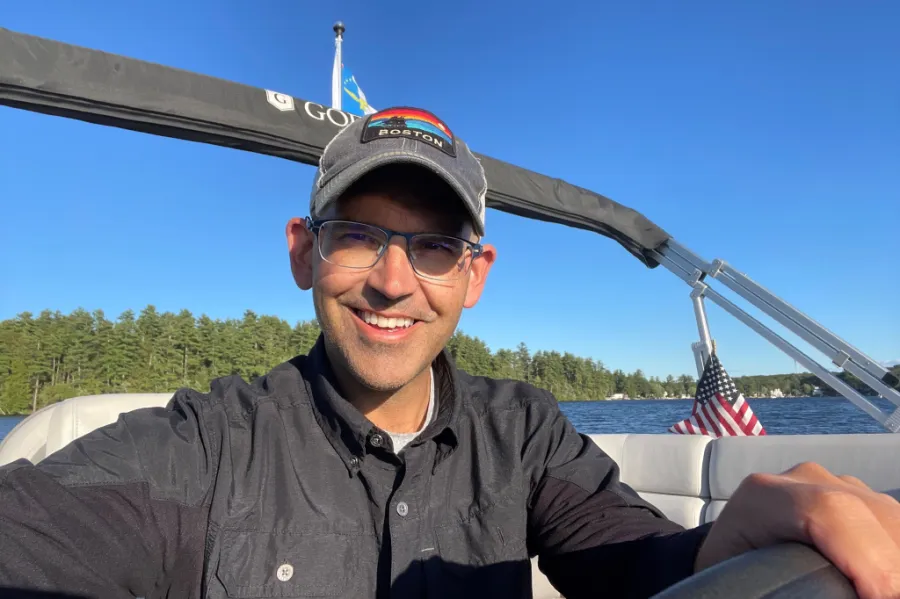
Moments like that stay with him. Even brief conversations can make a difference. Outside the operating room, music is still a big part of his life. A lifelong musician, he plays the euphonium and trumpet in community bands and sings in a choir. An avid reader, he devours more than 50 books each year, often swapping recommendations with coworkers who know exactly who to ask when they’re looking for their next great read. In the summer, you’ll likely find him unwinding on his pontoon boat at a lake in New Hampshire.
That same curiosity carries into his work, where he strives to approach every day with the mindset his father instilled in him while growing up in a family of Portuguese immigrants: Whatever job you do, become an expert at it.
“I’ve always wanted to do every job the best that I could,” said Phil. “It made every job rewarding because I knew I was giving it everything I had.”
That dedication is evident to the colleagues who rely on his versatility, the surgeons who count on his experience and the patients whose fears he helps ease before surgery begins.