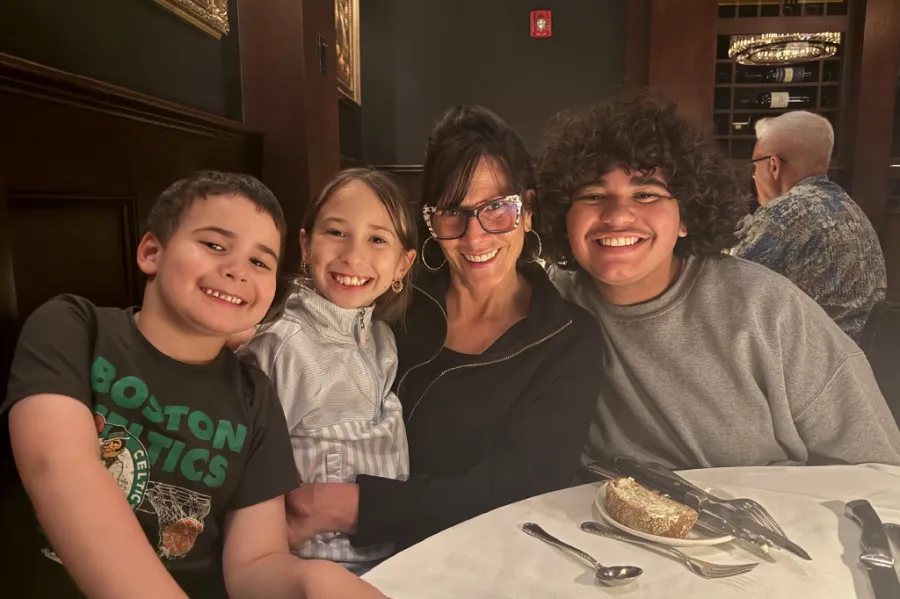
For Angela Cogan, being a respiratory therapist means being ready for anything and knowing that the work she does can help save a life.
On any given night at Tufts Medicine MelroseWakefield Hospital, Angela might be responding to a patient struggling to breathe in the Emergency Department, helping stabilize someone in critical condition in the Intensive Care Unit (ICU) or providing respiratory treatments on a medical floor.
After 22 years as a respiratory therapist, she knows that no two shifts are the same. And that’s exactly what she likes.
“I see different things every single time I’m there,” said Angela. “I like to go to the critical stuff, the emergencies, and I like just to feel like I took part in saving someone’s life.”
Respiratory therapists play a vital role in caring for patients with breathing difficulties, but Angela said the scope of their work often surprises people.
Depending on the situation, her responsibilities can range from administering oxygen and breathing treatments to assisting with intubation and managing mechanical ventilation for patients who need help breathing. She also draws arterial blood samples to assess how well patients are breathing and helps determine appropriate ventilator adjustments in collaboration with physicians.
When assigned to the Emergency Department, Angela may see anywhere from 10 to 20 patients during routine rounds, with additional calls for patients experiencing respiratory distress or other emergencies.
“We have a lot of independence,” she said. “I get to decide, you know, with the doctor, which modality we’re going to do.”
That combination of clinical knowledge, autonomy and quick thinking is a big part of what has kept her passionate about the profession for more than two decades.
The impact of that work becomes especially clear when she sees a patient recovering.
Angela remembers caring for patients who arrive in the Emergency Department unconscious or unable to breathe on their own. After helping stabilize them, she may later encounter those same patients recovering on a medical floor.
“You see them on one of the medical floors, and they look like a totally different person,” said Angela. “It’s like, ‘Oh my goodness. I participated in basically saving your life.’”
For Angela, those moments are among the most rewarding parts of the job.
A personal connection to respiratory care
Angela’s path into respiratory therapy was shaped by her own experience as a patient. Having lived with asthma since childhood, she understands how frightening it can be to struggle to breathe.
Although she initially considered nursing, a hospitalization in her 20s helped her recognize that respiratory therapy was the career she wanted to pursue.
“I know what the patient, somebody that has difficulty breathing, actually feels,” said Angela.
That perspective continues to influence how she approaches patient care. When someone is struggling to breathe, Angela knows that the experience can be scary, especially for people who have never had respiratory problems before.
Her own experience reinforces the importance of patience and understanding, particularly when patients are frightened or unable to communicate easily.
During the COVID-19 pandemic, Angela experienced respiratory illness from the other side of the hospital bed when the virus triggered her asthma. She received care at MelroseWakefield Hospital and remembers her experience positively.
“Everybody was wonderful,” she said.
One team
For Angela, great patient care depends on more than individual expertise. It also takes a team that knows how to work together, particularly during the overnight hours.
After working day shifts earlier in her career, Angela moved to nights about a decade ago. She appreciates the close bond among her colleagues and the way they support one another when staffing is leaner and emergencies arise.
“We support each other,” she said. “Everybody has a role, but we roll as one, and it’s like a well-oiled machine.”
That sense of connection reflects the Tufts Medicine value of One Team, which resonates strongly with Angela. In critical situations, every team member has a role to play, and collaboration can make all the difference.
One of her most memorable career experiences came early on, when she witnessed a team respond to an emergency involving a pregnant patient who needed an emergency C-section.
“What’s memorable is how quick and cohesive the team is during a critical situation like that,” said Angela. “I would definitely recommend a career in respiratory therapy because we get exposure to so much. I see different things every single time I’m there.”
For Angela, the greatest reward is seeing what happens after a crisis—when patients recover and get to return to their lives.
“I love my job,” she said.
Interested in a career where clinical expertise, teamwork and compassion come together?
