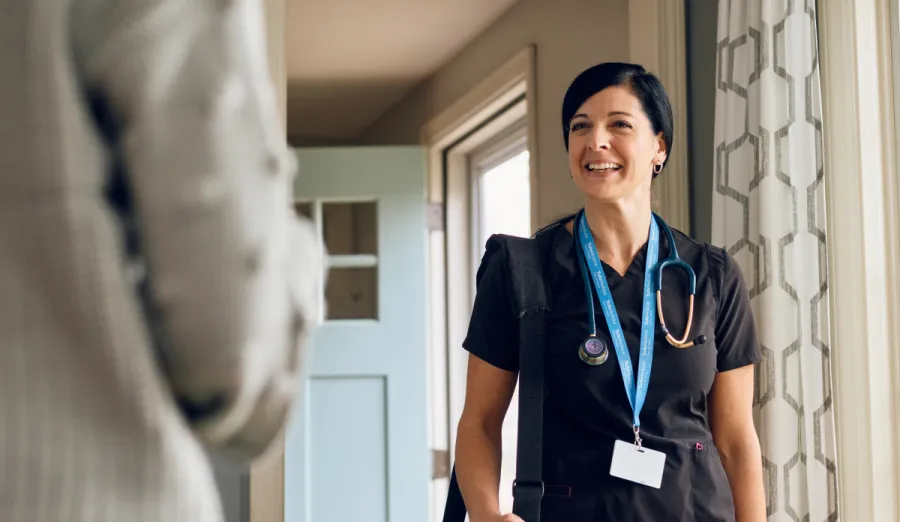
What’s it really like to build a career in hospice care? We asked hospice case manager, Rebecca Clementi, RN, to share her experience.
Q: Tell us about your role as a hospice nurse?
Rebecca: I’m the primary point of contact for my patients and their families. I oversee the entire care plan, manage symptoms, provide education and coordinate with the whole interdisciplinary team—physicians, social workers, chaplains and home health aides. Every day is different, but it's always centered on providing comfort and dignity.
Q: What types of challenges do you help patients manage?
Rebecca: Pain is a big one, but we also see shortness of breath, nausea, vomiting—things that require both clinical and human responses. Sometimes it’s medication. Other times, it’s simply redirection, reassurance or just being present in a calming way. We meet people where they are.
Q: What led you to hospice nursing?
Rebecca: Eight years ago, I was working night shifts in acute care while raising four kids as a newly single mom. I was exhausted. I saw a job posting for a Monday through Friday schedule and decided to apply. I didn’t know much about hospice, but I wasn’t afraid of it and I was open to learning. What started as a way to create better work-life balance became something much deeper. Now, it’s where I find purpose.
Q: Could you have imagined yourself in hospice care when you first became a nurse?
Rebecca: Honestly? Not at all. I thought I’d end up in the OR or labor and delivery. Hospice wasn’t even on my radar. But I’ve found something here I never expected: a deeply meaningful connection to the people I care for.
Q: What keeps you in hospice nursing?
Rebecca: The impact. I know what I do matters. I get to walk alongside patients and families during such an important part of life. When a family says, “You’re part of the family now,” you know you’ve made a difference.
Q: How is hospice nursing different from other types of nursing you’ve done?
Rebecca: It’s the relationships. In acute care, you see a patient for a day or two and then they’re gone. In hospice, I might see the same person weekly, or even daily, for weeks or months. You build trust. You become part of their support system, and you get to know the entire family.
Q: What’s something you wish more nurses knew about hospice care?
Rebecca: The truth is, it’s not for everyone—it takes emotional resilience and strong clinical judgment, especially since you’re in the patient’s home on your own. But you’re never truly alone. You have a team behind you, just a call away. And if you’re open to learning and growing, it’s one of the most rewarding paths you can take.
Q: What makes working at Tufts Medicine Care at Home a good fit for you?
Rebecca: For me, it’s the flexibility. I manage my own caseload and plan my day around what works best for my patients and for my life. If something comes up personally, I can work with my manager and adjust my schedule. That kind of support allows me to be present at home and still give my all to my patients. It’s a balance that’s hard to find in most nursing roles.
Ready to make a difference?
Hospice nursing isn’t just a job—it’s a calling. If you’re a compassionate, skilled nurse looking for meaningful work, flexibility and a supportive team, Tufts Medicine Care at Home might be the place for you.