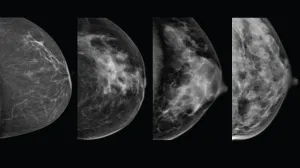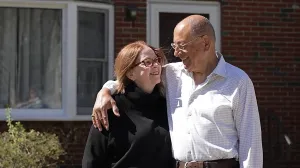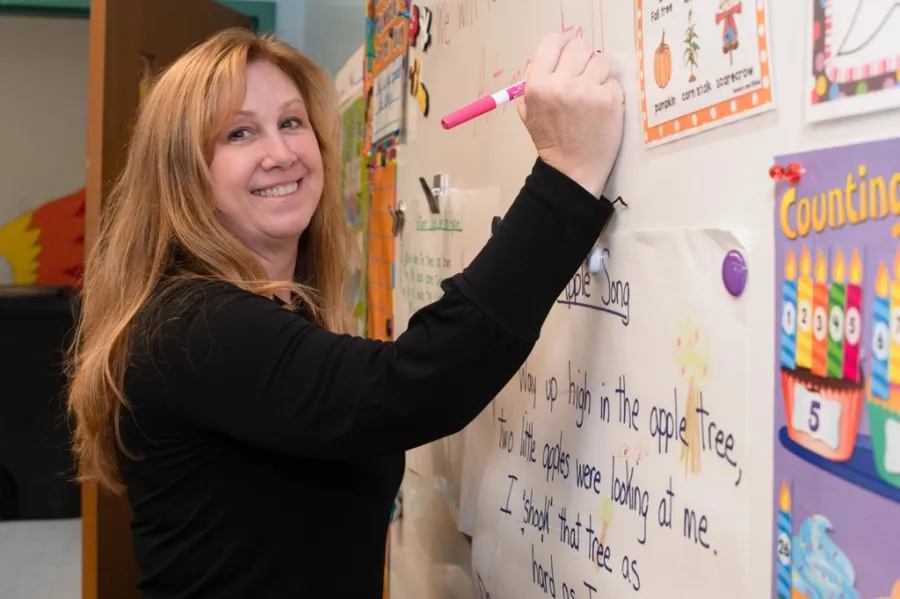
When it came time for her annual mammogram, Diane MacLean considered postponing it. Life was busy. As a second-grade teacher at Lowell's Bartlett Partnership School and a mother of four, there was always something more pressing. There was no history of breast cancer in her family. Although she had recently lost her father to pancreatic cancer, breast cancer simply wasn't on her radar.
But after thinking about a neighbor who had died in her 50s—never meeting her grandchildren—Diane made the appointment. That decision may have saved her life.
When Diane received a call asking her to return for a follow-up appointment, she wasn't worried. She had been called back once before, and everything turned out to be fine.
An unexpected call
But the next call was different. This time, she learned she had an abnormality that required a biopsy. The finding was then diagnosed as a high-risk lesion, which increased her breast cancer risk. She was identified as a candidate to be seen in the Lowell General Breast Cancer Risk Assessment Program.
"I was blindsided," MacLean says. "I look back now and think, was I too busy to live?"
Just a few weeks after her initial mammogram, she underwent successful surgery to remove the lesion. Throughout the process, she says she never had to think about what's next.
"I was too busy trying to process everything, but they had a plan for me," she says.
The hope for MacLean and her caregivers is that she will never have cancer. The odds of that happening are significantly decreased now that she is part of Lowell General's Breast Cancer Risk Assessment Program, where experts will monitor her closely as long as necessary.
A plan and a path forward
On her first visit to the clinic, she met Jennifer Gilliatt, NP, a breast care nurse practitioner, who walked her through all the ways she can reduce her breast cancer risk.
"Now the focus is on increased screening, as well as risk reduction," Gilliatt says. "That can be done through medication and lifestyle factors, including nutrition, exercise, maintaining a healthy weight and decreasing alcohol. The patient is directly involved in their care and risk reduction."
Diane's increased screening includes an annual mammogram as well as an annual breast MRI, which alternate every six months. This vigilance may have saved Diane's life—in 2024, an abnormal MRI led to another biopsy and partial mastectomy. It wasn't easy. But this time, Diane knew she wasn't alone.
"It's hard to put into words just how vulnerable you feel during this, and how kind and reassuring each health care worker was," she reflects. "It truly made all the difference."
Bringing genetic testing closer to home
The clinic also connected Diane with genetic testing, which she wanted to do to help her daughter know her genetic risk. Lowell General Hospital now offers genetic testing right on campus—no more long trips into Boston for answers that matter.
"I'm really excited that we now have a genetics program at Lowell General Hospital," Jennifer Gilliatt shares. "In the past, it's taken months for women to get these appointments and learn this information. Now we can do it right here."
That accessibility changes everything—especially for patients like Diane.
"Taking the genetic test was easy and alleviated so many concerns I had, especially after losing a father to pancreatic cancer," Diane says.
When her results came back negative, it brought peace of mind not just for her, but for her daughter's future. That's what the BCRAP is here for: bringing clarity and hope to patients who need answers.
"What we're doing is incredibly unique," Gilliatt says.
Small changes, big impact
Working with Jennifer and the BCRAP team opened Diane's eyes to the power of nutrition. Small changes in her daily life could make a real difference in reducing her cancer risks.
"I was shocked to learn how many cancers have environmental causes, and even how many chemicals are in the processed foods we eat every day," Diane shares.
It meant adjusting family habits, rethinking grocery lists and having honest conversations around the dinner table.
"It was an adjustment for my family, but we are all so much more knowledgeable now about what we're eating and what not to buy."
MacLean raves about the care she received, from the initial imaging to scheduling to the surgeons and then the high-risk clinic, and feels prepared to face whatever comes next.
"Everything they tell you doesn't defeat you, it empowers you," MacLean says. "And to me, knowledge is power. If I didn't experience it, I wouldn't know care could be this way."