Nurses Deliver Medicine's Most Human Lesson to Medical Students
When young, aspiring doctors go through medical school, they learn all about various illnesses and injuries and how to diagnose and treat them. What they don't typically learn, however, is the human side of medicine—how to effectively talk to, interact with and relate to patients.
Tufts Medicine has partnered with Tufts University School of Medicine (TUSM) to offer a new and innovative program called Medical Interviewing and the Doctor-Patient Relationship (MIDPR), designed to bridge the gap between medical education and clinical care. Offered to TUSM first-year medical students in the fall semester, the program features two components: classroom instruction by a registered nurse to educate doctors-to-be on talking to patients and understanding each unique patient's experience of illness, as well as practical application of those skills via medical interviews of hospitalized or ambulatory patients at Tufts Medicine's community hospitals, Lowell General Hospital and MelroseWakefield Hospital. Now in its second year, the 12-week course guides 200 first-year students across six clinical sites in Massachusetts and concludes with a clinical examination—a reminder that medicine is not just about science, it's about connection.
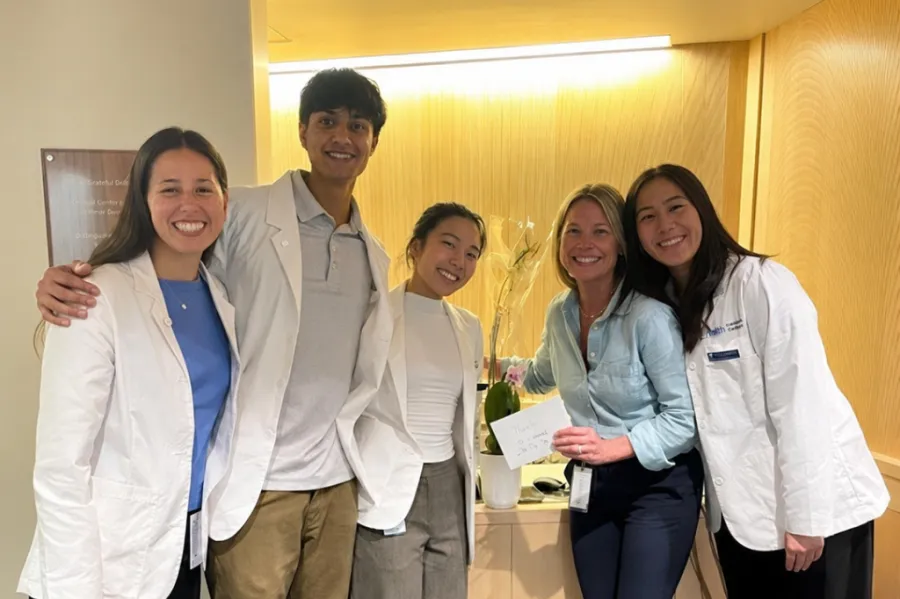
Morgan Wong is among the participants. A first-year medical student at TUSM who is leaning toward a career in OB-GYN, Wong spends her days immersed in a demanding academic curriculum. "Right now we're studying pulmonology — the lungs and the respiratory system. But before this, we were in cardiology and before that, the musculoskeletal system," she said. But at MelroseWakefield Hospital, Wong and her classmates are stepping out of their textbooks and into real-life scenarios, engaging directly with patients. "The sheer dynamic of being in a room with a patient and having to have really intimate conversations is a huge step," she said.
Guiding Morgan and her cohort through that step is Danielle Patturelli, a registered nurse and Clinical Director of the Cardiovascular Center at MelroseWakefield Hospital. Patturelli volunteered to assist in the program, driven by a belief that the patient-physician relationship is as essential as any clinical skill. "It doesn't come natural for everyone to sit in front of a patient and just have a conversation, or ask them tough questions about their past," she said. "I do feel that nurses have a good handle on patient experience, and if I could have a role in helping medical students learn the importance of that patient-physician relationship, I am honored to be part of that."
Previous studies have shown the value of nurses—long recognized for their bedside manner and interpersonal skills—teaching medical students, leading to improved interprofessional collaboration. Those involved with MIDPR have attested to this benefit firsthand, and to the program's knowledge, this type of initiative has not been replicated anywhere else.
In the classroom, Patturelli and her fellow nurse educators stress the importance of open-ended questions: How's your family? What have you been up to? How did that make you feel? The goal, she said, is simple but profound. "Ultimately, patients want to be heard and seen and felt like they have the attention of their physician."
For Wong, the experience has been transformative. "Just being there to chat was so meaningful and significant to both us and the patient," she said. More than that, she has come to understand that human connection is not a soft skill sitting alongside clinical training—it is the foundation of it. "I think what I've taken away is that building that relationship is really the gateway to even being able to unlock any of the later clinical diagnoses," she said. "We can get lost in the book sometimes and forget that this is all about a person at the end of the day."
As part of “thank you” note to patients visited by the students, “As first-year students, we spend the majority of our time studying the human body. By interviewing you, we have learned about the human condition.”
See how Tufts Medicine nurses are shaping the future of care.