For years, Megan Andy tried to make sense of the unbearable pain in her abdomen. Was it severe period cramps? Menopause? Or something else entirely?
"It got to the point where I was starting to have to take work off," she said. "I just didn't know what to do. I was in so much pain."
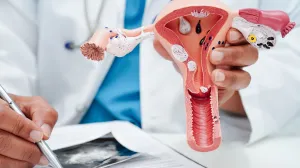
An ultrasound finally provided answers. Megan was diagnosed with adenomyosis, a condition in which tissue that normally lines the uterus grows into the uterine muscle. The condition can cause the uterus to thicken, leading to heavy or prolonged periods, severe cramping and chronic pelvic pain.
Understanding adenomyosis
Adenomyosis most commonly affects women between the ages of 30 and 50, women who have given birth and women with endometriosis or uterine fibroids. Treatment options include medication, hormone therapy or surgery to remove the uterus, known as a hysterectomy.
Megan, 49, said the pain was so bad that it was hard to function. While she felt relief in finally having an answer, she also learned that adenomyosis can be challenging to diagnose because its symptoms often mirror those of other conditions, such as tumors, polyps or endometriosis.
"For years I had been in pain thinking this is just my period, or maybe menopause is coming on," she said.
To manage the pain, Megan took both Advil and Tylenol as often as she could, but she knew she couldn't continue taking that amount of medication every two weeks.
Exploring treatment options
She met with Steven Dakoyannis, MD, chair of the Obstetrics and Gynecology Department at MelroseWakefield Hospital, who recommended a minimally invasive procedure called a robotic-assisted hysterectomy. Megan said she questioned whether removing her uterus was necessary, but the severity of her symptoms made the decision clearer.
A robotic-assisted hysterectomy removes the uterus using a robotic system that provides the surgeon with a magnified, three-dimensional view. The surgeon guides robotic arms with specialized instruments through small incisions, resulting in less pain, smaller scars and a faster recovery compared to traditional open surgery.
"With robotic-assisted hysterectomy, we're able to treat the root cause of a woman's pain through very small incisions," said Dr. Dakoyannis. "That typically means less discomfort after surgery and a much quicker return to everyday life."
Robotic-assisted hysterectomy surgery was approved by the U.S. Food and Drug Administration in 2005. Since then, more than 100,000 robotic-assisted hysterectomies have been performed in the United States.
Lasting relief from chronic pain
Megan's surgery took several hours, and she could go home the same day. She had small incisions, each about the size of a fingernail, on both sides of her abdomen. While the first two weeks of recovery were "a little tough," she was soon up and moving around.
"The recovery was nowhere near as bad as I thought it would be," said the Winthrop resident. "I would totally recommend this to anybody. I am pain-free now."
The difference was dramatic. Before her surgery in May, Megan couldn't plan activities or do the things she enjoyed because of her pain.
She credits Dr. Dakoyannis for the excellent care she received, noting that he took the time to thoroughly explain every step of the process.
"Now, I can't tell you how good I feel," she said. "I wish I could've done it sooner."
You don't need to live in pain. Learn more about minimally invasive gynecologic surgery.