Know Before You Go: What to Expect During a Well-Child Visit

August 15, 2025

A well-child visit is your child’s yearly check-up to track growth, give vaccines, screen development, and support their physical, emotional and social health.

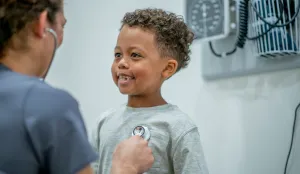
Child at a doctor's appointment

A well-child visit is more than just a check-up — it’s a chance to support your child’s health, growth and development every step of the way. From the first days of life through the teenage years, these yearly visits with your child’s pediatrician help ensure they’re growing up healthy, strong and thriving. Here’s what you can expect at every age. 

Each year, your child’s pediatrician will take the time to listen to concerns and answer questions that you or your child may have about their growth and development. Your pediatrician will also discuss any changes your child can make to improve their health, like exercising, reducing screen time or eating more veggies.

What actually happens during a well-child visit?

The purpose of a well-child visit is to help prevent childhood diseases, identify problems early and promote healthy development. All well-child visits include:

  • Developmental screenings: Your pediatrician will go over health milestones
  • Health and safety discussions: Nutrition, exercise and accident prevention (the importance of wearing a bike helmet and buckling up in the car, for instance) are discussed
  • Immunizations and vaccinations: Immunizations by age will be given to protect your child from childhood illnesses like measles
  • Physical exam: Your pediatrician will measure height, weight and blood pressure and listen to your child’s lungs. They will also check their eyes, ears, nose and mouth, feel their abdomen and check bones and joints
  • Health screenings: Your child may have their hearing and vision checked and will be screened for mental health wellness

How often does my child need to be seen by their pediatrician?

The American Academy of Pediatrics recommends well-child visits on a set schedule. Generally, well-child visits occur at:

  • Birth, 2–5 days old, and 1, 2, 4, 6, 9, 12, 15, 18 months, 2 years and 2.5 years old. After 2.5 years old, your child will have annual visits until they are 21 years old
  • Beginning at age 12, children may consent to their own medical care for substance use without the need for parental permission
  • The 21st Century Cures Act gives adolescents the right to confidentiality in health

What do I need to do before my well-child visit?

You can do a few simple things to prepare for your child’s checkup.

  • You may want to make a list of questions to help you remember what to ask your pediatrician
  • Be aware of any recent changes in health, problems or concerns you have
  • Review your family health history in case any questions come up

What happens when I arrive for my well-child visit?

When you arrive for your child’s well visit, you’ll check in at the front desk. A nurse or medical assistant will bring you and your child to an exam room, take their height, weight and vital signs, and ask a few questions about their health and development. 
Your pediatrician will knock before entering, introduce themselves and begin the visit.

When will my child receive immunizations?

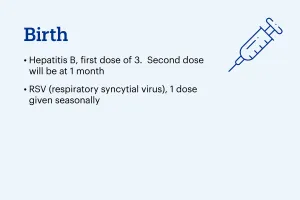
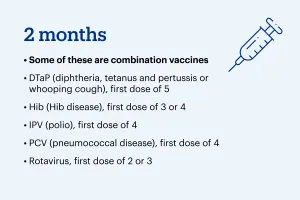
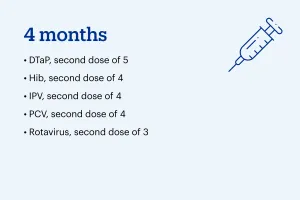
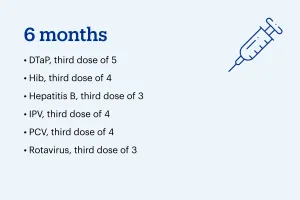
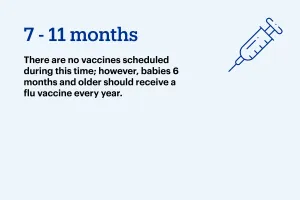
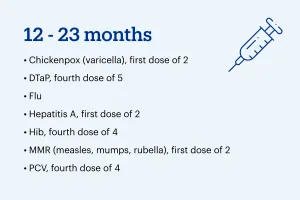
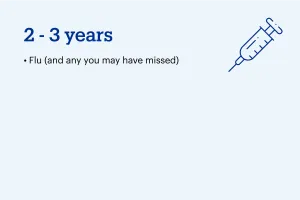
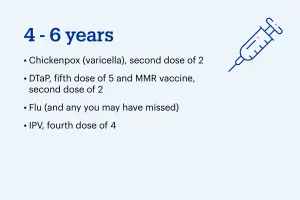
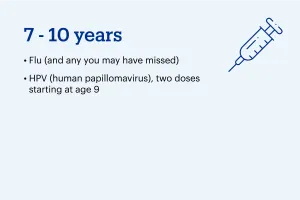
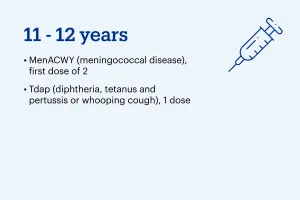
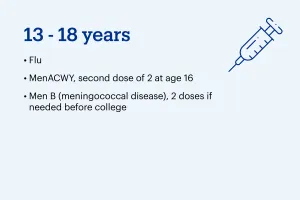
Immunizations are part of most well-child visits. Vaccines are an important part of staying healthy—they protect children from preventable childhood diseases, some of which can be serious and even deadly. Vaccines are usually given at the end of the appointment after the exam is complete.
Immunizations are given based on the following schedule:
 

Are there specific age-related questions I should ask?

Well-child visits are the perfect time to ask your pediatrician questions about your child’s growth and development at every stage. 

From birth to 9 months, you might ask questions about feeding, sleeping, peeing and pooping. 

It’s perfectly normal to ask about vaccinations, diet, nutrition and emotional and mental health. 

You might also ask about allergies, medications and environmental factors that could be affecting your child’s health, like second-hand smoke or lead and specific medical conditions.

Your pediatrician will be prepared to talk to you about your child’s overall health, including any behavioral or developmental questions you may have.

How will I know it’s time for a well-child visit?

Generally, your pediatrician’s office will reach out to you to let you know it’s time to schedule a yearly physical. You can also keep track of your child’s appointments and add a reminder to your calendar when it’s time to schedule a visit. Yearly physicals are required for all school-age children.

  • For your child to attend school for the first time, the law requires children to have a physical exam
  • Students who play sports often need a physical exam every year

How much does a well-child visit cost?

Well-child visits are covered under the Affordable Care Act (ACA) as preventive care. The ACA requires health insurance plans to cover 1 well-child visit a year at no cost to parents/caregivers. 

That means you’ll have no copay and won’t have to pay any money out of your pocket.

Feeling nervous before your well-child visit?

It’s normal for your child to feel nervous before their annual exam. You can put your child’s mind at ease by:

  • Getting comfortable: Allowing them to bring a favorite blanket, toy or stuffed animal
  • Keeping them company: Letting them know you’ll be in the room the entire time (unless they are 12 and older for confidentiality reasons)
  • Telling them it’s okay to have mixed feelings: Let them know lots of kids feel shy or nervous at the doctor. Their feelings are completely normal.
  • Preparing by practicing: You can prepare your child by letting them know what kinds of questions they’ll be asked by their pediatrician and even by role-playing
  • Being ready for vaccinations: Let your child know if they’re receiving vaccinations and reassure them you’ll be by their side (unless it would upset your child more to know about vaccinations ahead of time)

What questions will be asked during a well-child visit?

Your child’s pediatrician will ask questions to learn about your child’s health since the last time they visited. Questions will vary depending on age, but some questions they may ask include:

  • Do you have any concerns about their health?
  • Is your child up to date on vaccinations?
  • Have there been any recent illnesses or injuries?
  • How is your child developing?

What will my child’s doctor talk to me about during the visit?

A well-child visit is a great opportunity to get any parenting questions or concerns addressed. Your pediatrician will also want to get to know you as a parent. Some questions you may be asked include:

  • Have there been any changes in the family and household?
  • Do you feel safe at home?
  • Can you manage your child’s health needs?
  • Do you have concerns about parenting?
  • Do you have questions about discipline or setting boundaries?
  • How is your child doing in school (if school age)?
  • Does your child have friends?

Depending on your pediatrician, your well-child visit may go beyond the routine exams. Other topics of discussion may include:

  • Social-emotional development: How your child manages their emotions, builds relationships and interacts with others
  • Mental health: Screening for depression, anxiety and behavioral issues
  • Adolescence: Puberty, substance use, sexual behavior and mental health
  • Detailed questions: About your and your child’s family medical history

Bottom line: Well-child visits keep kids healthy

A yearly check-up is just that—a time to check your child’s overall health and make sure they are doing well.
It’s also a great opportunity to build a relationship with your pediatrician and for children and parents to ask questions to solve any concerns about growth and development.

You’ll walk out feeling like you are on top of your child’s health.

Learn about how we care for our youngest patients
 

Baby walking
Articles
Baby Walkers: What Every Parent Needs to Know
September 12, 2025
When your baby is ready to explore, it can feel like they’re eager to move before their legs truly are. Many parents turn to baby walkers, thinking they’re a helpful tool to keep babies contained and encourage mobility. But research shows that not only are walkers unnecessary for development—they can be dangerous.
Back to school
Articles
Pediatrician-Approved Tips to Prevent Back-to-School Illness
August 21, 2025
Pediatrician-approved tips to keep your kids and family healthy during back-to-school season.
WINDOW FALL
Articles
Keep Kids Safe: 5 Tips To Avoid Window Falls
June 18, 2025
Jose Ponce-Rios, MD, medical director of Pediatric Emergency Services at Lowell General Hospital shares how to prevent window falls and keep your family safe with simple measures like installing window guards, keeping furniture away from windows and more.

Be among the first to know

Enjoy the latest health updates from Tufts Medicine by signing up for our e-newsletter today.

Jump back to top