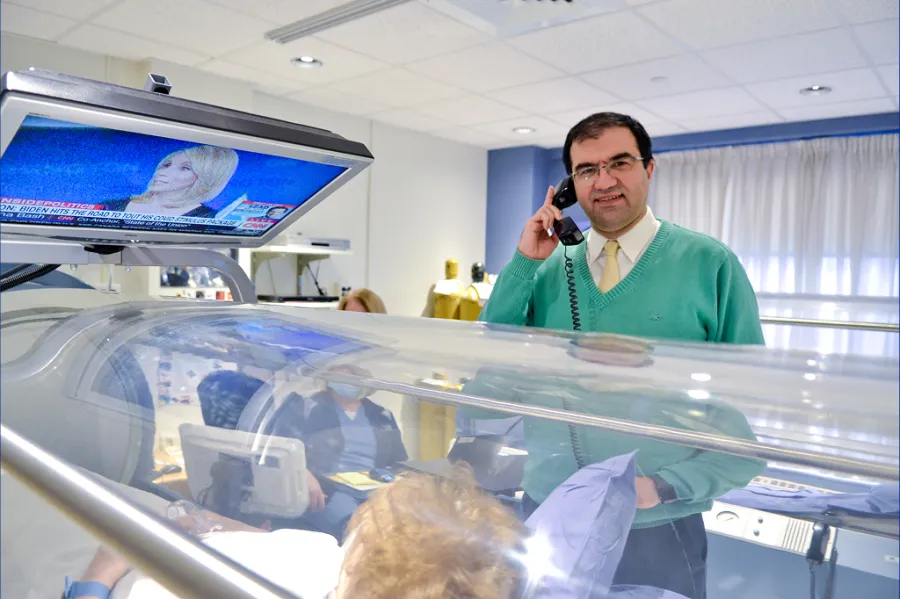
When a wound isn't healing as expected, specialized wound care may help. Hyperbaric oxygen therapy (HBOT) is one of the advanced treatments offered through Tufts Medicine's Wound Healing Program. By delivering 100% oxygen in a pressurized chamber, HBOT helps improve oxygen delivery to damaged tissue, supporting wound healing, reducing infection and promoting recovery.
"Many people are surprised to learn that oxygen itself can be a powerful medicine," Payam Salehi, MD, Chief of Vascular Surgery, Tufts Medical Center and Professor of Surgery, Tufts University School of Medicine. "By increasing the amount of oxygen delivered to injured tissues, we can help the body heal."
If your doctor has recommended hyperbaric oxygen therapy, here's what you can expect.
What is hyperbaric oxygen therapy?
Hyperbaric oxygen therapy involves relaxing in a clear, pressurized chamber while breathing pure oxygen. The pressure inside the chamber is typically two to three times greater than normal atmospheric pressure, allowing your blood to absorb significantly more oxygen than they would under normal conditions. This oxygen-rich blood travels throughout the body to support healing, reduce inflammation and help fight infection.
Think of it as giving your body's healing process a boost.
Why might I need hyperbaric oxygen therapy?
Your care team may recommend HBOT if you have a condition where tissues aren't getting enough oxygen to heal properly. Conditions commonly treated include:
- Diabetic foot ulcers
- Radiation-related tissue injuries
- Chronic bone infections (recurrent osteomyelitis)
- Compromised skin grafts or flaps
- Crush injuries
- Certain types of arterial ulcers
- Severe infections affecting soft tissue or bone
Before your first treatment
Before starting therapy, you'll undergo an evaluation to determine whether HBOT is right for you. Depending on your condition and medical history, your care team may recommend the following tests:
- Blood tests
- Chest X-ray
- EKG
- Hearing or vision testing
- MRI
- Oxygen measurements
- Physical examination
Your team will also review your medications. Some medications may need to be adjusted before treatment. This is especially important for patients who have undergone cancer treatment or are currently receiving certain therapies.
How should I prepare for my appointment?
A few simple steps can help ensure a safe and comfortable treatment:
Do:
- Eat a meal or healthy snack before treatment
- Stay hydrated
- Use the restroom before your session
- Arrive on time for your appointment
Don't:
- Smoke before or during your course of treatment
- Drink alcohol within 12 hours of treatment
- Wear jewelry
- Apply lotions, deodorants, hair products or makeup before your appointment
- Bring electronics, books or food into the chamber
You'll change into 100% cotton clothing provided by the treatment center before entering the chamber.
What happens during treatment?
Most hyperbaric oxygen therapy sessions last between 90 minutes and 2 hours. Many patients receive treatment once a day over several weeks, depending on their condition and healing goals.
Step 1: Entering the chamber
You'll lie comfortably inside a clear acrylic chamber. The transparent design allows you to see outside throughout the treatment. A technician will remain in contact with you and monitor you the entire time.
Step 2: Pressurization
As the chamber pressure gradually increases, you may feel fullness or popping in your ears, similar to what happens during an airplane takeoff or when driving through mountains. This is completely normal. Your care team will teach you simple techniques such as swallowing or yawning to help equalize the pressure. The sensation usually lasts only during the first 10 to 15 minutes of treatment.
Step 3: Relax and breathe
Once the chamber reaches the prescribed pressure, most patients feel comfortable and relaxed. During this phase, you can:
- Rest
- Sleep
- Watch TV
- Listen to music
The majority of the treatment is simply spent breathing oxygen and relaxing.
Step 4: Decompression
At the end of the session, the chamber pressure is slowly reduced. You may notice the ear-popping sensation again or hear cracking, but it typically resolves quickly without intervention.
What does hyperbaric oxygen therapy feel like?
Most patients describe the experience as comfortable and uneventful. "The biggest surprise for many patients is how easy the treatment actually is," says Dr. Salehi. "Once the pressure equalizes, most people simply relax for the remainder of the session." The chamber is clear, well-lit and continuously monitored. Many patients even nap during treatment.
Are there side effects?
Hyperbaric oxygen therapy is generally very safe when performed under medical supervision. However, as with any medical treatment, side effects can occur. The most common include:
Ear pressure or discomfort
The most frequent side effect is temporary pressure in the ears caused by changing chamber pressure.
Temporary vision changes
Some patients notice mild changes in their vision during a course of treatment. These changes are usually temporary and often resolve after treatment ends.
Low blood sugar
Patients with diabetes should eat before treatment and closely follow instructions from their care team regarding blood sugar management.
Mild fatigue
Some people feel tired after a session, although most return to their normal activities right away.
Hyperbaric oxygen therapy myths vs. facts
Myth: Hyperbaric oxygen therapy is only for scuba divers.
Fact: While HBOT is well known for treating decompression sickness, it is also an established treatment for many wound-healing conditions, radiation injuries, severe infections and diabetic ulcers.
Myth: The chamber is like an MRI and feels claustrophobic.
Fact: Hyperbaric chambers are clear and allow you to see outside during treatment. Staff members remain in constant communication with you throughout the session. Many patients find the experience relaxing.
Myth: Hyperbaric oxygen therapy is painful.
Fact: The treatment itself is painless. The only sensation most patients notice is temporary ear pressure during compression and decompression.
Myth: Hyperbaric oxygen therapy is a wellness trend.
Fact: HBOT is an evidence-based medical treatment approved for specific conditions. While you may see wellness claims online, patients should seek treatment through accredited medical programs and under physician supervision.