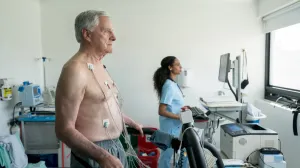
Cardiac rehabilitation (cardiac rehab) is more than exercise—it's a program that helps you recover, build strength and learn ways to protect your heart. If your doctor has recommended cardiac rehab, here's what you need to know so you can feel safe, informed and confident on your journey.
What is cardiac rehab?
Cardiac rehab combines supervised exercise, education and support to help improve heart health, strength and well-being. Your doctor may recommend cardiac rehab after events such as a heart attack, heart surgery, stent placement or a diagnosis of heart failure.
The goal is to help you recover safely, build endurance and make heart-healthy lifestyle changes.
Why do I need to go to cardiac rehab?
Your care team may recommend cardiac rehab to:
- Help your heart recover after a cardiac event or procedure
- Build strength and endurance safely
- Reduce your risk of future heart problems
- Improve blood pressure, cholesterol and overall fitness
- Support emotional and lifestyle changes that benefit your heart
How do I get started?
To begin cardiac rehab, you'll need a referral from your cardiologist or primary care clinician. Once the referral is in place, a member of the cardiac rehab team will contact you to schedule your first visit and answer questions about insurance or logistics.
What happens at my first cardiac rehab appointment?
Your first visit is an evaluation and planning session. During this appointment, your care team will:
- Review your medical history and recent cardiac event
- Check blood pressure, heart rate and weight
- Talk about your medications
- Ask about your activity level, lifestyle and goals
This information helps the team create a personalized cardiac rehab plan that's safe and appropriate for you.
What will cardiac rehab sessions be like?
Most cardiac rehab programs include regular sessions over several weeks. A typical session might include:
- Supervised exercise: You'll use equipment like treadmills, stationary bikes or light weights while your heart rate and symptoms are monitored.
- Heart monitoring: Team members watch your heart rate, rhythm and how you feel during activity.
- Education: You'll learn about heart disease, medications, nutrition and ways to stay heart-healthy.
Your care team adjusts your program as you progress.
Listen to Bob describe his experience at MelroseWakefield Hospital's Cardiac Rehab
How should I prepare for cardiac rehab?
To get the most from your rehab sessions:
- Wear comfortable workout clothes and supportive shoes
- Bring a list of your current medications
- Bring water and a light snack if recommended
- Ask if there are any specific instructions before your first session
Is cardiac rehab safe?
Yes. Cardiac rehab takes place in a supervised, medically guided setting. Your exercise and activity are tailored to your health status and monitored closely, so you can build strength safely.
How long does cardiac rehab last?
Cardiac rehab programs vary, but many last several weeks to a few months depending on your health needs and goals. Your care team will discuss the recommended frequency and duration with you.
Frequently asked questions
Do I need insurance coverage for cardiac rehab?
Many insurance plans, including Medicare, cover cardiac rehab for eligible conditions. Coverage varies, so check with your insurer or ask your care team for help.
How often will I attend cardiac rehab?
Most people attend two to three sessions per week, but your schedule will be tailored to your needs.
Can cardiac rehab help with emotional health?
Yes. Many programs include support for stress, anxiety and lifestyle behavior changes that impact heart health.
What if I feel nervous about exercise?
It's normal to feel nervous. Cardiac rehab is supervised, and professionals are there to support and adjust activity to your comfort and safety.
Will I see the same team throughout my program?
Yes. You'll work with a consistent team that understands your progress and goals.
Bottom line: You're taking an important step
Cardiac rehabilitation can be one of the most impactful parts of your heart recovery journey. It helps you build strength, learn heart-healthy habits and connect with a care team dedicated to your long-term wellness.
Your Tufts Medicine cardiac rehab team is here to support you every step of the way.