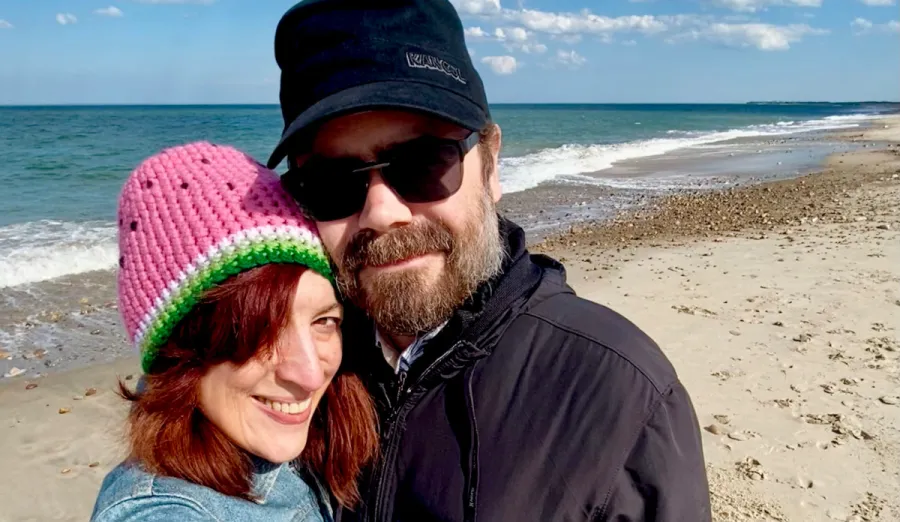
Kimberly Gunner has always been someone who notices things—the changing of the seasons, the humor in small moments, the feeling of being part of something bigger than herself. She's an artist, a writer, a person who remembers names and asks follow-up questions, and she connects deeply with the people around her. Those qualities shaped her world, and they would shape how she faced unimaginable challenges.
A life changed in an instant
On August 18, 2020, Kimberly and her husband, Andy, set out for a short walk near their home in Natick. They were just half a mile from their house when a pickup truck sped toward them, swerved onto the sidewalk and hit them with full force—driving them through a wooden fence. Witnesses watched as the truck ran over the couple and then backed up on top of Kimberly's legs before all occupants in the vehicle fled the scene.
Kimberly and Andy were airlifted to separate hospitals—Kimberly, to Tufts Medical Center, where trauma teams were already preparing for one of the most complex cases they had ever seen.
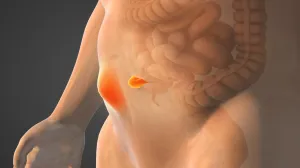
Chief of Orthopedic Trauma Surgery, Scott Ryan, MD, was called to the case, and when he entered the operating room, he was stunned. Kimberly had been impaled by a two-by-four. Her jaw was broken in five places. Her nasal cavity was fractured. Her left arm was broken in two. Her right tibia and fibula were fractured and exposed. Her left ankle was shattered and dislocated with major skin loss. And eight inches of her left femur—the largest segment of bone he had ever seen missing—were gone.
Extraordinary care when it mattered most
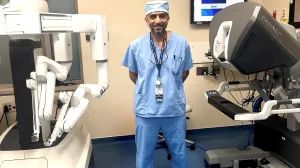
Kimberly required care from a coordinated team of medical specialists. Along with Dr. Ryan, this team included: Horacio Hojman, MD, Chief of Trauma and Acute Care Surgery; Martin Goodman, MD, surgeon and Director of the Peritoneal Surface Malignancy Program; and Christopher Homsy, MD, plastic and reconstructive surgeon who performed a free tissue transfer from her back muscles to her ankle—a critical surgery that required intense postoperative recovery, along with applying multiple skin grafting procedures along both of her legs. Kimberly's jaw was reconstructed by the Oral and Maxillofacial Surgery team, and the Orthopedic Hand Surgery team successfully repaired her arm.
For the first two weeks, Kimberly had surgeries nearly every day—often multiple in one session. Despite the severity of her injuries, she avoided infection.
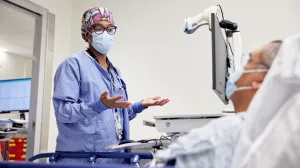
Kimberly spent two weeks in the ICU and a full month as an inpatient during COVID restrictions. Visitors weren't permitted for much of her stay, yet she never felt abandoned. Her ICU and North 4 nurses checked on her frequently, shared laughter, and treated her pain, fears and progress with genuine care. "They were like my sisters," Kimberly said. "I was alone—but never lonely."
Dr. Homsy sat with her often, gently talking her through procedures and reassuring her about every step. "He treated my ankle like it was his baby," she said. "And he treated Andy like family."
Andy, who suffered far less severe injuries, was discharged home the morning after the hit-and-run and spent as much time with Kimberly as was permitted. The couple found mutual healing in those visiting hours, together forming a path towards recovery. Their course was dramatically blocked when Kimberly was transferred to rehab, where visitors were not allowed. She resided at the facility for one month.
Rebuilding a life, one step at a time
Returning home meant starting over—navigating the world in a wheelchair, in pain and fully reliant on Andy's care—all with a leg that could potentially be lost.
More than half of her femur was missing, yet Dr. Ryan believed it could be rebuilt.
Over the next few years, Kimberly underwent seven additional surgeries, including the implantation of an innovative bone-lengthening device that she and Andy maneuvered at home daily. Slowly, Kimberly's bone re-grew.
"Her recovery is remarkable," said Dr. Ryan. "Her physical strength is extraordinary – but her mental strength is what truly sets her apart."
"Kimberly was incredibly resilient and never accepted no as an answer when it came to walking again," Dr. Homsy reflected. He promised her she would walk—and dance. About a year after she was admitted to the Medical Center, Kimberly attended a concert with Andy, where, on crutches, she danced. "That, to me, was the best part of her story," he said.
Healing from trauma isn't linear and Kimberly lives with reminders of her injuries every day. She has physical limitations and lingering discomfort, but she approaches her recovery with acceptance, clarity and even curiosity.
"I don't waste energy on 'what if,'" she says. "There's no moving on—just moving forward."
Kimberly has found that drawing from her experience can help others cope with difficulties too. She has connected with other trauma survivors, offering compassion, honesty, and deep understanding.
"No one has to feel alone," she says. "If someone needs to talk, I listen. And if someone needs to listen, I talk. People need people."
She and Andy have returned to many of their favorite things: concerts, galleries and museums, local markets, quiet moments in nature. They move through life with more care, but with no less joy.
Surpassing five years after injury, Kimberly continues to find strength in small victories: carrying groceries, folding laundry, brushing her hair. The everyday moments feel like gifts and they do not go unrecognized.
"To wake up in my own home and stand on two legs is a fantastic start to any day," she said.
Dr. Ryan agrees. "Kimberly's functionality is far beyond what I ever imagined," he said. "But it's her spirit—her grit—that truly defines her recovery."
Trauma will always be part of Kimberly's story. But it will never overshadow the awe she feels of her survival or the appreciation she has for those who helped to rebuild her life.
"Andy and I are alive," she said. "We'll never lose sight of how remarkable that is and we will always be grateful."
See how expert trauma care, advanced surgery and compassion come together at Tufts Medicine.