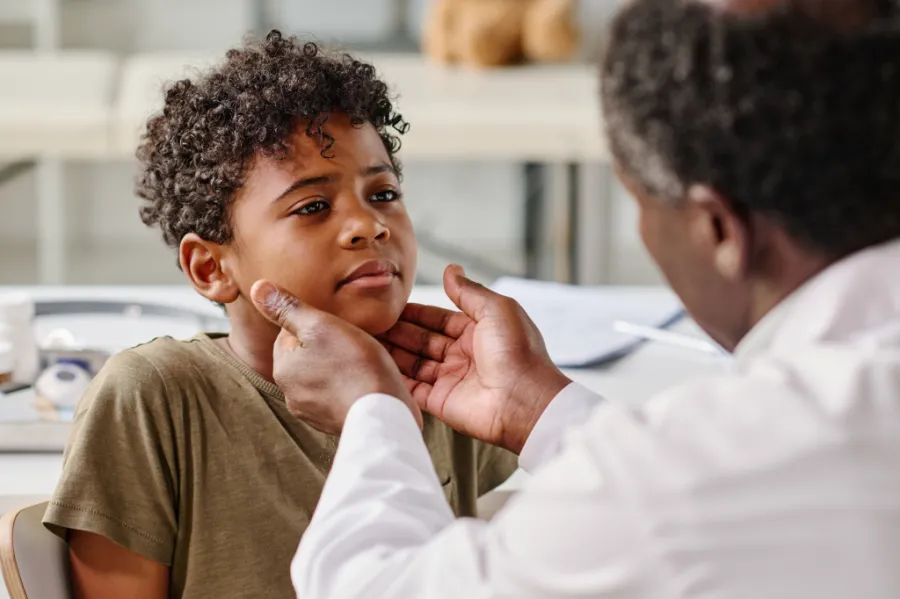
Knowing the signs, when to get tested and when antibiotics are actually needed can help your child recover quickly and avoid unnecessary treatment. Below, we answer some of the most common questions parents have about strep throat, from surprising symptoms to diagnosis, treatment, contagiousness and more.
Q: What is strep throat?
Strep throat is a bacterial infection caused by Group A Streptococcus (Group A strep). It commonly affects school-age children but can occur at any age.
Q: What are the symptoms of strep throat?
Classic symptoms include a sudden sore throat, painful swallowing, fever, swollen lymph nodes and red, swollen tonsils (sometimes with white patches). Children may also have headache, stomach pain, nausea or vomiting.
Q: Can children have strep throat without a sore throat?
Yes. Some children have unusual symptoms. They may develop a rough, sandpaper-like rash (scarlet fever), stomach pain, vomiting or fever with little or no sore throat. Young children may also be irritable or eat less than usual.
Q: Could my child have a sore throat without strep throat?
Yes. Most sore throats are caused by viruses. The presence of viral symptoms such as cough, runny nose, congestion, conjunctivitis or diarrhea should raise suspicion of viral pharyngitis, which is much more common than bacterial pharyngitis.
Q: How is strep throat diagnosed?
A clinician uses a rapid strep test and, if needed, a throat culture. Symptoms alone cannot reliably distinguish strep throat from viral infections.
Q: Do antibiotics treat strep throat?
Yes. Antibiotics are recommended for confirmed Group A strep infections. They shorten symptoms by about a day if started early, reduce the spread to others and help prevent complications such as rheumatic fever. Antibiotics are not recommended if testing is negative.
Q: How long do antibiotics take to work?
Most children and adults begin feeling better within 24 to 48 hours after starting antibiotics. Fever often improves within a day. Children can return to school after 24 hours of appropriate antibiotics if fever has resolved and they feel well enough to return to normal activities.
Q: Can adults get strep throat?
Yes. Adults can develop strep throat, especially parents, caregivers, teachers and others exposed to school-age children. However, viral sore throats are more common in adults.
Q: How contagious is strep throat?
Strep throat spreads through respiratory droplets and close contact. Symptoms start within 2 to 5 days after exposure to an infected person. Without treatment, a person can remain contagious for up to two to three weeks. Appropriate antibiotics greatly reduce contagiousness within the first day.
When to seek care
If you or your child has symptoms of strep throat—such as a sore throat with fever, swollen glands, a rash or difficulty swallowing—it's important to be evaluated by a healthcare clinician. Because strep throat requires testing to confirm the diagnosis, getting the right care can help ensure appropriate treatment and avoid unnecessary antibiotics.
If your PCP is available, schedule an appointment for evaluation. If you need same-day care, can't get in with your PCP or symptoms develop after hours or on the weekend, visit your local urgent care. Prompt testing and treatment can help you or your child start feeling better sooner and reduce the risk of spreading the infection to others.
Is your child showing signs of strep throat?
Can't get in with your pediatrician? Tufts Medicine Urgent Care offers same-day strep testing