As dementia progresses, everyday life can become more challenging—not only for the person living with the disease, but for their loved ones as well. Care decisions can feel overwhelming, and one question comes up often: Is it better to move to a care facility, or can a person remain safely at home?
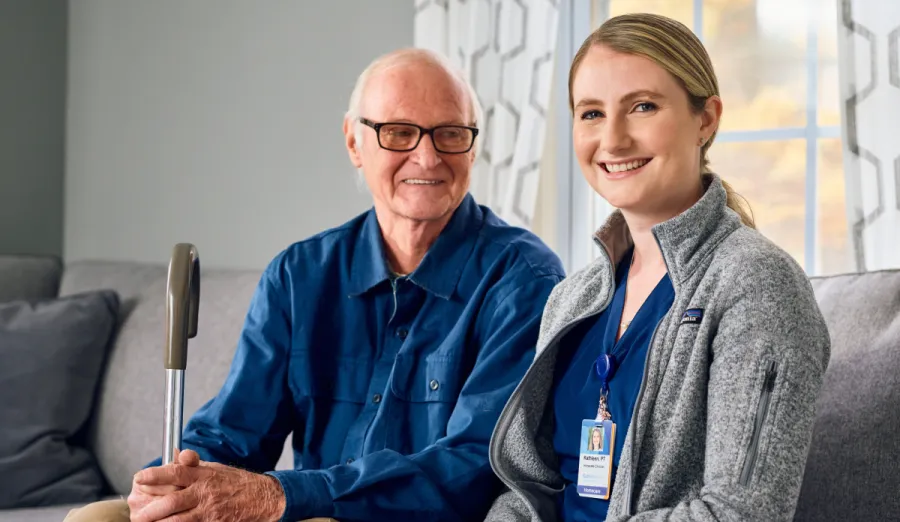
For many families, in-home care offers a reassuring middle ground, providing essential support while allowing loved ones to remain in a familiar, comforting environment. Tufts Medicine Care at Home provides in-home nursing, palliative and hospice care that can help you or your loved one stay safely in the home.
Here’s what you should know about in-home care and why home may be an option for those living with dementia.
Why home matters
Home isn’t just where we sleep or eat. It’s where we feel most like ourselves. For people with dementia, familiar surroundings can reduce confusion, ease anxiety and help preserve a sense of identity.
Remaining at home often means:
- Fewer disruptions to routines
- Less sensory overload compared to busy facilities
- Greater sense of independence
- More meaningful time with family, pets and personal belongings
- Reduced risk of infection or illness compared to communal settings
Studies have shown that individuals with dementia may experience slower cognitive decline and higher quality of life when cared for at home with proper support.
In-home dementia care
In-home care can be tailored to match a person’s stage of dementia and their unique physical, emotional and cognitive needs. At Tufts Medicine Care at Home, our team of home health aides, nurses, physical therapists, social workers, chaplains and volunteers provide many services in the home, including:
Personal care assistance
Trained home health aides can help with daily activities like:
- Bathing and dressing
- Grooming and toileting
- Medication reminders
- Meal preparation
Companionship and cognitive engagement
Social interaction is critical for emotional health. Caregivers can:
- Offer conversation and companionship
- Engage clients with memory games, music, art or familiar activities
- Encourage gentle physical movement and fresh air
Household support
Keeping the home safe and functional is just as important. Services may include:
- Light housekeeping
- Laundry and linens
- Grocery shopping
- Organizing medications or appointments
Skilled nursing care
For people with more advanced needs, visiting nurses provide:
- Wound care
- Help managing chronic conditions
- Vital sign monitoring
- Care coordination with doctors and specialists
Physical therapy
Physical therapy can significantly benefit dementia patients by improving physical function, balance and potentially slowing cognitive decline.
Support for family
In-home care isn’t just for the person with dementia—it offers vital relief for caregivers, too. Family members often juggle work, parenting and caregiving all at once. Respite care, or temporary in-home help, can provide much-needed breaks, prevent burnout and allow loved ones to remain involved without feeling overwhelmed.