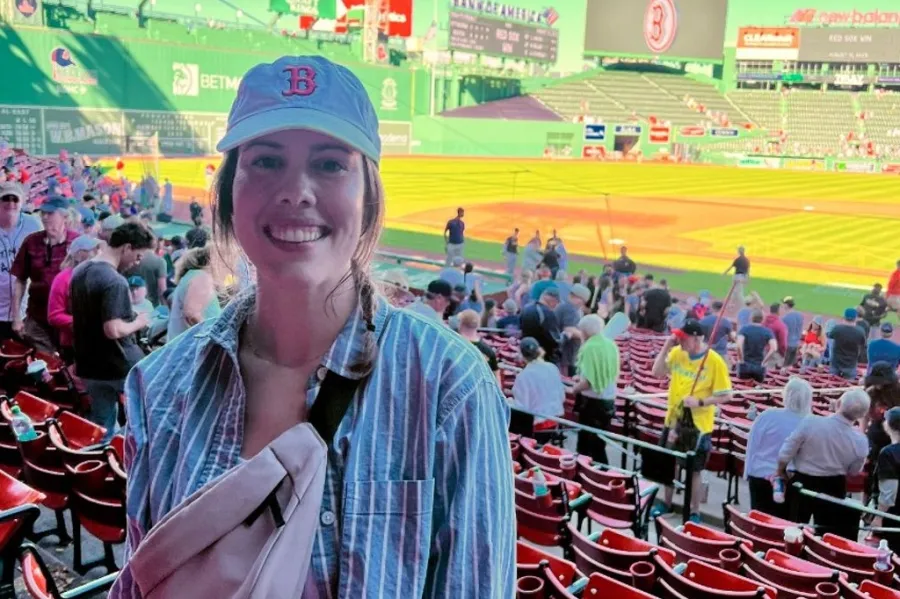
For Lauren Lessard, the 2026 Boston Marathon is the ultimate victory lap. Over the past two years, she navigated two complex diagnoses—stage IV endometriosis and achalasia—and two surgeries. Now, she's running to celebrate her health and the Tufts Medical Center care team that helped her reclaim her stride.
Something didn't feel right
When Lauren first started experiencing symptoms, she didn't immediately think of endometriosis. "Every impression I had of endometriosis before my own diagnosis was completely different from what my experience ended up being," she recalls. Rather than the severe pain often associated with the condition, Lauren experienced persistent bloating, a feeling of fullness she couldn't explain and mid-back pain.
The Tufts Medicine CheckUp newsletter ultimately prompted her to act. An article about rising colon cancer rates in young adults mirrored her own symptoms, and she decided not to wait. "I felt like something was going on and booked an appointment with my doctor to ensure we were addressing it."
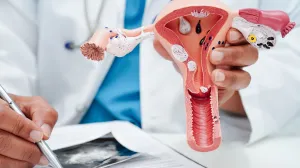
That decision led to an ultrasound, which revealed large ovarian cysts. An MRI confirmed the diagnosis: stage IV endometriosis (meaning the disease is widespread throughout the pelvis and beyond). Endometriosis can notoriously take four to eleven years to diagnose. Fortunately for Lauren, between her proactive approach and her attentive care team, she had answers in just a few weeks.
Working with Alison Vogell, MD, Division Chief, Minimally Invasive Gynecologic Surgery, Lauren underwent surgery to remove the cysts. She emerged ready to get back to the activities she loved and registered for a triathlon in July 2025.
Then came challenge number two
Early in 2025, Lauren began experiencing troubling new symptoms. Simple acts like drinking water became difficult, leaving her gasping for breath with heartburn-like symptoms during most meals. The diagnosis was achalasia, a rare condition where the esophagus struggles to move food to the stomach.
Another surgery was needed, but Lauren had her long-awaited triathlon coming up. Rather than giving up, she found her thoracic surgeon, Lana Schumacher, MD, Chief of Thoracic Surgery, Tufts Medical Center, willing to work with her. "I did a triathlon on a Sunday, and I had my surgery on the following Friday."
Following a smooth recovery, the daily struggle to swallow disappeared. "Since getting that surgery, I can enjoy eating again," Lauren says.
Care that felt different
Lauren's doctors made complex medical information accessible and helped her understand what was happening in her body. "Ever since I started my journey with Tufts Medical Center, I've always felt seen and heard, and that my questions or thoughts or ideas are valid," Lauren shares. "I've been able to explore and understand both of my diagnoses in a really thoughtful way."
That patient-first approach showed up in big ways. Dr. Vogell noticed endometrioma near Lauren's ribs during her first surgery. When Lauren mentioned this before her achalasia procedure, Dr. Schumacher brought Dr. Vogell into the operating room to address it. During that surgery, they discovered and removed endometrioma on Lauren's diaphragm, relieving her back pain.
Because her care team was so proactive, Lauren always had a clear next step. "I cannot commend my doctors and their teams enough. Some people are scared to go to the doctor, but that's not been my experience at Tufts. I know I'm going to get answers, and I'm going to be treated with care during that process," she explains.
Running toward something bigger
Following her recovery, Lauren was ready for a new challenge. When she saw that Tufts Medical Center had a marathon team, something clicked. "I've done a lot in the last couple of years that I wasn't really prepared for," she remembers thinking. "And getting to tackle a life-long dream for a charity that I actually feel a connection to and believe in—it's like all the pieces were falling in place."
She's running not just for herself, but to raise awareness and encourage others to advocate for their health. "Especially as women, we've been socialized to normalize and tolerate chronic pain," she says. "If you feel like you can't live life to the fullest based on how your body is experiencing life, it's worth having a conversation with your doctor. You never know what the solution could be."
Part of that solution is building community and sharing experiences. "If we don't talk about our experiences, conditions like endometriosis or achalasia will continue to stay in the background," Lauren urges. "But in sharing our stories, we can help each other put names to the issues affecting our health, get the support we need and encourage each stride forward in women's health research."