The FDA has approved the first new sunscreen filter in more than 25 years. Here's what that means for your skin and what dermatologists want you to know about choosing the right sunscreen.
For years, Americans have had fewer sunscreen options than people in Europe, Australia and parts of Asia. That's beginning to change.
In June 2026, the U.S. Food and Drug Administration approved bemotrizinol, the first new sunscreen filter approved in the United States in more than 25 years. The ingredient has been widely used internationally for years and is expected to appear in U.S. sunscreen products later this year.
The approval has generated excitement among dermatologists, but experts say the most important sunscreen advice remains the same: wear sunscreen every day.
"Daily sunscreen use is one of the most effective things people can do to protect their skin from both skin cancer and premature aging," says Farah Moustafa, MD, dermatologist and Director of Laser and Cosmetics, Tufts Medical Center and Assistant Professor, Tufts University School of Medicine.
Whether you're wondering how much SPF you need, trying to decide between mineral and chemical sunscreen or curious about the new ingredient everyone is talking about, here's what you need to know.
What does sunscreen actually do?
Sunscreen helps protect your skin from ultraviolet (UV) radiation from the sun. Too much UV exposure can damage skin cells, leading to sunburn, premature aging and an increased risk of skin cancer.
Skin cancer is the most common cancer in the United States, making sun protection an important part of everyday health—not just something to think about during summer vacations.
In addition to reducing your risk of skin cancer, sunscreen can help prevent:
- Sunburn
- Dark spots and hyperpigmentation
- Wrinkles and fine lines
- Loss of skin elasticity
- Premature aging caused by sun exposure
What's the difference between UVA and UVB rays?
Not all UV rays affect your skin the same way, but both UVA and UVB contribute to skin cancer. UVB rays primarily affect the outer layers of the skin and are the main cause of sunburn. They can directly damage DNA in skin cells and contribute to the development of skin cancer.
UVA rays penetrate deeper into the skin and contribute to wrinkles, age spots and other signs of premature aging. They also damage skin cells and play an important role in the development of skin cancer.
That's why dermatologists recommend choosing a broad-spectrum sunscreen, which protects against both UVA and UVB rays.
"Many people focus on SPF, but broad-spectrum protection is just as important because UVA rays can penetrate deeper into the skin and contribute to long-term skin damage," says Dr. Moustafa.
What SPF should you use?
SPF, or Sun Protection Factor, measures how well a sunscreen protects against UVB rays.
The American Academy of Dermatology recommends using a broad-spectrum sunscreen with SPF 30 or higher.
For most people:
- SPF 30 blocks about 97% of UVB rays
- SPF 50 blocks about 98% of UVB rays
- No sunscreen blocks 100% of UV rays
The bigger issue isn't usually choosing a higher SPF—it's applying enough sunscreen and reapplying it regularly.
How much sunscreen should you use?
Most people don't apply enough sunscreen to achieve the protection listed on the label.
As a general rule:
- Use about a nickel-sized amount for your face and neck
- Use approximately one ounce (about a shot glass full) for your entire body
- Reapply every two hours when outdoors
- Reapply after swimming or sweating
Mineral vs. chemical sunscreen: What's the difference?
One of the most common questions dermatologists hear is whether mineral or chemical sunscreen is better.
The answer? It depends on your preferences, skin type and lifestyle.
Both mineral and chemical sunscreens help protect the skin from ultraviolet radiation. While they're often described as working differently, current research shows that both types primarily work by absorbing UV energy and preventing it from damaging the skin.
Mineral sunscreen
Mineral sunscreens use ingredients such as zinc oxide and titanium dioxide to protect the skin from ultraviolet radiation.
Benefits may include:
- Good option for sensitive skin
- Broad-spectrum protection
- Often recommended for young children
- Some formulations may be considered more environmentally friendly, depending on the ingredients and local ecosystem concerns
Potential drawbacks:
- Can feel thicker on the skin
- May leave a white cast, especially on deeper skin tones
Chemical sunscreen
Chemical sunscreens use UV filters that absorb ultraviolet radiation before it can damage the skin.
Benefits may include:
- Lightweight feel
- Easier to spread
- Often more transparent on the skin
- Less likely to leave a visible white cast, which can make them particularly appealing for people with deeper skin tones
- Popular for daily wear and under makeup
"There isn't one type of sunscreen that's right for everyone," says Dr. Moustafa. "The best sunscreen is the one that fits your skin type, lifestyle and preferences so you'll use it consistently."
What is bemotrizinol?
Bemotrizinol is a sunscreen filter that absorbs ultraviolet radiation and helps protect the skin from sun damage.
What makes it notable is that it offers broad-spectrum protection against both UVA and UVB rays. It has been used safely in sunscreen products in Europe, Australia and parts of Asia for years, but until now it hadn’t been approved for use in the United States.
The FDA's approval marks the first new sunscreen filter approved in the U.S. since 1999.
Why are dermatologists excited about bemotrizinol?
Dermatologists say bemotrizinol offers several advantages that could improve sunscreen options for consumers.
Strong UVA protection
"One of bemotrizinol's biggest strengths is its ability to provide strong UVA protection. UVA rays contribute to premature aging and play an important role in the development of skin cancer."
It remains stable in sunlight
Some sunscreen ingredients can break down when exposed to UV radiation. Bemotrizinol is highly photostable, meaning it continues working effectively even during prolonged sun exposure.
It feels good on the skin
Sunscreen only works if people use it. Bemotrizinol can help manufacturers create lightweight formulas that spread easily and dry clear on the skin. This could be especially beneficial for people with deeper skin tones, since many chemical sunscreen formulations dry clear and are less likely to leave a visible white cast than some mineral formulations.
Minimal systemic absorption
Research has shown that bemotrizinol largely remains on the skin's surface rather than being significantly absorbed into the body, a characteristic that has contributed to its popularity internationally.
Should you switch to a sunscreen with bemotrizinol?
Not necessarily. If you're already using a broad-spectrum sunscreen with SPF 30 or higher every day, dermatologists say you should continue using it.
"Bemotrizinol gives us another excellent option, but it doesn't mean your current sunscreen suddenly isn't working," says Dr. Moustafa. "What's most important is finding a sunscreen you'll wear consistently."
However, products containing bemotrizinol may be especially appealing for:
- People who prefer chemical sunscreens
- People looking for strong broad-spectrum protection, including UVA protection
Common sunscreen myths
Do I need sunscreen on cloudy days?
Yes. Up to 80% of UV rays can pass through clouds, meaning your skin can still be exposed even when the sun isn't visible.
Do people with darker skin tones need sunscreen?
Yes. While darker skin contains more melanin, it can still be damaged by UV radiation and skin cancer can still occur.
Is makeup with SPF enough?
Usually not. Most people don't apply enough makeup to achieve the SPF protection listed on the product label. Sunscreen should still be your primary source of protection.
Do I need sunscreen indoors?
If you spend time near windows or drive regularly, sunscreen can help protect against UVA rays that penetrate glass.
The bottom line
The FDA's approval of bemotrizinol is welcome news for dermatologists and consumers alike. The ingredient expands the sunscreen options available in the United States and may help create products that offer strong protection while feeling more comfortable to wear.
But the fundamentals of sun protection haven't changed.
Choose a broad-spectrum sunscreen with SPF 30 or higher, apply enough to cover exposed skin and wear it every day—not just when you're heading to the beach.
"The best sunscreen," says Dr. Moustafa, "is the one you'll actually use."
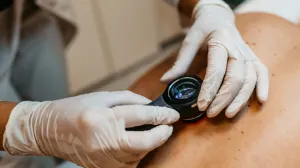
Daily sunscreen use is important, but it shouldn't be your only line of defense. Regular skin checks help detect skin cancer early and provide peace of mind about changes in your skin.