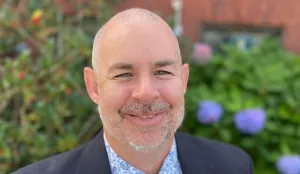
It had been a quick inning. Cory Thomas, the 48-year-old coach of a Melrose baseball team was coming off the field from his coach’s box and back to the bench when he began feeling strange.
“My feet felt heavy, I was off balance and I couldn’t hold my scorebook or my water bottle,” remembers Cory of the June day in 2022. “I didn’t realize that my speech was slurred. I was talking to the other coaches and players who were all looking at me strangely. They were asking, ‘why do you sound like that?’”
Cory saw, and will always remember, the look of concern on the face of his 15-year-old son, who was a member of the team. “He told me to stop messing around and that I was scaring him.”
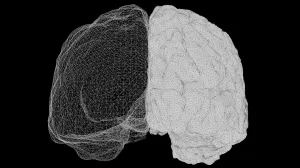
Thankfully, an off-duty nurse, who was watching the game noticed the signs Cory was presenting as signs of stroke and immediately called 911. Cory was having a hemorrhagic stroke, otherwise known as a brain bleed.
Hemorrhagic stroke is a serious type of stroke that occurs when blood from an artery begins bleeding into the brain. One of the main causes of this kind of stroke is high blood pressure—and Cory’s was dangerously high that day.
While waiting for the ambulance to arrive, Cory remembers being frightened and thought that he might not survive. While waiting for the ambulance, Cory was scared. “I honestly didn’t know if I was going to make it,” he said. When the EMTs arrived, they told him he was going to MelroseWakefield Hospital, Cory remembers thinking, that’s where I want to go.
At the Emergency Department, he was quickly evaluated and treatment began immediately to get his blood pressure lowered.
“Recognizing stroke symptoms quickly is so important,” said Sarah Nelson, MD a neurologist at MelroseWakefield Hospital. “Getting medical help fast can improve a person’s chance of recovery.”
Once stabilized Cory was transferred to Tufts Medical Center, where he was monitored and treated for hypertension for nine days before being discharged for a month at a rehabilitation facility to regain his strength.
By his follow-up appointment in October of 2023, nearly all of Cory’s symptoms were gone.
Since his stroke, Cory has made his health a top priority. In April, he completed the Boston Marathon, raising funds for stroke awareness and has become an advocate for stroke education.
This past month, Cory’s son who witnessed his stroke, graduated from Melrose High School. Watching that moment felt like a gift. “Three years ago, I didn’t think I’d live to see this,” Cory said.
“MelroseWakefield Hospital and Tufts Medical Center played roles in saving my life and I will forever be grateful for the coordinated care I received and the second chance they gave me.”