Hearing that you need a stress test can be a little unsettling, especially if you've never had one before. The good news is that stress tests are one of the most common tools cardiologists use to understand how your heart responds to physical activity. They're safe, noninvasive and can provide important clues about what's causing your symptoms.
"The biggest thing we hear from patients is that they're nervous because they don't know what to expect,” says Terri Fegan, MSN, RN, CV-BC, Clinical Manager, Heart and Vascular Center, Cardiology Services and Cardiac Rehabilitation at Lowell General Hospital. “We walk you through every step of the process, stay with you throughout the test and make sure you feel comfortable from start to finish."
Whether you're having a stress test because you've been experiencing symptoms or as part of your heart care, here's what you can expect before, during and after your appointment.
What is a cardiac stress test?
A cardiac stress test evaluates how well your heart works when it's under stress, either through exercise or medication that temporarily makes your heart work harder.
By monitoring your heart rate, blood pressure, heart rhythm and, in some cases, images of your heart, your care team can see whether your heart is getting enough blood and oxygen during activity. Some heart problems only become noticeable when your heart is working harder, making stress tests an important tool for diagnosis and treatment planning.
Why might I need a stress test?
Your doctor may recommend a stress test if you're experiencing symptoms such as:
- Chest pain or pressure
- Shortness of breath
- Dizziness or lightheadedness
- Heart palpitations
- Fatigue with activity
A stress test may also be used to:
- Help diagnose coronary artery disease
- Find the cause of symptoms that occur during exercise
- Evaluate how well your heart is working after a heart attack or heart procedure
- See how well heart medications or treatments are working
- Help determine whether it's safe to begin or increase an exercise program
What are the most common types of stress tests?
The type of stress test you have depends on your symptoms, medical history and what your doctor is looking for.
Exercise stress test
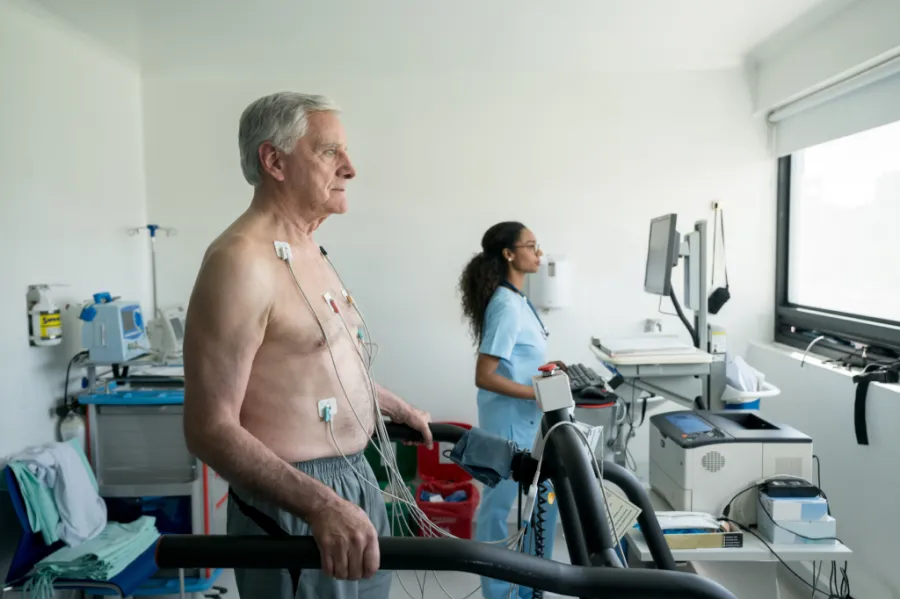
This is the most common type of stress test. You'll walk on a treadmill while small sticky electrodes placed on your chest monitor your heart rhythm with an electrocardiogram (EKG). Every few minutes, the treadmill gradually becomes faster and steeper to safely increase your heart rate.
Stress echocardiogram
A stress echocardiogram combines an exercise stress test with ultrasound images of your heart. An echocardiogram is performed before and immediately after exercise so your care team can compare how your heart muscle pumps at rest and when your heart is working harder.
If you're unable to exercise safely, medication may be used instead to temporarily increase your heart's workload while the ultrasound images are taken.
Pharmacologic (chemical) stress test
Not everyone can safely exercise on a treadmill. If you have mobility limitations, arthritis, balance concerns or another medical condition, your clinician may recommend a pharmacologic (chemical) stress test instead. During this test, medication is given through an IV to safely mimic the effects of exercise while your heart is monitored.
What happens during the test?
No matter which type of stress test you're having, a member of your care team will be with you throughout the exam.
You'll have electrodes placed on your chest to monitor your heart rhythm, and your blood pressure will be checked regularly.
If you're exercising on a treadmill, you'll start at a comfortable walking pace. Every few minutes, the speed and incline increase gradually. Throughout the test, your care team will ask how you're feeling and whether you're experiencing symptoms such as chest discomfort, shortness of breath or dizziness.
"Our goal isn't to push you beyond your limits,” Fegan says. “We're watching your heart very closely the entire time, and the test can be stopped whenever we've gathered the information we need or if you're not feeling well."
The test ends once you've reached your target heart rate, your clinician has collected the information they need or you develop symptoms that make it appropriate to stop.
Although the actual exercise portion usually lasts less than 15 minutes, plan to be at your appointment for about 45 to 60 minutes. Some stress tests that include additional imaging may take a little longer.
How should I prepare?
Your care team will give you instructions based on the type of stress test you're having, but in general you may be asked to:
- Avoid eating or drinking for about four hours before your test
- Avoid caffeine before certain types of stress tests
- Ask your clinician whether you should take your regular medications that morning
- Wear comfortable clothing and supportive walking shoes if you'll be exercising
- Bring a list of your medications
Don't stop taking any medications unless your clinician tells you to. Some heart medications may need to be paused before your test because they can affect the results, while others should be taken as usual.
It's also a good idea to avoid applying lotions, oils or powders to your chest on the day of your appointment, as they can make it harder for the electrodes to stick properly.
If you have diabetes or another medical condition that affects when you eat or take medications, let your care team know ahead of time so they can provide personalized instructions.
What happens afterward?
Most people feel back to normal shortly after the test and can return to work, drive themselves home and resume their usual daily activities.
If you received medication instead of exercising, your care team may ask you to stay for a short observation period until the medication wears off.
Your clinician will review the results and discuss any next steps, which could include additional testing, medication adjustments or lifestyle recommendations. Sometimes you'll receive preliminary results the same day. In other cases, a cardiologist will review the test first, and your clinician will contact you within a few days.
Are stress tests safe?
Yes. Cardiac stress tests have been performed safely for decades and are considered very low risk when done under medical supervision.
Because your heart is intentionally being stressed, you may temporarily feel tired, short of breath or notice mild chest discomfort during the test. If you're having a pharmacologic stress test, you may also briefly feel your heart beating faster or notice a warm or flushed sensation. These symptoms usually go away quickly once the test is over.
Serious complications are rare, and your care team is trained to respond immediately if they occur.
Will insurance cover a stress test?
Most health insurance plans, including Medicare, cover medically necessary cardiac stress tests when they're ordered by a clinician. Your coverage, out-of-pocket costs and whether prior authorization is required depend on your insurance plan.
If you have questions about your benefits, contact your insurance company before your appointment or ask your care team for guidance.
When should I call my doctor after the test?
Most people recover quickly without any problems. However, contact your care team if you experience persistent chest pain, severe shortness of breath, dizziness that doesn't improve or any new or worsening symptoms after you return home.
Frequently asked questions
Will the test hurt?
No. A stress test is noninvasive and shouldn't be painful. You may feel tired or short of breath while exercising. If medication is used instead of exercise, you may briefly notice your heart beating faster, feel warm or flushed or experience mild chest pressure. These sensations usually pass within a few minutes.
What if I can't walk on a treadmill?
That's completely okay. Many people have conditions that make exercising on a treadmill difficult or unsafe. A pharmacologic stress test allows your care team to evaluate your heart using medication instead of exercise, providing similar information without requiring you to walk or run.
Can I drink coffee before my stress test?
It depends on the type of stress test you're having. For some tests, especially pharmacologic stress tests, you'll be asked to avoid coffee, tea, energy drinks, soda, chocolate and other sources of caffeine beforehand because caffeine can interfere with the medication used during the test. Be sure to follow the instructions your care team provides.
What if my stress test is abnormal?
An abnormal stress test doesn't necessarily mean you have heart disease. It simply means your care team found something that deserves a closer look. Depending on your results, your clinician may recommend additional testing, changes to your medications or a treatment plan to better understand and manage your heart health.
"A stress test gives us valuable information that we simply can't get while your heart is at rest,” says Fegan. “The results help us determine whether your symptoms could be related to reduced blood flow, guide treatment decisions and, in many cases, provide reassurance that your heart is functioning well."
The bottom line
A cardiac stress test is a safe, effective way to learn more about how your heart performs when it's working harder. Whether you're walking on a treadmill or receiving medication to simulate exercise, your care team will be with you every step of the way. Knowing what to expect can make the experience feel a little less stressful and help you arrive at your appointment feeling prepared.
Whether you're preparing for a scheduled stress test or looking for answers about new heart symptoms, the cardiology experts at Tufts Medicine are here to help. From advanced diagnostic testing to personalized treatment plans, we're committed to helping you understand your heart health every step of the way.