Facing a serious brain or spine issue can feel overwhelming, but expert care provides guidance and support every step of the way. Close monitoring and clear communication help people and their families feel informed and supported throughout treatment.
Neurocritical Care
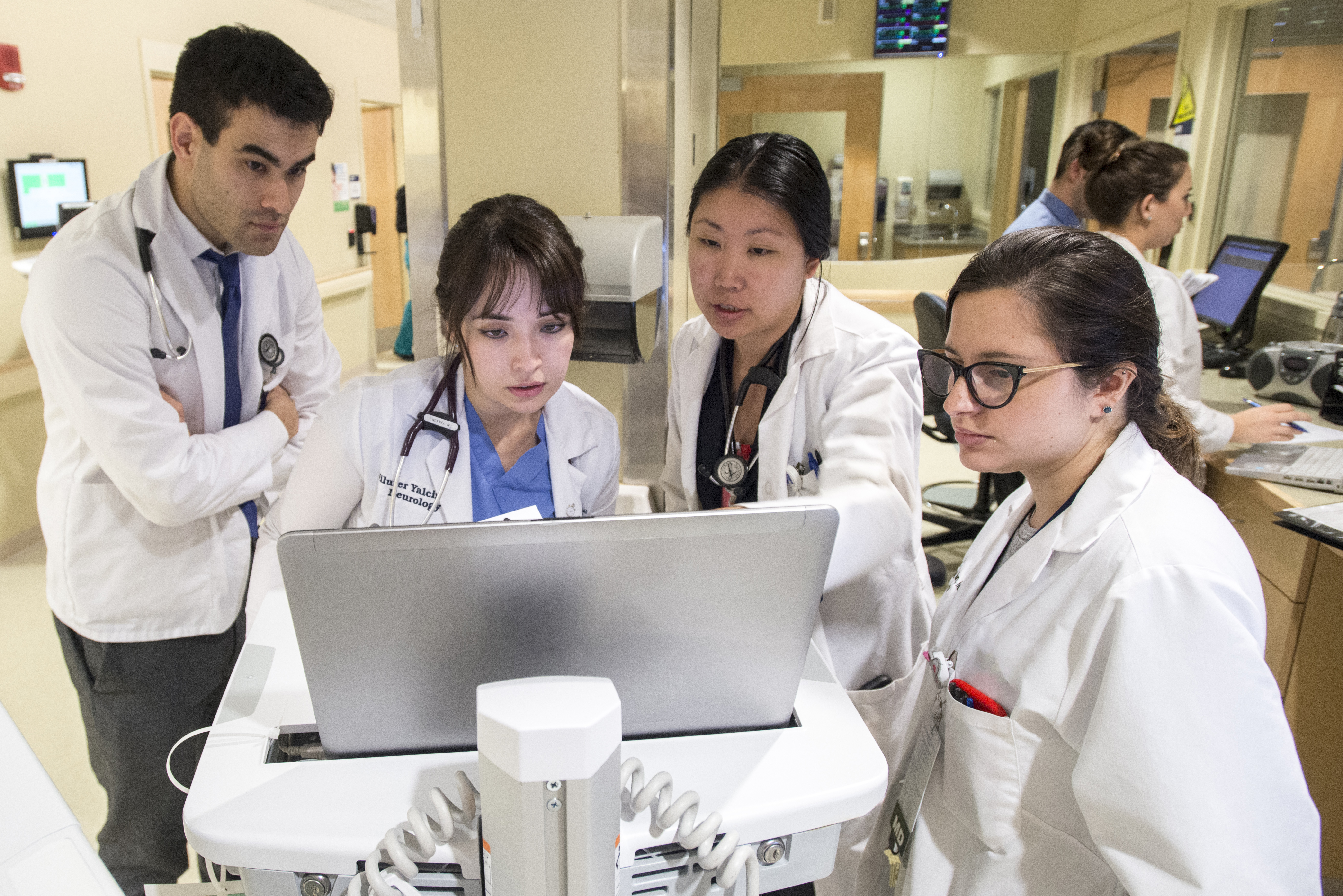


Helping you navigate complex brain + spine conditions with confidence
Neurocritical care provides specialized treatment for serious injuries and illnesses affecting the brain, spine and nervous system. A skilled team—including neurointensivists (doctors who focus on critical care for the brain and nervous system), neurosurgeons, ICU doctors, nurses, nurse practitioners, physician assistants, physical therapists, occupational therapists, speech therapists, dietitians, social workers, case managers and palliative care specialists—works together to manage even the most complex situations. We use advanced monitoring, precise treatments and coordinated care to address every aspect of an individual’s needs.
Families are an important part of the care team from start to finish. We provide guidance, updates and clear explanations so loved ones feel informed, supported and confident throughout treatment.
Find a doctor near me

Conditions
We provide expert care for sudden injuries, ongoing neurological problems and complex conditions that may involve surgery or other advanced procedures. Families are involved at every step, receiving the information and support they need to feel confident and included.
We help manage a wide range of neurological conditions, including:
Acute spinal cord trauma or disease: Sudden injury or illness affecting how the spinal cord works, which can change movement, feeling or strength
- Aneurysms: Weak spots in blood vessels that can bulge or bleed
- Brain contusion: A bruise on the brain caused by an injury
- Brain trauma (traumatic brain injury): Injury to the brain caused by a fall, hit or strong force
- Elective neurovascular procedures: Planned treatments for blood vessel problems in the brain, such as aneurysms or vascular malformations
- Elevated brain pressure: Swelling or fluid buildup that puts extra pressure on the brain
- Encephalitis: Swelling of the brain caused by infection, inflammation or an autoimmune response
- Hepatic encephalopathy: Brain dysfunction caused by severe liver disease, which can affect thinking, behavior and consciousness
- Hydrocephalus: A buildup of fluid inside the brain that increases pressure and affects brain function
- Hypoxic-ischemic brain injury: Brain damage that occurs when the brain is deprived of oxygen, such as after cardiac arrest
- Intracerebral hemorrhage: A type of stroke where bleeding occurs inside the brain, causing pressure, swelling and damage
- Meningitis: Inflammation of the protective membranes around the brain and spinal cord, often caused by infection
- Neuromuscular disorders or crises: Conditions like myasthenia gravis or Guillain-Barré syndrome that affect how nerves and muscles communicate, sometimes making movement or breathing difficult
- Prolonged seizure (status epilepticus): Seizures that last longer than usual or occur repeatedly without recovery in between
- Seizures: Sudden bursts of unusual electrical activity in the brain that can affect movement, speech or awareness
- Stroke: When blood flow to the brain is blocked or a blood vessel breaks, affecting brain function
- Subarachnoid hemorrhage: Bleeding into the space around the brain, often caused by a ruptured aneurysm or trauma
We also provide care after surgeries on the brain, spine and nervous system, including:
- Brain tumor surgery: Surgery to remove or reduce a growth in the brain or relieve pressure or symptoms
- Neurosurgery: Surgery on the brain or spine to treat an injury, illness or other problem
- Spine surgery: Surgery on the spine to fix injury, relieve pressure or treat disease

Testing
Understanding a serious brain or spine condition requires careful attention and the right tools. Testing and monitoring help our team see exactly what’s happening, guide treatment decisions and track progress over time. These tools allow us to detect problems early, prevent complications and provide precise, effective care.
Families are involved at every step. We explain tests clearly, answer questions and provide updates so loved ones feel informed and included throughout treatment.
Some of the tests and monitoring we may use include:
- Automated pupillometry: Measures pupil size and reaction to detect changes in brain function or pressure within the head
- Blood tests: Check for infections, inflammation and other medical conditions that can affect the brain or spine
- Brain tissue oxygen monitoring: A probe that measures oxygen levels in the brain to ensure adequate blood flow and oxygenation
- Electroencephalogram (EEG): Measures electrical activity in the brain to check for seizures or abnormal brain activity
- Evoked potentials: Measures electrical signals in the brain in response to stimulation to assess nerve pathway function
- Heart and lung monitoring: Continuous checks to make sure vital functions are stable
- Imaging scans: CT scans, MRI and angiograms that show the brain, spine and blood vessels clearly
- Intracranial pressure monitoring: Tracks pressure inside the skull to detect swelling or fluid buildup
- Lumbar puncture (spinal tap): Collects spinal fluid for testing to help diagnose infections, bleeding or other conditions
- Neurological exams: Evaluate movement, sensation, reflexes, speech and awareness
- Point-of-care ultrasound (POCUS): Bedside testing that quickly assesses heart, lung, blood vessels and other organs without moving the individual
- Transcranial Doppler (TCD): Measures blood flow in the brain’s major arteries to detect narrowing or spasm
- Other specialized tests: Additional tests may be used depending on the condition to guide treatment and recovery

Treatments
We use a wide range of therapies and procedures to address both sudden injuries and ongoing challenges. Every plan is tailored to the individual, and families are involved throughout, receiving guidance and support at every step. Some of the treatments we may suggest include:
- Medication management: Medicines to control symptoms, reduce swelling, manage seizures or treat infections
- Minimally invasive procedures: Targeted techniques to treat blood vessel problems or other issues without major surgery
- Ongoing monitoring and follow-up care: To track progress, adjust treatment and prevent complications
- Rehabilitation support: Physical, occupational and speech therapy to help recovery and improve daily function
- Surgery: Procedures on the brain, spine or nervous system when needed to treat injuries, remove growths or relieve pressure
- Ventilation and breathing support: For patients with neuromuscular issues or other conditions that affect breathing
Our goal is to combine advanced treatments with expert care and family guidance, ensuring that each person receives the support and interventions they need to recover safely and confidently.

FAQs
What is neurocritical care?
Neurocritical care is specialized treatment for serious brain, spine and nervous system conditions. Our team manages complex situations, monitors health closely and provides expert care while keeping families informed and supported. We also treat other medical problems that can occur alongside neurological injuries or illnesses, such as infections, heart rhythm changes, kidney issues and other conditions that may affect recovery.
Who is on the neurocritical care team?
Our team includes neurointensivists, neurosurgeons, ICU doctors, nurses, nurse practitioners, physician assistants, physical therapists, occupational therapists, speech therapists, dietitians, social workers, case managers and palliative care specialists. Everyone works together to make sure all aspects of care are covered.
What conditions do you treat?
We provide care for sudden injuries, ongoing neurological problems and complex conditions such as stroke, bleeding in or around the brain, brain or spinal cord trauma, ruptured aneurysms, seizures, infections and neuromuscular disorders. We also provide care before and after surgeries on the brain, spine and nervous system.
What types of tests are done?
We use imaging scans, EEGs, intracranial pressure monitoring, ultrasounds, blood tests, neurological exams, heart and lung monitoring and other specialized tests depending on the condition. These tests help us track health, guide treatment and prevent complications.
What treatments are available?
Treatments can include medication management, surgery, minimally invasive procedures, breathing support, rehabilitation therapies and ongoing monitoring. Every plan is tailored to the individual’s needs and involves families at every step.
How are families involved in care?
Families are part of the care team from start to finish. We provide guidance, updates and clear explanations so loved ones feel informed, supported and confident throughout treatment.
What should families expect while in neurocritical care?
Families can expect clear communication, close monitoring and compassionate support. We provide regular updates, involve families in decisions and coordinate care to address both medical and emotional needs.
Related services + treatments
Department of Neurology
Academic Department
When our specialty lies in treating an entire system inclusive of nearly 85 billion neurons, we must collaborate with experts from nearly every branch of medicine to create indisputable improvements in patients’ lives.