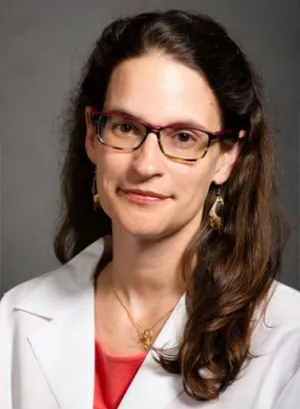
Scientists from the Mother Infant Research Institute at Tufts Medical Center and Tufts University are collaborating on a year-long grant from the intramural Tufts Springboard program which sponsors projects of investigators at TMC and Tufts University. Entitled "How Father's Stress Impacts Neonatal Growth and Metabolism via the Placenta," the project will examine the father's role in intergenerational impacts of stress, which is critically understudied in humans. It builds on the findings of the O'Tierney-Ginn and Feig labs.
Besides the team leads Dr. O'Tierney-Ginn and Dr. Larry Feig, other team members include Dr. Robert Sege, Dr. Erika Werner, as well as Supervisor of Clinical and Translational Research Taysir Mahmoud and Francesca Carasi-Schwartz of the O'Tierney-Ginn lab.
Background for the study
The O'Tierney-Ginn group found that several miRNA were differentially expressed in placentas of non-Hispanic Black and non-Hispanic white patients. These miRNA (e.g. miR-34c, miR-181d-5p) targeted cellular stress-response pathways, and one was associated with fetal growth (miR-192-5p). The O'Tierney-Ginn lab's work also supports the idea that stress-responsive pathways in the placenta mediate the effects of maternal stress on fetal growth. Complementary preliminary data from the Feig lab has also implicated the placenta in mediating how chronic paternal stress and reduced sperm miR-34c in mice leads to altered phenotypes in offspring.
Study aims
The study will have two aims. The first is to determine the association between parental exposures to early life or adult trauma and resiliency on neonatal growth and metabolic outcomes. The study team will re-contact participants from Dr. O'Tierney-Ginn's ongoing NIH-funded prenatal cohort study, MAMMA, in order to administer stress (Adverse Childhood Experience, or ACE) (Trauma History Questionnaire, or THQ) and resiliency (Positive Childhood Experience, or PCE) surveys to both parents. Both mothers and fathers from MAMMA will be asked to participate to have identical stress measures and assess independent and combined impact of parental stress.
A second study aim is to assess the impact of parental trauma and resiliency on placental stress-responsive gene and miRNA expression.
Ultimately, data generated by the study will support grant applications between the Tufts Intergenerational Stress and Resiliency Group members (O'Tierney-Ginn, Feig, Sege and Werner) to explore mediating and mitigating factors involved in the intergenerational impacts of stress. Co-PI Dr. O'Tierney-Ginn is excited about the larger implications of the project. "We anticipate that this work will lead ultimately to design of interventions to mitigate the intergenerational effects of stress and trauma. It aligns perfectly with the MIRI's holistic view of patients, their families and communities that uniquely positions us to reduce inequities and improve health outcomes across generations."